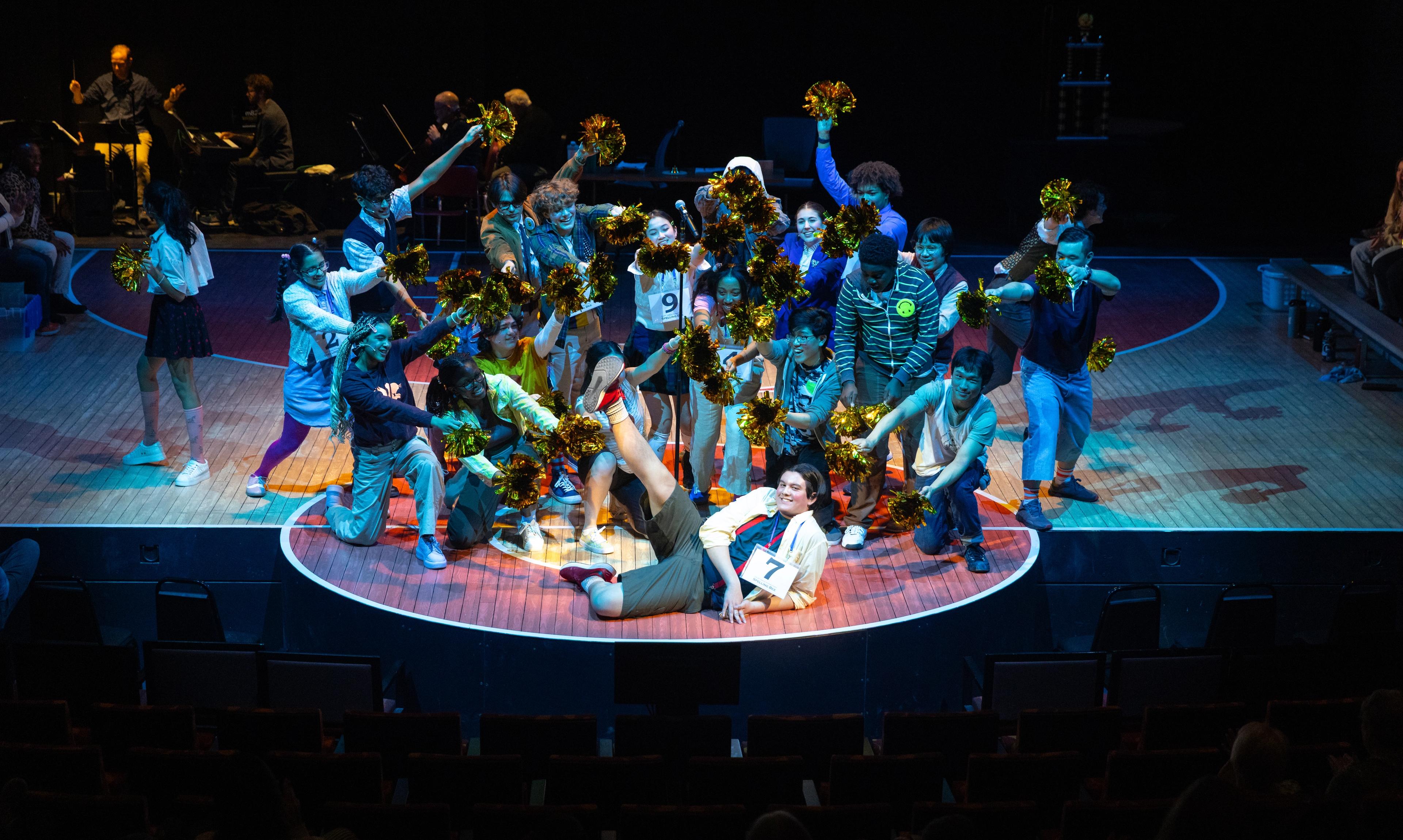
“New England winters are tough,” says Lauren Josef, chair of the Theater and Dance Department. “We need joy. We need weird.” Exeter’s performance of The 25th Annual Putnam County Spelling Bee brought all that and more to The David E. and Stacey L. Goel Center for Theater and Dance. The fast-paced and riotous musical featured six “middle schoolers” and audience participants who spelled their way through vexing vocabulary while sharing hilarious and poignant personal stories.
“I think one of the reasons this show has felt so special is because early on we said, ‘This is not going to be a traditional show,’ ” says Josef, the production’s director. “We told the students: ‘You’re going to be interacting with the audience. You might be throwing things. You’re going to be in character preshow and bringing everybody into this environment.”
Delivering such an immersive experience took creativity and collaboration. Here’s a behind-the-scenes look at the way the show took shape.
SETTING THE SCENE
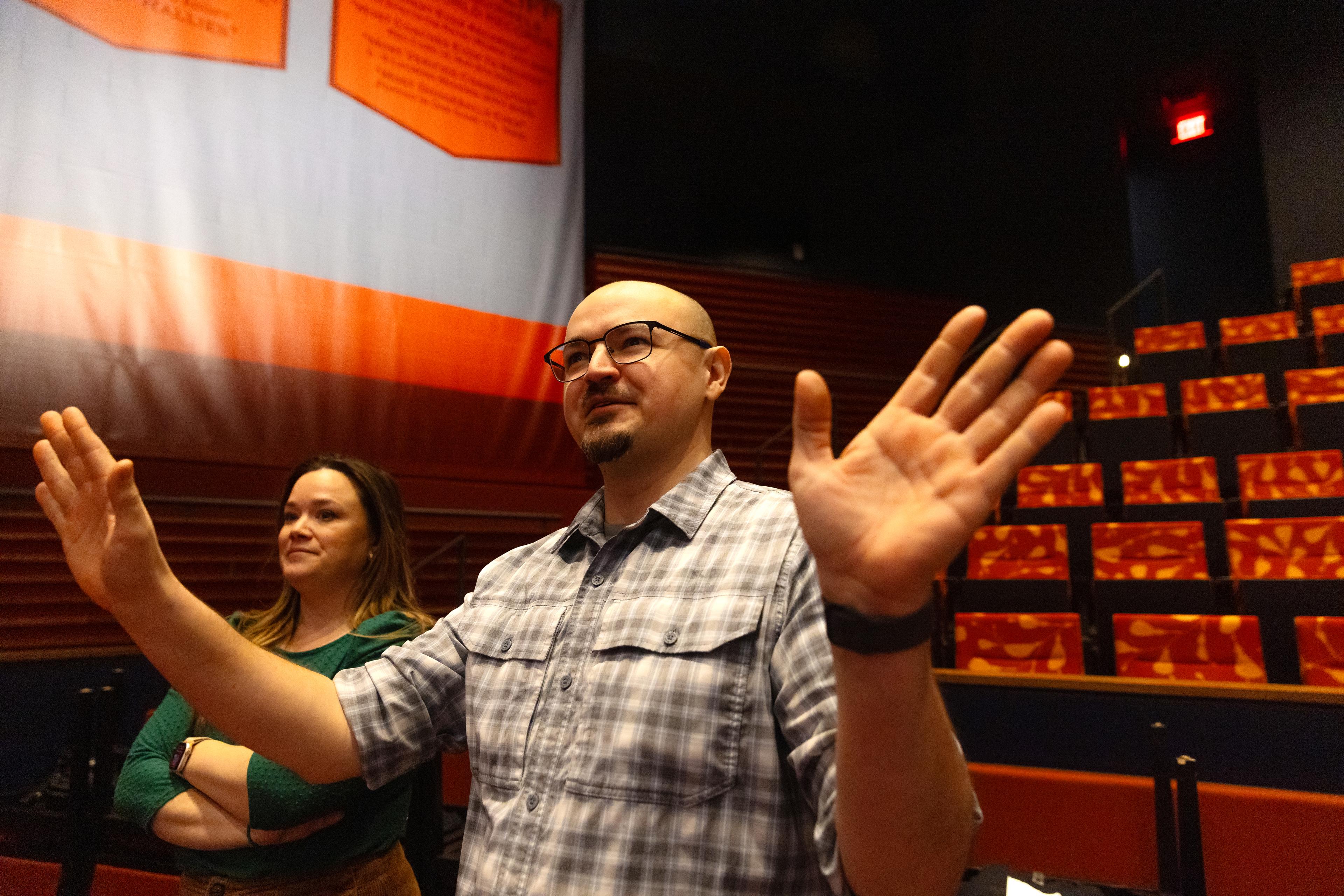
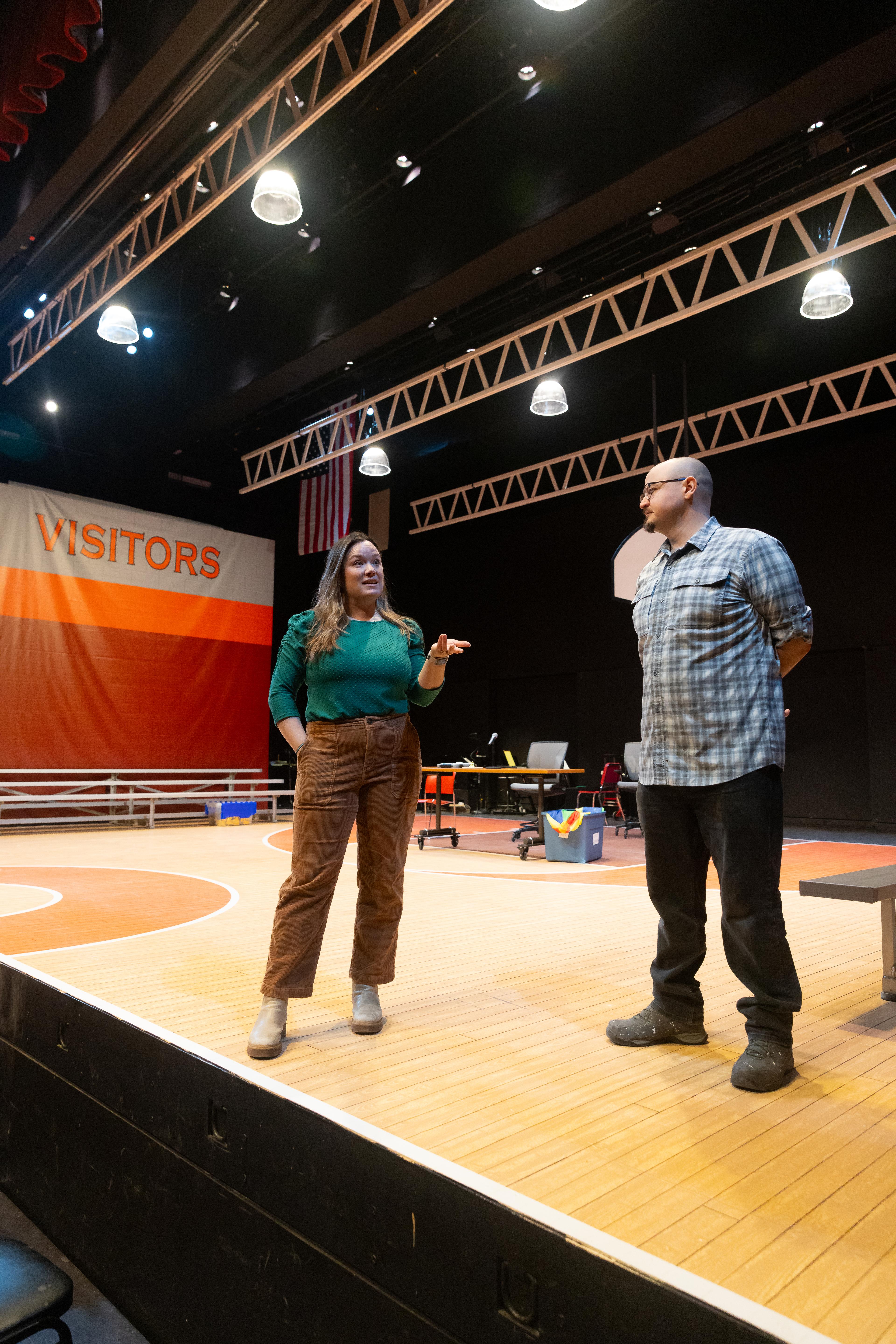
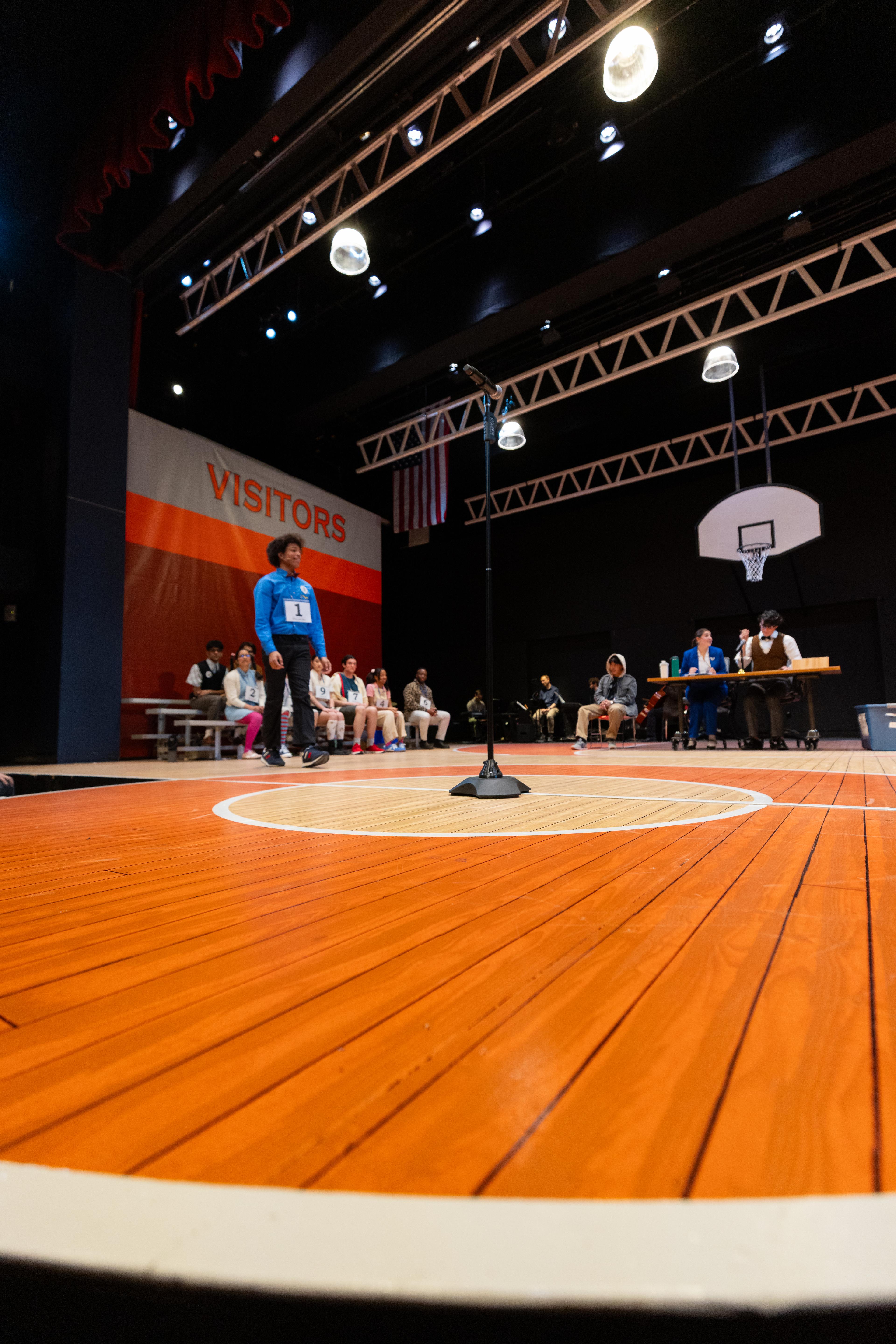
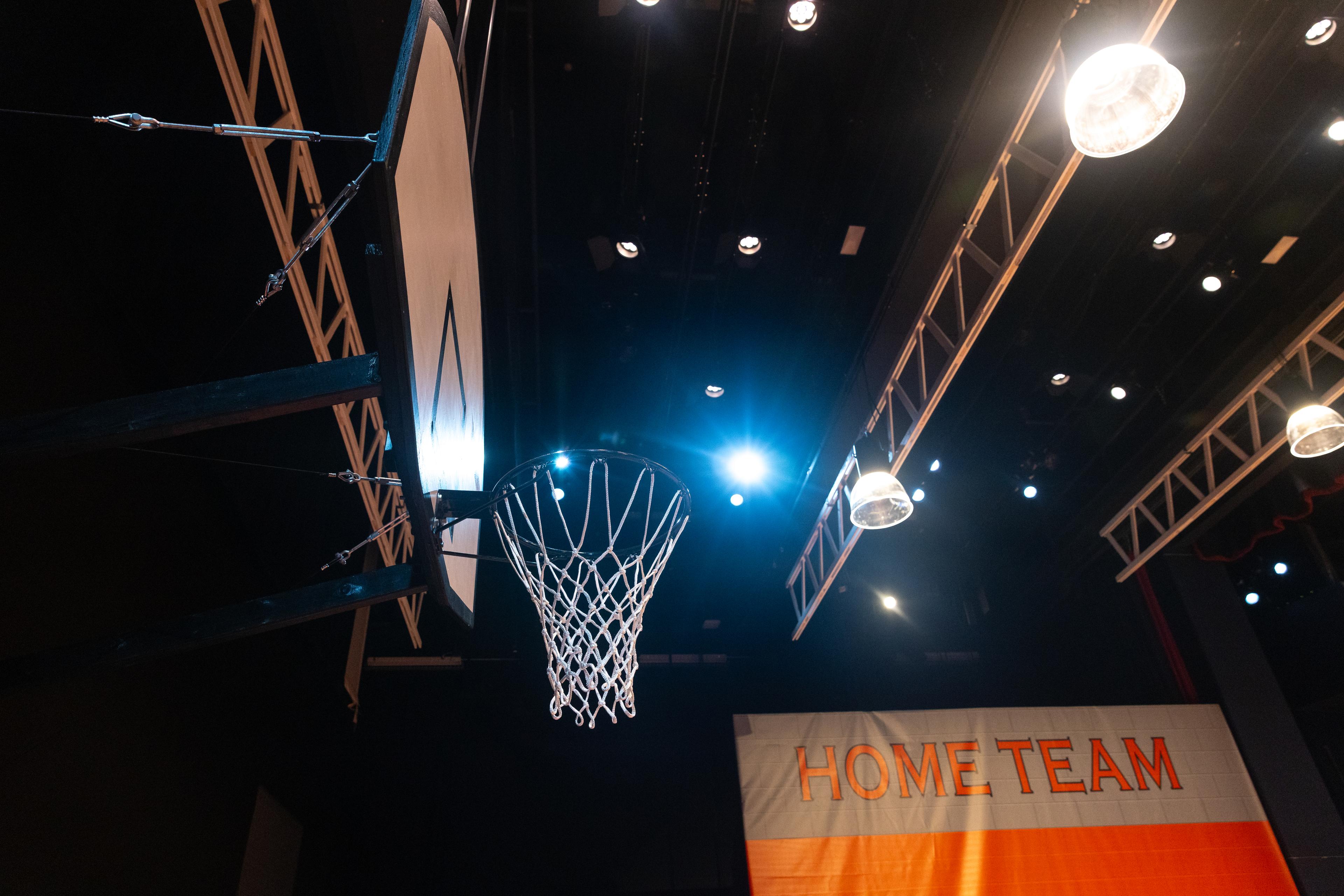
Instructor in Theater and Dance Anthony Reed, the show’s technician, set designer and lighting designer, created an immersive environment outside and inside the Goel Center’s mainstage theater. “The phrase that we were working off of was ‘absurdity that looks like reality,’ ” he says. “Everything is just a little bit cartoonish, almost like a long-form SNL skit.” Reed designed the set to look like a middle school gym with lighting fixtures, a basketball court, even a Lost and Found bin. He also created the Screamin’ Squirrels mascot for the fictional school.
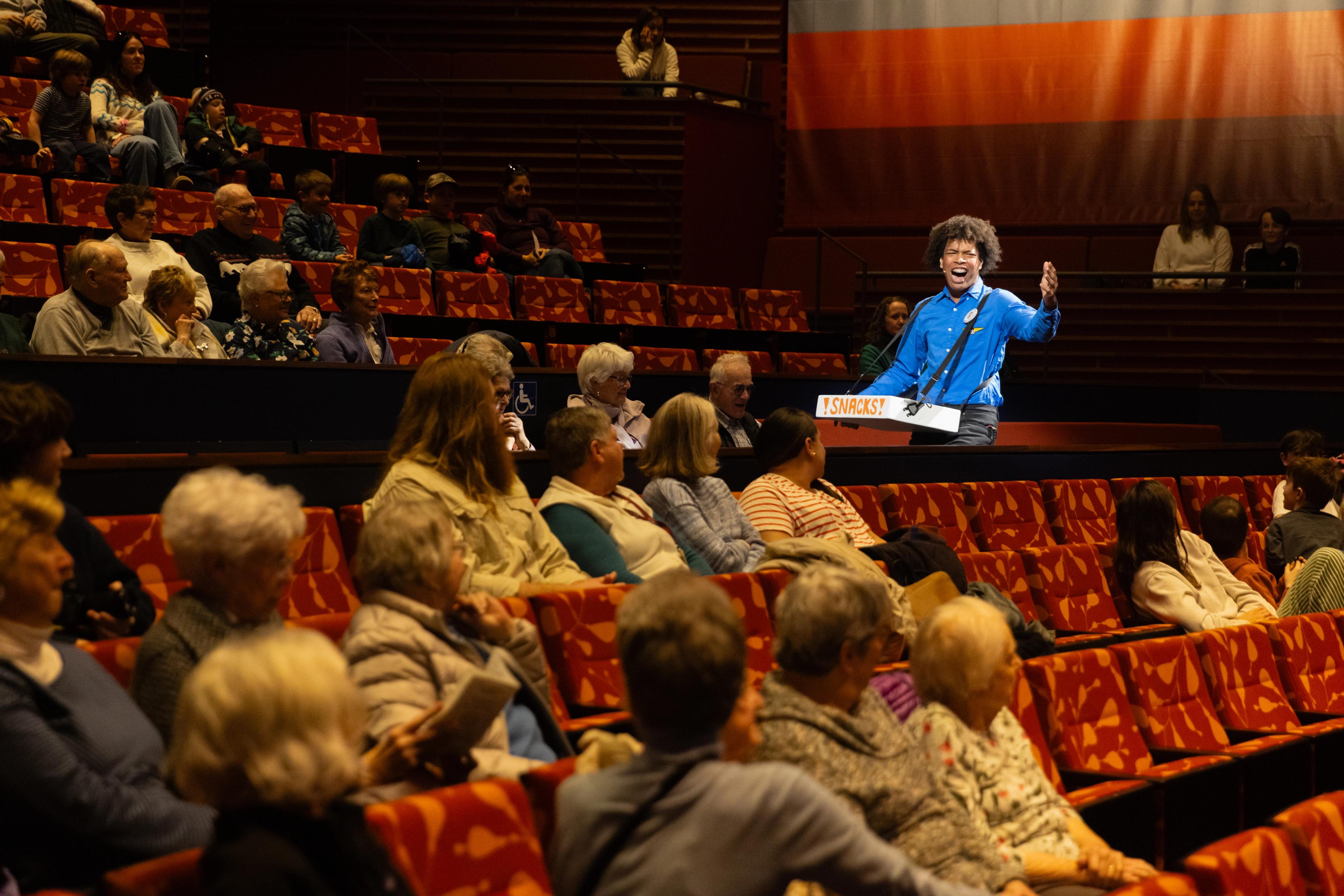
AUDIENCE IMMERSION
Some attendees were seated onstage (on bleachers hauled in from Hatch Field) and called to participate in the spelling bee. Student performers walked through the theater seating area, breaking the “fourth wall.”
CREW WARDROBE
Working with Instructor in Art Heather Hernon, Reed designed and screen-printed T-shirts for the crew.
STAGE
To make the stage look like a basketball court, Reed built a center circle that extended into the audience. He also hand-painted the floor to resemble hardwood. Visiting alumna Emma Aldrich Jordan ’17 pitched in to help. As a student, Jordan was a stage manager. She is now a scenic painter and props artisan.
MUSIC
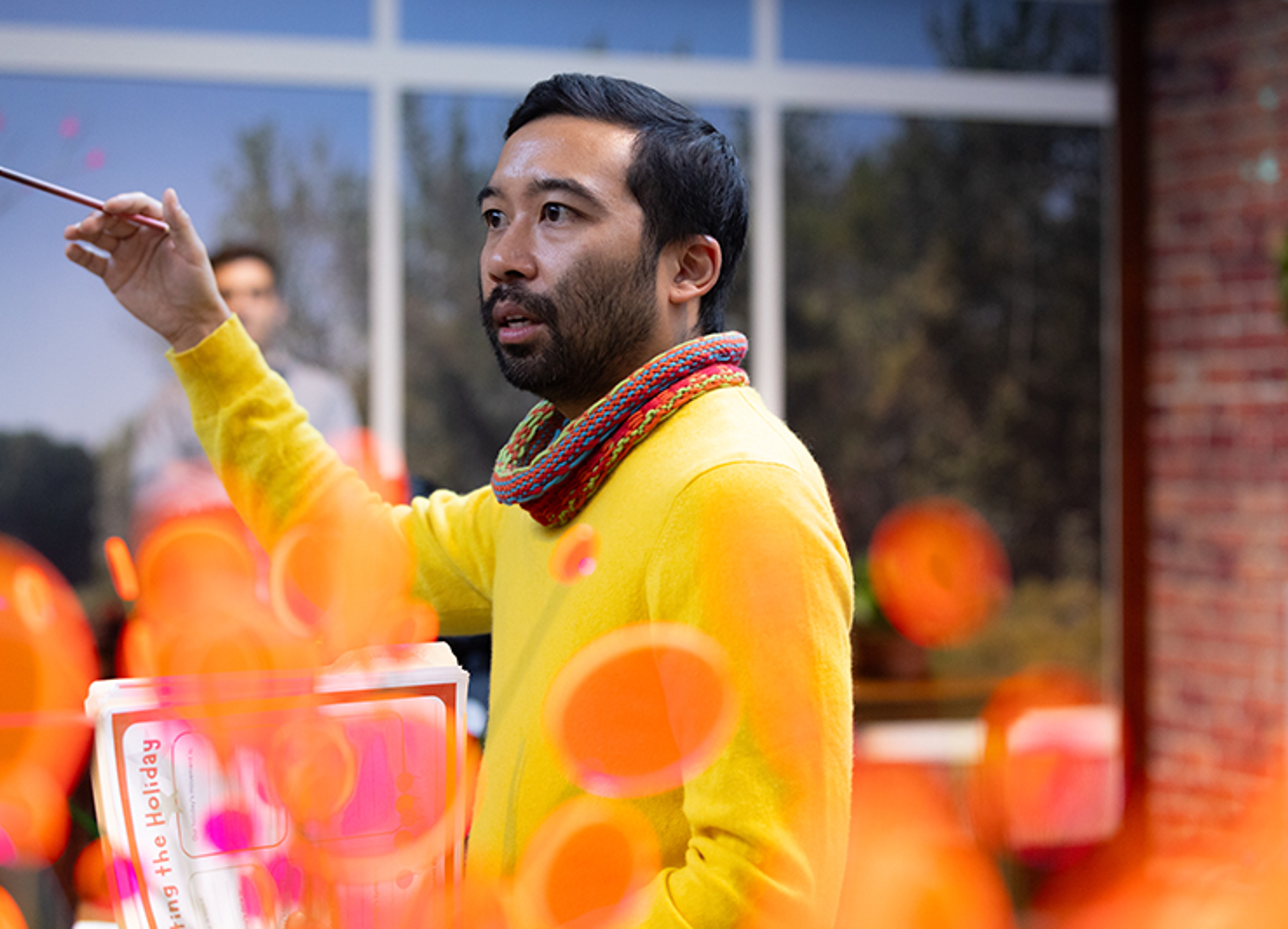
With audience seating in the orchestra pit, Instructor in Music Kristofer Johnson and six musicians performed on stage. Computer monitors streamed live video of Johnson’s conducting so the actors could follow his direction. “The characters needed to be able to know when to sing or when to stop,” Reed says.
SOUND
“Each student actor has a body mic, so there are 22 mics,” Josef says. “ We have one student [Audrey Dent ’25] who is mixing. Audrey has to listen carefully. If one student is being especially quiet during a scene or especially loud, she is live-mixing that. And then we have another sound person backstage, Angelina Wang ’27. If something malfunctions, if we need to fix a microphone, she fixes that.”

APPLIED SCIENCE
“A lot of the work that we do relies on computer science, on physics and these different technologies that students are learning about in the classroom,” Reed says. “In theater tech, they get to see how the light at a different angle is going to cast a pool of light on the stage and how big that pool will be. These are real-life applications for a lot of things they are learning.”
LIGHTING
Light operator Jiayu Wang ’25 was tasked with about 200 lighting cues: visual indicators to the performers that specific actions are supposed to happen at precise times. During the performance, actors rely on prompts to hit their marks and keep the show running smoothly. “So much of the storytelling in this show relies on lights,” Josef says. “Tony has a really stark difference between what the lighting looks like when you’re in the real world and in the character’s mind.”