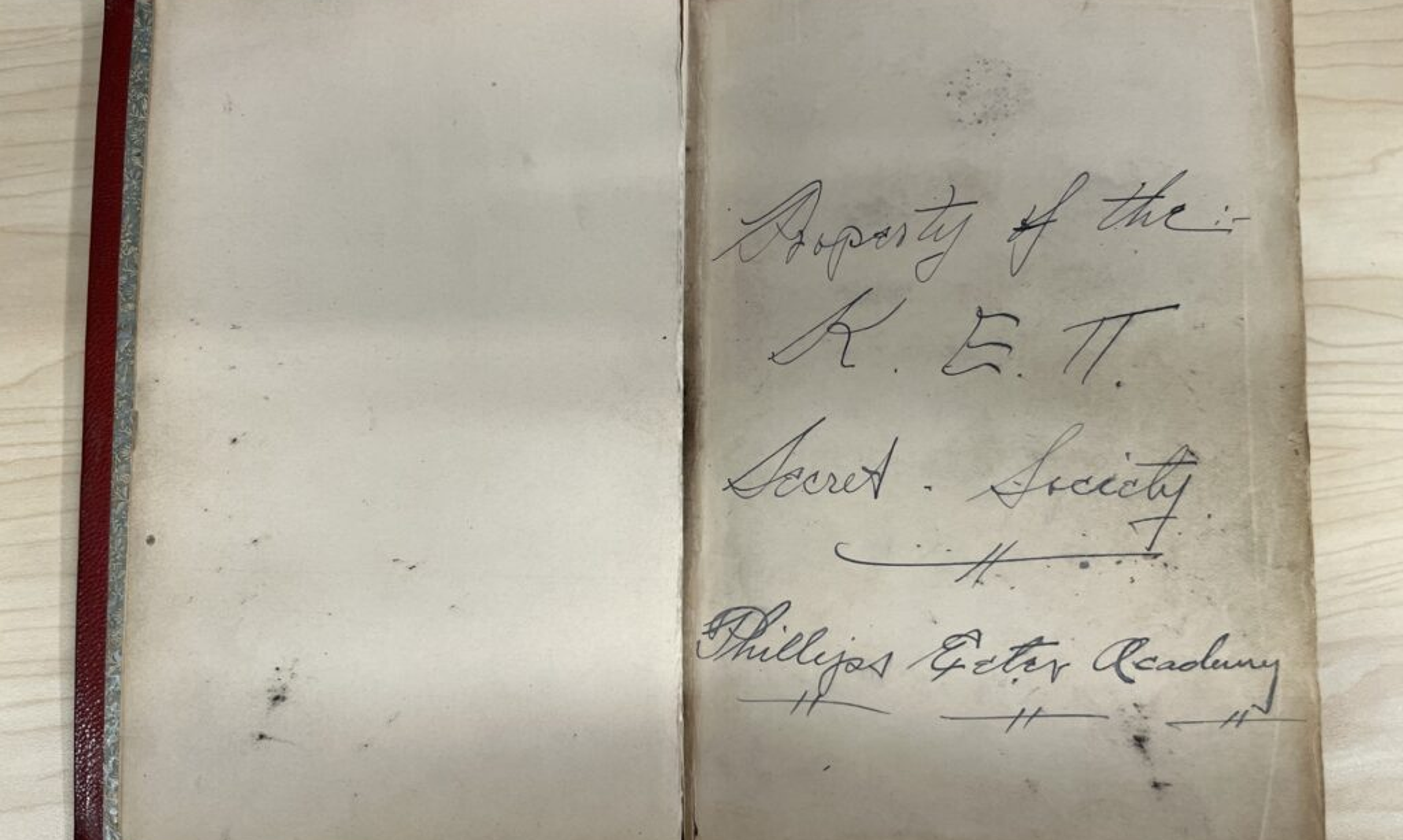
Skulls, crossed bones, swords and smoke — these are just some of the iconic symbols that represented Exeter’s early secret societies, or fraternities. Their origins trace back to 1818, when the Golden Branch Literary Society emerged as a secret organization. The first fraternity, Pi Kappa Delta, was started about 1870, but not until the 1890s did a growing number of these groups begin to stir intrigue, mystery and controversy.
As a 1935 article in The Exonian described, the secret societies distressed some faculty and the administration: “They openly opposed faculty authority. The initiations were held late at night, and in some cases, all night, and the candidates were injured both mentally and physically, so that their class work began to drop.”
The initiation ceremonies, as chronicled in the article, were both eerie and humiliating. One society, for instance, took initiates to an old burial vault lit only by candles. Other societies, it recounted, were notorious for their physical tests, including branding candidates with a cigar and requiring candidates to appear in “fantastic and almost no clothes at classes, sell peanuts to the faculty and townspeople, and make speeches from a soap box at what is now the town bandstand.”
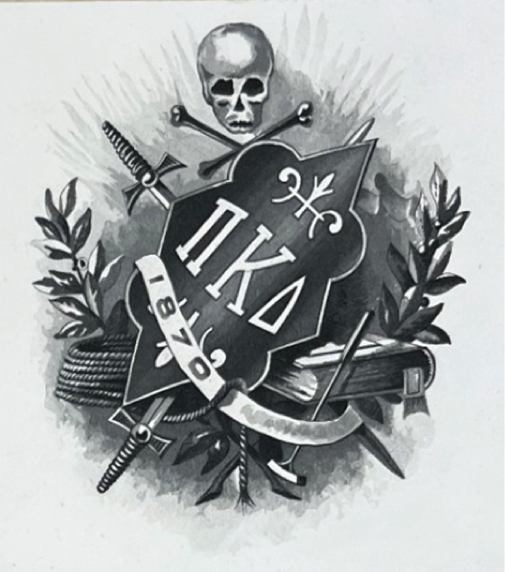
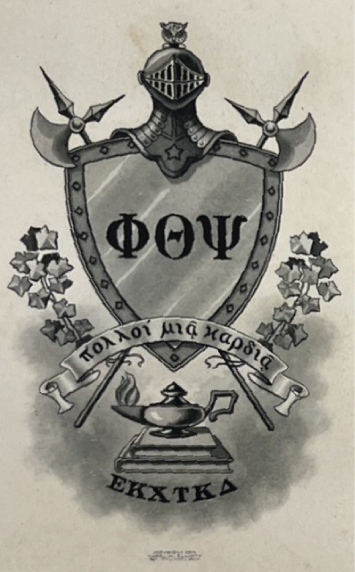
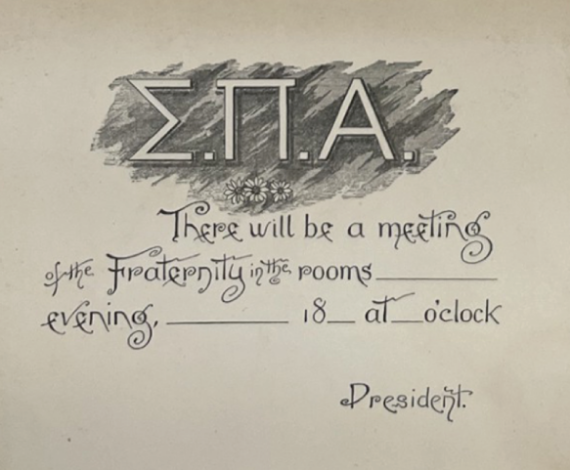
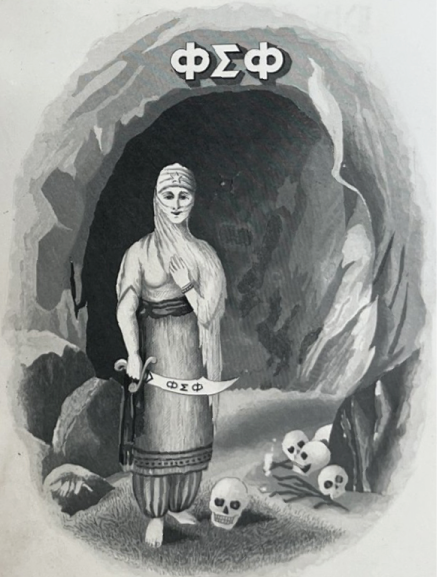
The growing tensions between the societies and the administration culminated in 1891, when Principal Charles E. Fish explicitly banned their existence and forbade students from participating in them. Enforcing those rules proved none too easy and the effort to root out fraternities ultimately failed.
In 1896 Principal Harlan Page Amen took a different approach. He granted official sanction to the fraternities with increased faculty supervision. This was a turning point, marking the beginning of a more controlled and formalized era for the organizations. At the time, there were six fraternities, each of which rented rooms in various homes near the Academy.
In 1908, Exeter established the Interfraternity Council, which brought all the fraternities under a centralized governing body — a move intended to further bring order and oversight to the secret societies.
But by the mid-20th century, the face of Exeter had changed. In June 1942, the Committee on Fraternities recommended the abolition of all fraternities, citing two key reasons. First, the school’s updated environment — with all students living and eating in dormitories — created a new social dynamic that diminished the need for secret societies. Close friendships could be formed more naturally, without the artificial divisions created by fraternities, they argued. Extracurricular groups that were more inclusive and diverse in purpose had also begun to take on the social roles that fraternities had once held.
Second, the committee took issue with the undemocratic nature of fraternities. “They segregate school leaders, foster snobbishness, and divide rather than unite the school,” the committee wrote. “In a nation and a school that champion democracy, it is not appropriate to condone such undemocratic institutions.”
The recommendation to formally abolish fraternities was passed by a vote of the faculty, signaling the end of an era.