This spring, 11 students and two faculty advisers — History Instructor Jack Gronau and Rabbi Jennifer Marx Asch, an instructor in religion, ethics and philosophy — embarked on the Academy’s newest Global Initiatives program to Europe. Their 10-day journey to Paris and Kraków, Poland, explored the history of European Jewish life, persecution and resistance during the Holocaust.
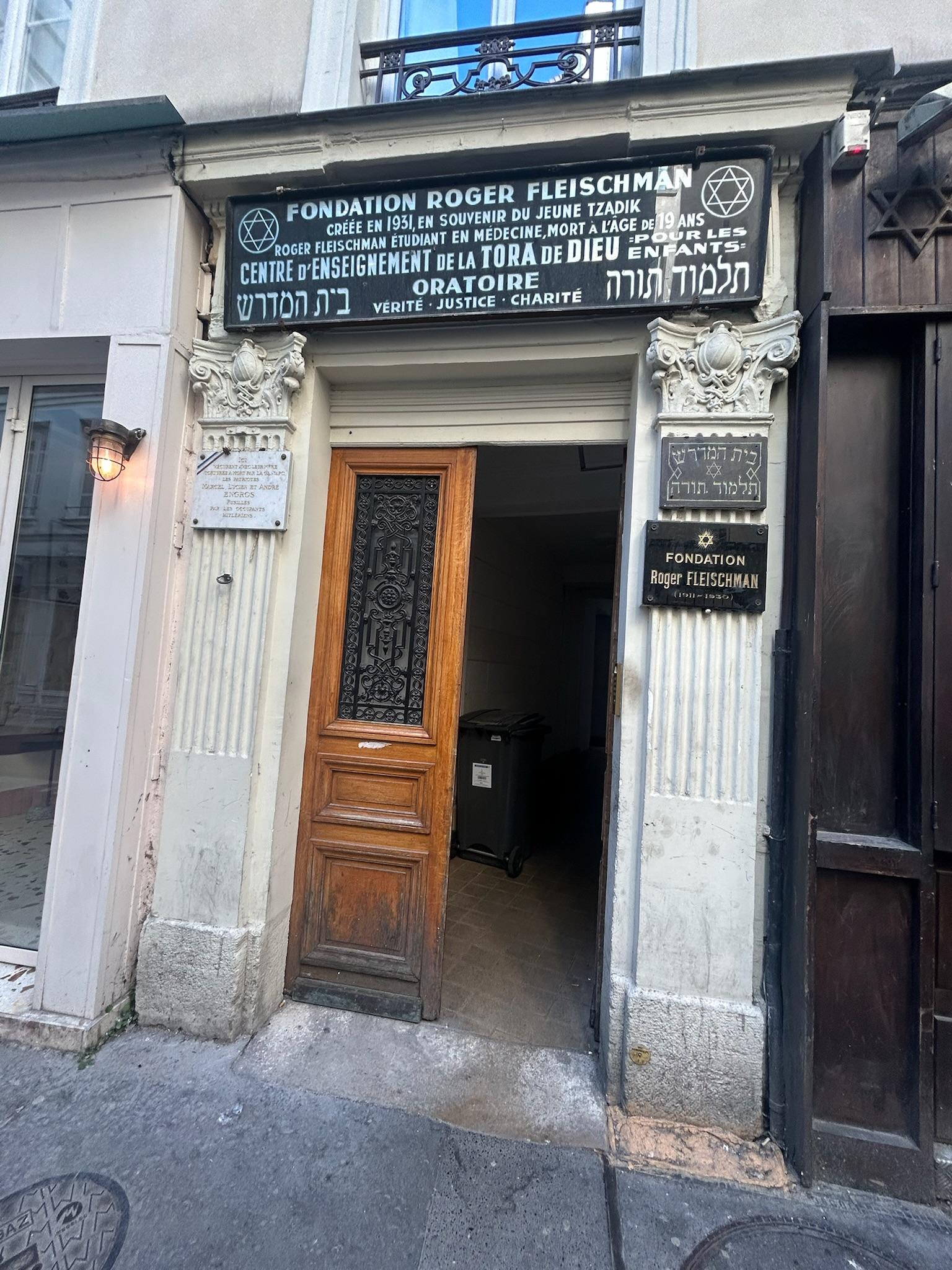
The trip began in France, where the group visited the historic Marais neighborhood — once the heart of Parisian Jewish life — and museums dedicated to the Holocaust and World War II. At Drancy, the internment camp from which the majority of Jews in France were deported to concentration camps, the weight of that history came into sharp relief, prompting one student to reflect on the moral choices facing ordinary citizens.
“Fighting injustice is more nuanced than I once thought,” Elias Warner ’26 wrote following the trip. “And people often do more than they realize in smaller ways. Being kind to others, standing up to bullies, and supporting those going through hard times are all ways to help make the world better."
“Visiting Auschwitz-Birkenau and seeing the scale and organization of the camp helped me to understand the scale of the tragedy of the Holocaust in a way that reading books cannot.”
From Paris, the group traveled to Kraków, where they walked through Auschwitz I and Auschwitz II-Birkenau, toured Oskar Schindler’s Enamel Factory and explored Kazimierz, the city’s historic Jewish quarter, including its restored Old Synagogue. For many students, the experience of standing inside these spaces transformed their understanding.
“Visiting Auschwitz-Birkenau and seeing the scale and organization of the camp helped me to understand the scale of the tragedy of the Holocaust in a way that reading books cannot,” Johanna Hillman ’28 reflected. “Birkenau, for example, is vast. The barracks and chimneys seem almost like they go on forever.”
The two cities offered students a rare and layered lens through which to bear witness to the richness of Jewish culture and identity before the war, the scale and machinery of the genocide, and the continuing work of remembrance. Historical context proved as formative as the sites themselves.
“The history of Judaism in France and Poland since antiquity framed every landmark we visited, from Notre Dame to Wawel Castle, as part of a long cycle of religious coexistence and persecution,” Levi Stoll ’28 wrote. “Understanding how the two European nations responded to Nazi aggression expanded my sense of how the Holocaust was made possible as the result of cultural manipulation across a continent.”
For many, the trip resonated on a personal level. Faye Yang ’28, who says she had little exposure to Jewish history prior to the trip, described a moment at Auschwitz: “I saw things and felt emotions so heavy that they are difficult to put into words. … Throughout the trip, I had heard the vast numbers and descriptions of suffering, but I had not fully internalized their magnitude. Being at Auschwitz, standing where it all happened and seeing the physical remnants of those lives, brought a level of understanding that could never be reached from my room back home.”
That encounter spurred a clear sense of obligation.
“It happened; therefore it can happen again,” Yang reflected. “It serves as a powerful reminder that it is the responsibility of future generations, including current Exonians like us, to ensure that such atrocities are never repeated.”