Throughout the history of the United States, most people running for president have had common traits. Regardless of party affiliation, white men of means have traditionally found themselves at the top of the ticket. But as Ellen Fitzpatrick told students gathered at assembly this fall, there are examples of women who challenged barriers and vied for the highest office in the land that date back further than you might imagine.
“I’m going to begin today with the takeaway message,” said Fitzpatrick, who holds a Ph.D. in history from Brandeis University and is a veteran professor of Harvard University, M.I.T. and Wellesley College, and an emerita at the University of New Hampshire. “Historical change takes a very long time. Often to achieve especially transformative and profound change, it doesn’t come easily.”
Fitzpatrick spoke briefly about Hillary Clinton’s unsuccessful 2016 bid for president and acknowledged former Vice President Kamala Harris’ campaign, but used most of her time on the Assembly Hall stage to talk about some lesser-known political pioneers. She pointed out that over 200 women have run for president including the first, Victoria Woodhull, in 1872, nearly a half century before women had the right to vote.
“She was among the most radical presidential candidates of any sex,” Fitzpatrick said. “She set up her own political party and her own newspaper to promote her candidacy. … At 34, she was ineligible under the constitution to even hold the office that she sought.”
“Historical change takes a very long time. Often to achieve especially transformative and profound change, it doesn’t come easily.”
—Ellen Fitzpatrick, Professor and historian
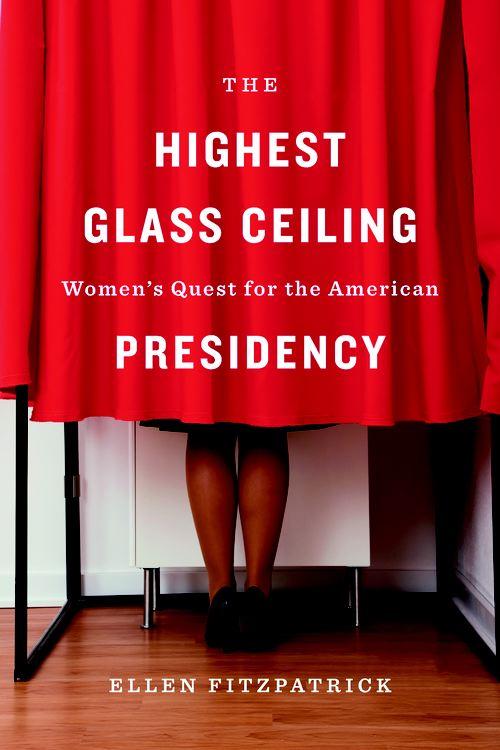
Fitzpatrick chronicles Woodhull as well as Margaret Chase Smith (who in 1964 became the first woman to be placed in nomination for the presidency at a major party’s convention), and Shirley Chisholm (who became the first Black candidate for a major-party nomination in 1972) in her book The Highest Glass Ceiling: Women’s Quest for the American Presidency, a 2016 “Editor’s Choice” by The New York Times.
After assembly, students joined Fitzpatrick for a lunch-and-learn session in the Elting Room where discussion topics ranged from the election in the United States to recent elections in Mexico and Europe that have seen women assume ruling positions.