Educator and Activist
Wick Sloane ’71 receives the 2025 John and Elizabeth Phillips Award
Winter 2026
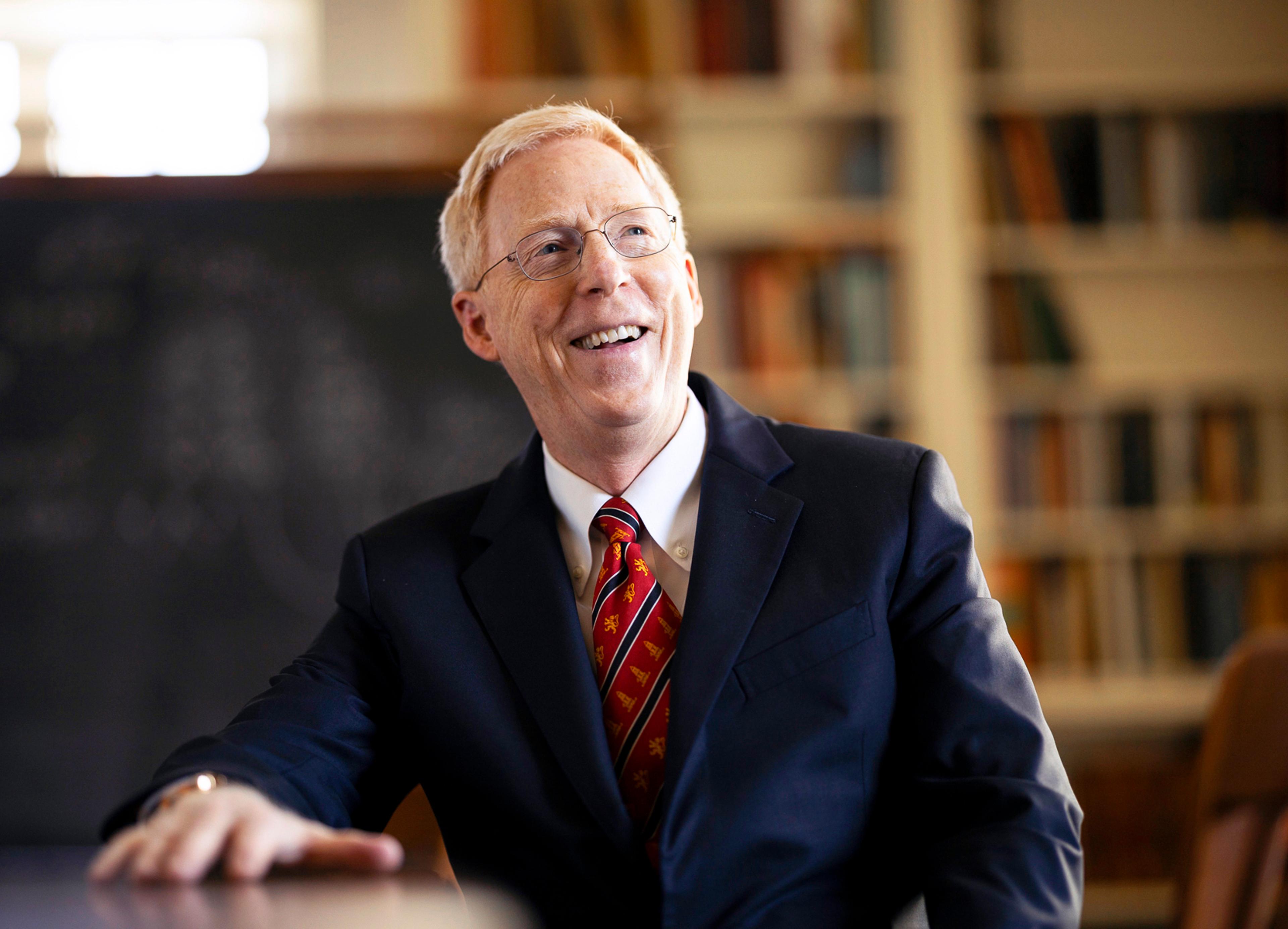
Through journalism, teaching and grass-roots activism, James R. W. “Wick” Sloane ’71 has helped address the challenges — including food insecurity, homelessness and employment — facing millions of veterans and low-income college students across the nation.
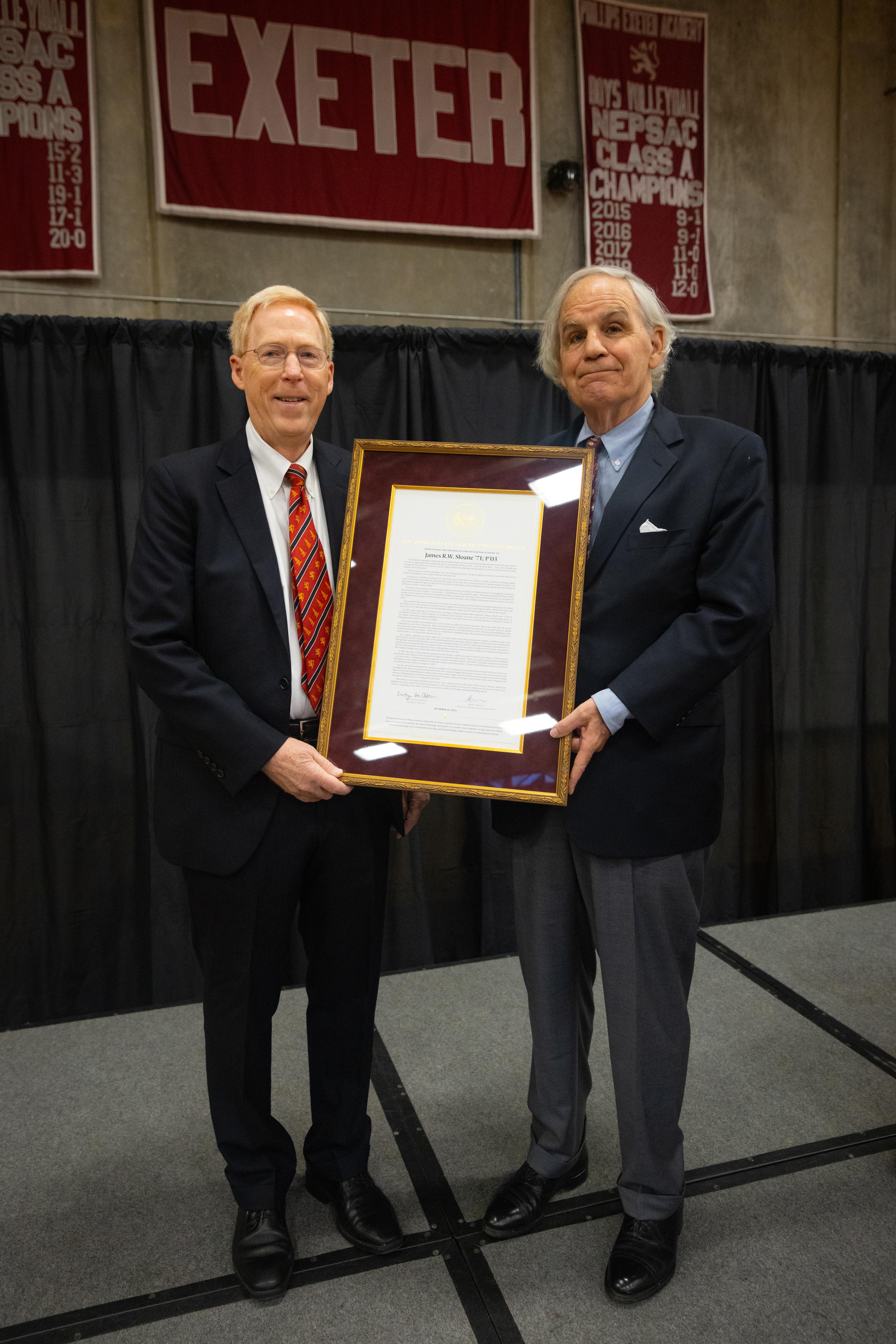
He returned to campus in October to accept this year’s John and Elizabeth Phillips Award, which recognizes an Exonian who has contributed significantly to the welfare of community, country and humanity.
Sloane enjoyed a diverse career that included reporting for newspapers and more than a decade of executive roles in the insurance industry before he started teaching at Bunker Hill Community College in 2006. His tenure began with a night shift in the school’s tutoring center. He later became an adjunct faculty member in the college’s nationally recognized late-night classes.
Eventually, Sloane worked as senior special programs coordinator in charge of helping students transfer to four-year colleges.
A regular contributor to Inside Higher Ed, Sloane wrote extensively about low-income students, like the ones at Bunker Hill in Boston, grappling with adver-sity outside the classroom. In 2013, his open letter to President Barack Obama asked why the federal free and reduced lunch program for students didn’t con-tinue through college. Sloane’s work spurred lawmakers to persuade the U.S. Government Accountability Office to conduct the first study of food insecurity at U.S. colleges and universities in 2019 and led to new or proposed legislation addressing the problem at the local, state and federal levels.
“When you discovered that a student hadn’t eaten that day, you bought bread and peanut butter and made them a sandwich,” Sam Brown ’92, trustee and president of the Exeter Alumni Association, said while delivering the award citation. “You expanded on those efforts by soliciting donations from local businesses and helping to open a mobile food market on campus.”
In his acceptance remarks, Sloane spoke about teaching the whole student, saying, “We weren’t trained as social workers, but that’s what we became because students were hungry.” Thanks to local business support and the Greater Boston Food Bank, Sloane and his colleagues began distributing food on campus; more than 700,000 pounds of food have been dispensed since 2012. When they failed to get attention from the state government, they went to federal legislators like Sen. Elizabeth Warren of Massachusetts, leading to a nationwide program and legislative changes aimed at combating food insecurity.
Sloane told the Exeter students seated in Love Gym that hunger “has been the injustice I’ve sought to solve. You’ll find your own,” he added. “You will come across an issue that you simply can’t turn away from — so don’t. Instead, get to work.”
Sloane and Brown were joined onstage by Principal Bill Rawson ’71. In addition to speaking in assembly, Sloane joined students in class discus-sions, visiting a session of the integrated studies course Social Innovation and the religion, ethics and philosophy course The Ethics of the Marketplace. He also attended a luncheon with students at the Class of 1945 Library.
About the Award
The John and Elizabeth Phillips Award was inaugurated in 1965 at the behest of the Academy Trustees and the Executive Committee of the General Alumni Association. The award honors Exonians whose lives and contributions to the welfare of the community, country and humanity exemplify the nobility of character and usefulness to society that John and Elizabeth Phillips sought to promote in establishing the Academy.
To watch the award assembly, visit exeter.edu/assemblies