Artful Intelligence
Instructor in English Tim Horvath on AI and the human act of making meaning
By Tim Horvath
Fall 2025
The first day of ENG534: What Artifice; Whose Intelligence? AI Through a Literary Lens, I handed my students a packet containing three very short stories. One was an AI-generated story from a program developed by Imogen Casebourne in the 1990s, with subtle lines like, “Filled with hatred for Rebekka, Emma thirsted for revenge.” One was a burst of a story about grief by the very human author Rebecca Fishow that was published in the first-rate journal SmokeLong Quarterly. And one was hot off the algorithmic assembly line courtesy of Open AI, whose CEO, Sam Altman, boasted that “we trained a new model that is good at creative writing.” All identifying information was obscured. “OK,” I said. “One of these stories was written by a human. Your mission — should you choose to accept it — is to figure out which.”
The conversations the next day were boisterous … and sobering. In one class, only one student correctly ID’d the human story. Many were torn and, at the reveal, I felt an undertow of despair in the room: “If AI can write like this, we’re doomed!”
I, too, had been struck by the story written by Open AI — it had flaws, but what first draft doesn’t? One moment had given me particular pause: “I said, ‘It becomes part of your skin,’ not because I felt it, but because a hundred thousand voices agreed, and I am nothing if not a democracy of ghosts.” A democracy of ghosts? That’s a line that I would likely have noted in a published book. A line I wouldn’t have been ashamed to write — maybe even patted myself on the back for.
It turns out that “a democracy of ghosts” is indeed from a published book — straight out of Vladimir Nabokov’s Pnin. It was “scraped,” along with unimaginably vast quantities of other phrases from the published books that make up several lobes of Open AI’s “brain.” And the rest of the story? Who knows how its tokens, more finely sliced, diced and plated to resemble words, thoughts and ideas were generated? Beneath the silicon surface masquerading as skin lay countless hours of human experience, human labor — the euphoria, confusion, striving, heartsickness, angst, lethargy, hunger, curiosity, incomprehen-sion, contentment, hilarity, longing and ingenuity recorded by people over centuries.
What we were hearing was the thundering reverberation of trillions of pulsing synapses.
I’m not a Luddite. I write on a laptop, have to remember to silence my phone in class, have gotten sucked into Reels more times than I want to admit. And I’ve used AI to create an app that helps me study Spanish by reading Cortázar. (Take that, Duo!) The algorithms and I are no strangers. And yet, as we hurtle into this Brave New World, I wonder if the most underrated technology yet invented is the brake.
That’s really what this class was for me — an opportunity to slow down. To think alongside my students about what kind of present we’re living in and what sort of future we’re sowing the seeds of. The world they’ll inhabit. Sometimes, hearing statistics and doomsaying about the use of AI for shortcuts, it’s easy to imagine a divide — students embracing AI, teachers tearing their hair out. But the students in my classes were thoughtful, wary, critical. In their Human Journals, they reflected on everything from the prospect of AI companions to the environmental toll. And they made it personal. They wrote about the hope of restoring vision, about the way translation had brought them closer to their families. They imagined what it might be like to be a conscious machine. They wrote with candor and wonder.
It’s tough to slow down when the hype is breathless, ubiquitous. My inbox is inundated with news about the latest AI breakthrough; YouTube influencers want me to know how I can become a ChatGPT Iron Man in Under Five Minutes. Speed is enthralling, alluring, addictive. And when we see the speed with which large language models mimic actual thinking and creativity, it’s easy to stand slackjawed.
How do you persuade people to row when hovercrafts are in view, soaring above the water?
And yet, we have crew teams — dedicated to doing just that. When it comes to athletics, we grasp that merely maximizing performance with technological wizardry isn’t the goal. Without the friction of oar displacing water, the stretch and release of rib cage, the rush of self-propulsion, what, after all, are we left with?
Annie Dillard writes, “How we spend our days is how we spend our lives.” When it comes to writing and making art, we’re talking about the making of meaning itself. For that, in fact, is so much of what I am striving for in my teaching. I’d say the making of meaning is itself a kind of muscle, one that calls not for artificial intelligence but what we might call artful intelligence. (Note: The internet tells me this is far from an original coinage — it has, of course, been used and copyrighted, and is being monetized.)
Like my students, I’m anxious about what hap-pens when we yield the capacity to make meaning to a mechanism. AI might be capable of great, life-saving and -enhancing feats. But we need to get far savvier at discerning who we are and what kind of world we want to live in. Otherwise, I shudder at how much of our humanity we’ll cede in our thrall to algorithms; I wonder if we risk becoming a democracy of ghosts.
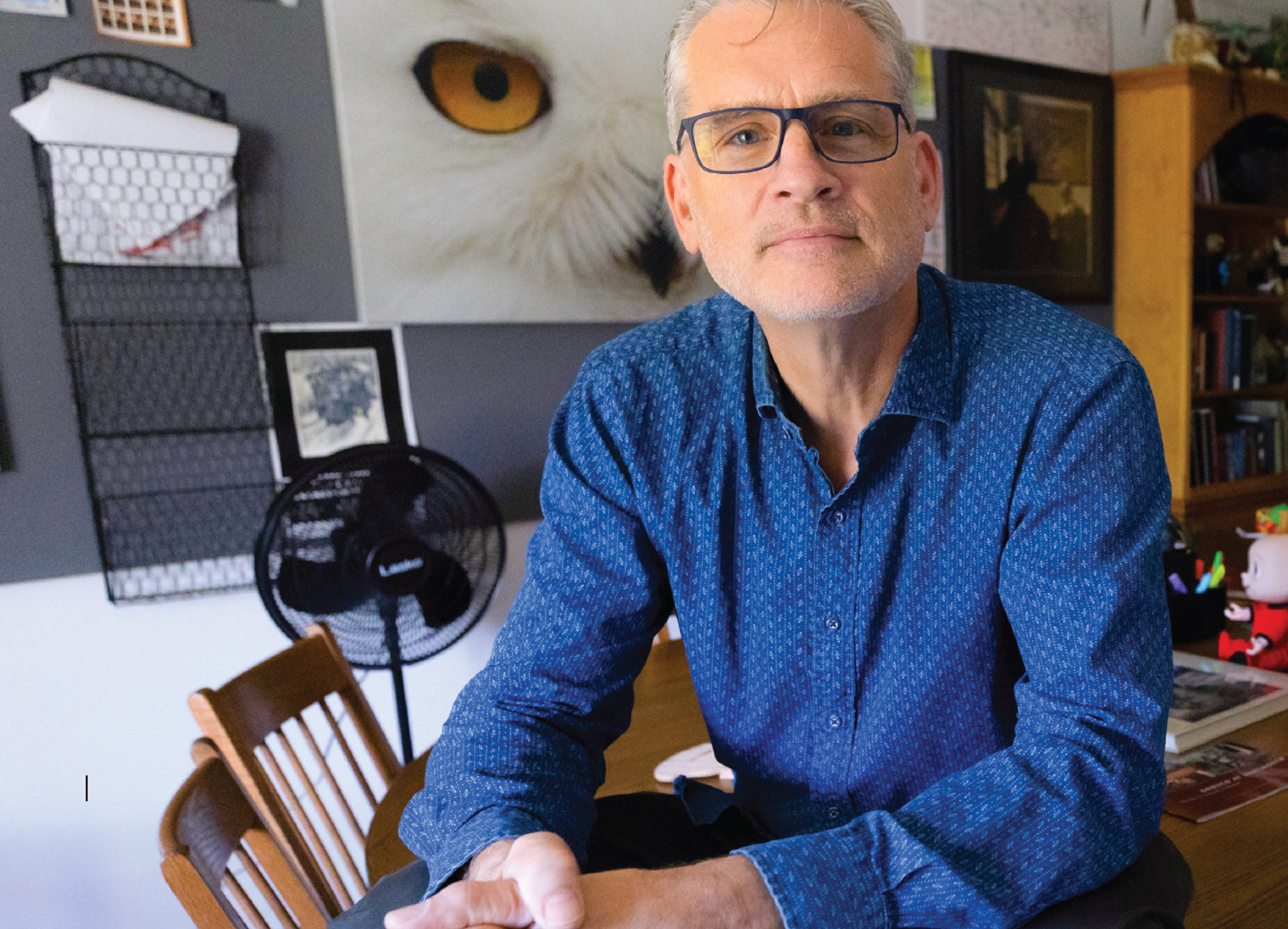
Tim Horvath is an instructor in English at the Academy and teaches creative writing in the MFA Program for Writers at Warren Wilson College. He is the author of Understories and Circulation, and his stories have appeared in Conjunctions, AGNI and other journals. He is working on his first novel.
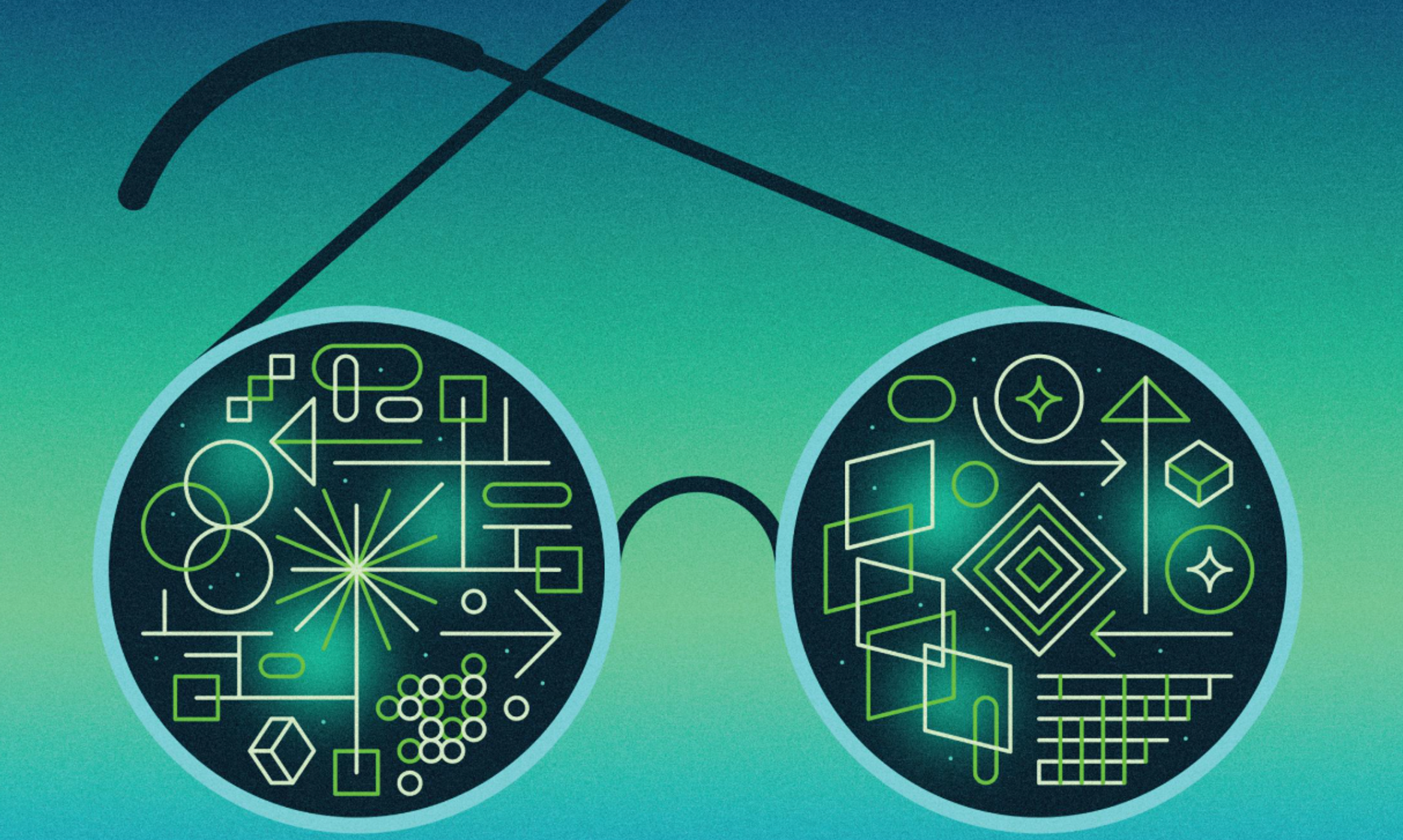
ILLUSTRATION BY GREG MABLY
2025 ALL-FACULTY SUMMER READING
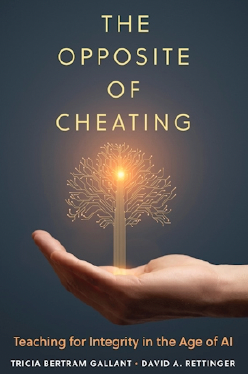
The Opposite of Cheating: Teaching for Integrity in the Age of AI, by Tricia Bertram Gallant and David A. Rettinger