Professional Development
What Science Instructor Tanya Waterman saw and learned on a faculty trip to Iceland
By Sydnee Goddard Instructor in Science
Fall 2025
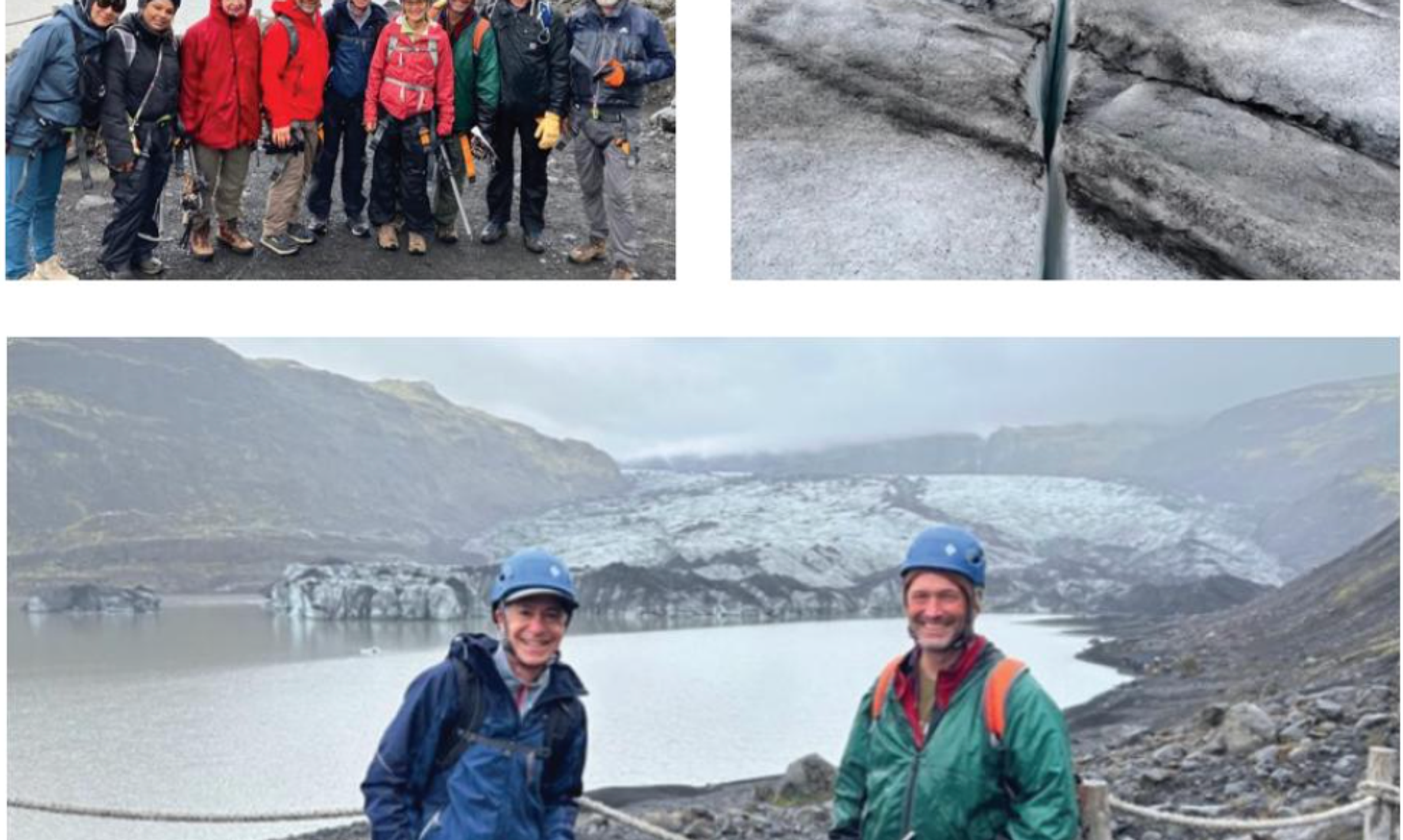
In August, eight Science Department faculty members traveled to southwest Iceland for a six-day educational journey. With backgrounds in physics, chemistry and biology, the instructors immersed themselves in the living classroom of Iceland’s volcanic landscapes, geothermal energy systems and inventive approaches to sustainability. The trip was planned by Science Instructor Albert Legér and Global Initiatives Director Patty Burke Hickey to ensure the excursion supported the Academy’s teaching needs. Here is Tanya Waterman’s reflection about the trip.
↑ “On the way to climb a glacier, Oli cautioned us, ‘nothing is as it seems …’ The solid ice is covered with black granular deposits from nearby volcanoes, and it looks like a lava hill; yet, we were stepping on ‘solid’ ice, covered with a thin layer of volcanic debris and a veneer of vegetation — mostly mosses and lichens. Eventually, we found ourselves on ice that looked as expected — white and bluish. Sadly, from that vantage point, we could see the extent of the retreat of the melting glacier. Considerable volume has melted within the past couple of decades; the melted footprint area is now a sizable valley with a lake.
“We heard the cracking of the ice as it cleaved and melted. We knelt and drank water from the rivulets running rapidly in shallow spots — might this be glacier tears?”
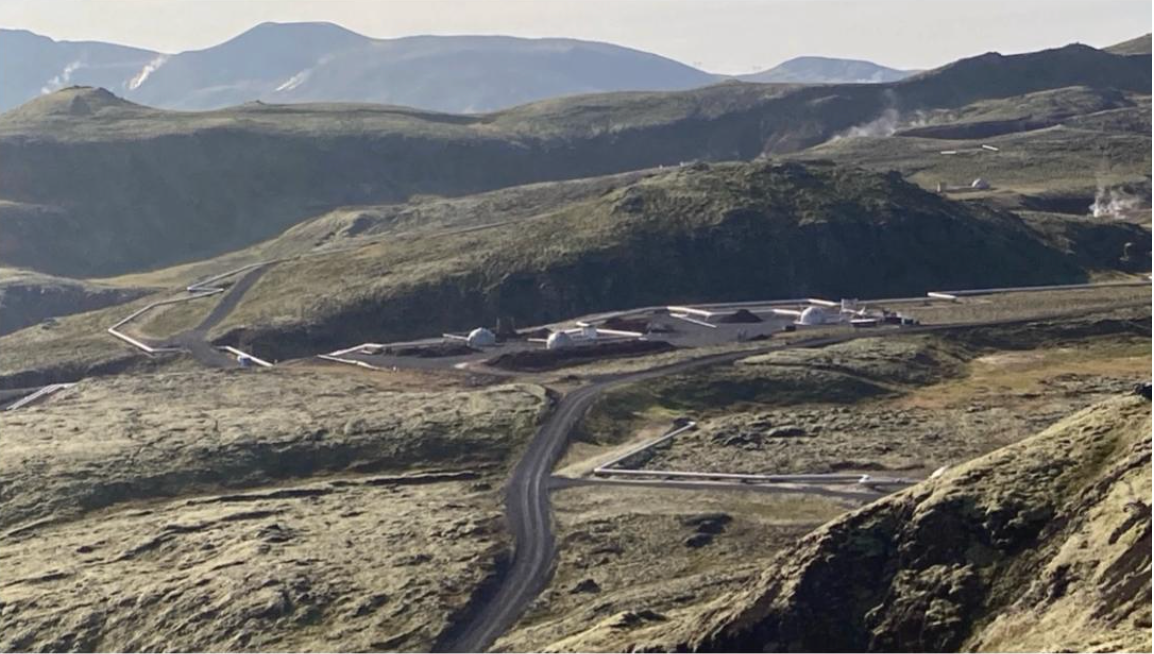
↑ “During a truly immersive learning week, every day
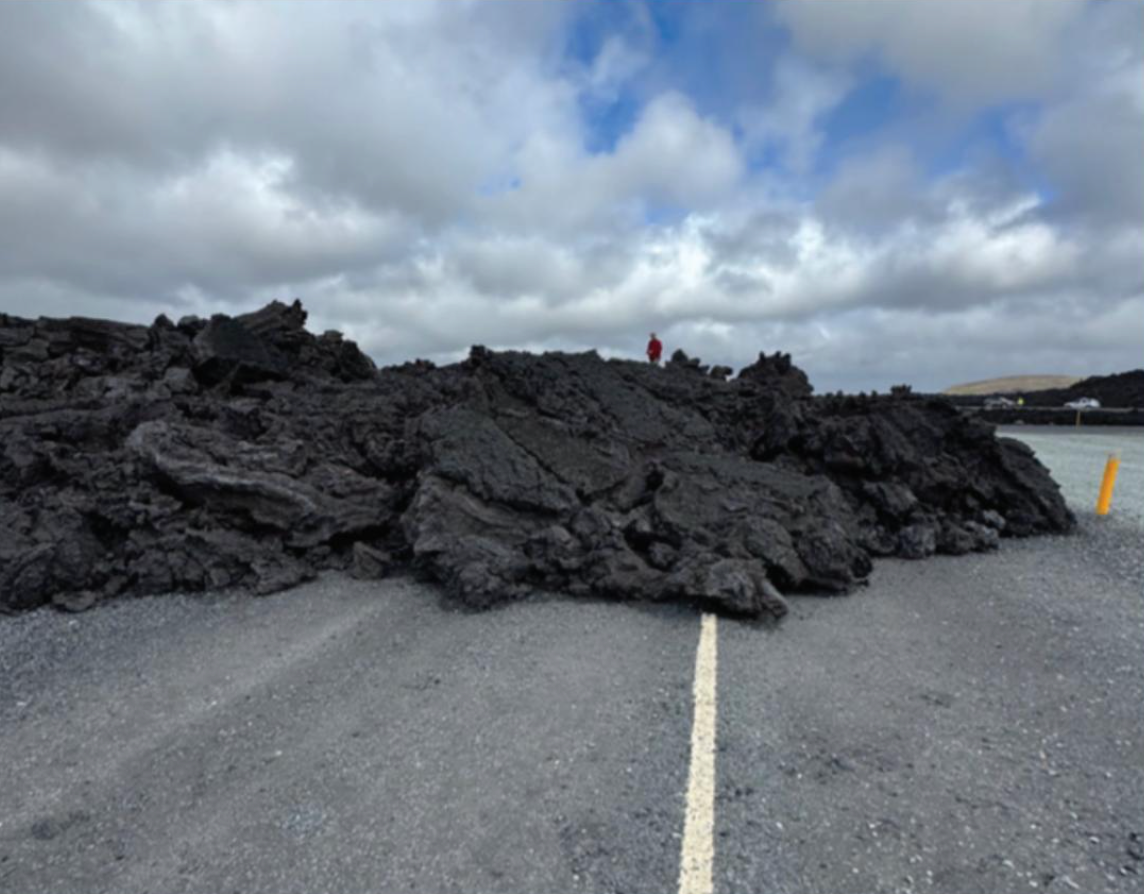
was packed with both knowledge of facts and visceral experiences. While we were on a land of many active volcanos, we were at ‘the safest place on Earth,’ according to our group leader Olafur Jon Arnbjornsson, or ‘Oli,’ because seismic activity is continuously monitored and broadcast like the weather is in the U.S. Icelanders receive SMS alerts on their phones from the Department of Civil Protection and Emergency Management; there is careful mitigation planning and the precautions and alerts are obeyed.”
↑ “Traveling by car each day, we saw miles upon miles of hot water pipes along the road and zigzagging the valleys, going from the geothermal power plants to towns, for distribution in homes.”
“I was thrilled to learn how the carbon capture company pumps carbon-dioxide-rich water back into the earth to solidify within the basalt.”
—Sydnee Goddard, Instructor in Science
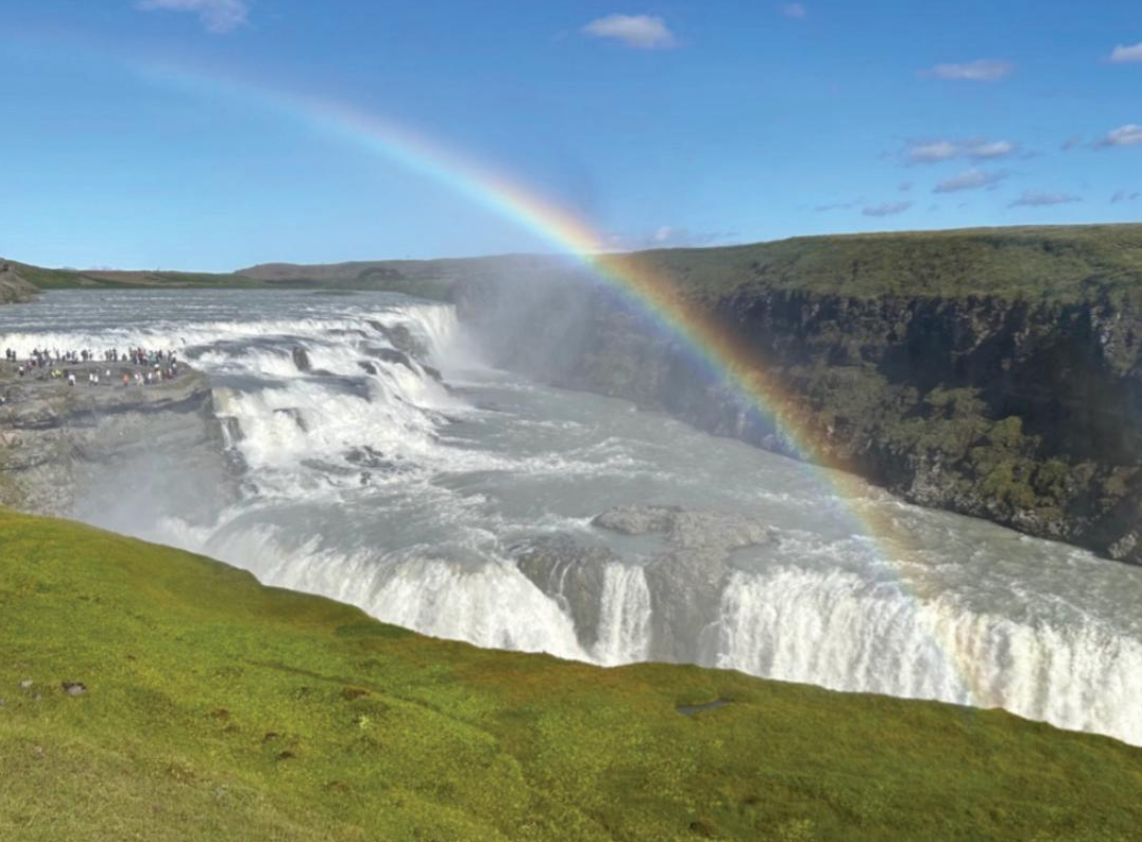
↑ “A parallel component of our education was the social history of the Icelandic nation. Our group toured historical places, and our guides explained how and why Icelandic culture is centered on personal responsibility, integrity and getting along for the good of the nation. It makes sense to evolve a community-minded ethos, as it is necessary to do so when living and facing nature on the island ‘of fire and ice.’
“Indeed, there is an overabundance of geothermal energy. So
how much should a nation use? When should it stop excess profiting? At Gullfoss waterfall (pictured above) we saw a bit of Icelandic ethos.
“Sigridur Tomasdottir (1871–1957) advocated to keep Gullfoss waterfall undeveloped. She opposed the group of farmers (including her own father) who wanted to sell the power generated to industrial concerns. We walked along and were awed by the power and beauty of the water. Had she not fought for the waterfall, there would probably be an aluminum smelting plant in this paradisiacal spot today. ‘Just because the energy is there and it is free, the nation should not ruin its nature just to make money,’ she advocated.”
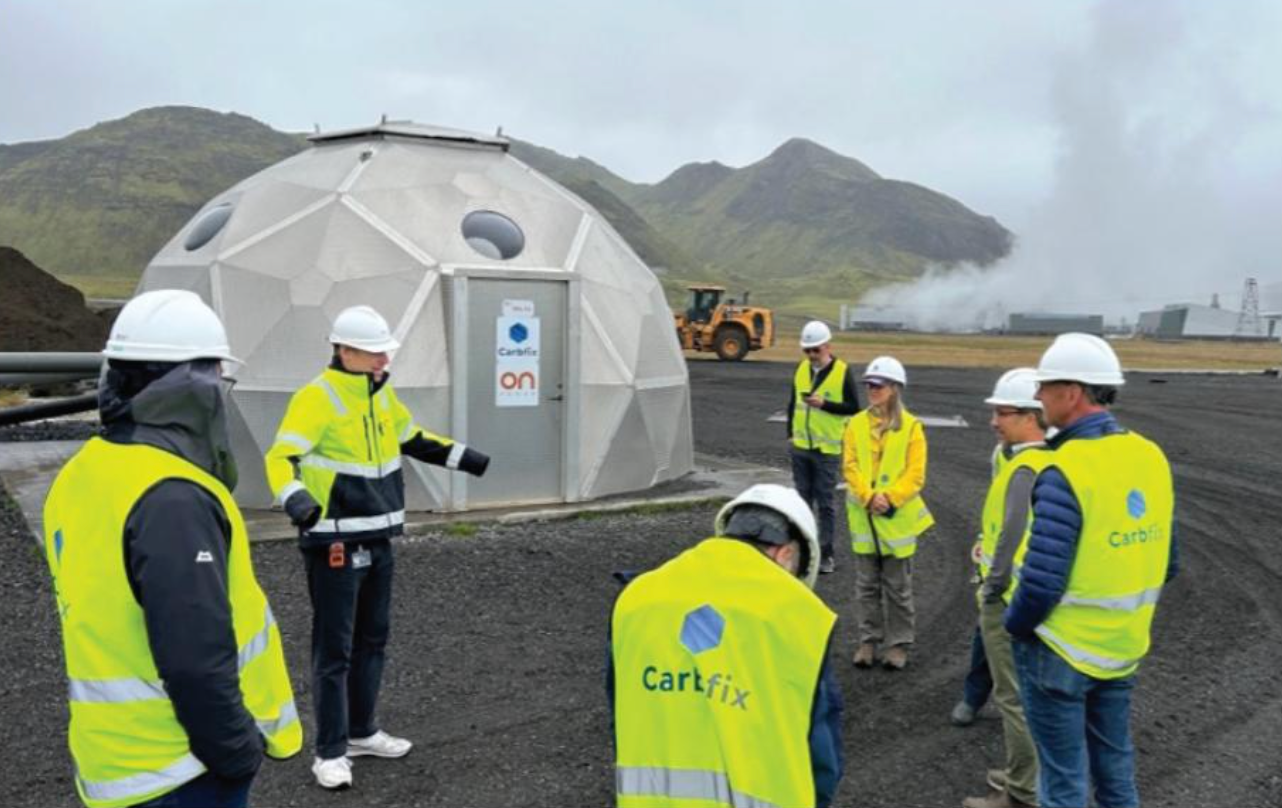
↑ “Our visit at the Hellisheiði Geothermal Power Plant was filled with chemistry and physics: energy cycles, geothermal dynamics and systems (physics of feedback loops), and also Iceland’s role in geothermal innovation and mitigation of climate change. We learned about the CarbFix project,
of carbon capture and its mineral storage in underground basalt, and the chemistry of sustainable solutions. Our guide proclaimed, ‘The whole of Iceland is a geothermal power plant!’”
“To be in conversation with a living author who is immersed in the cultural significance of a global science-informed issue was fascinating.”
—Susan Park, Instructor in Science
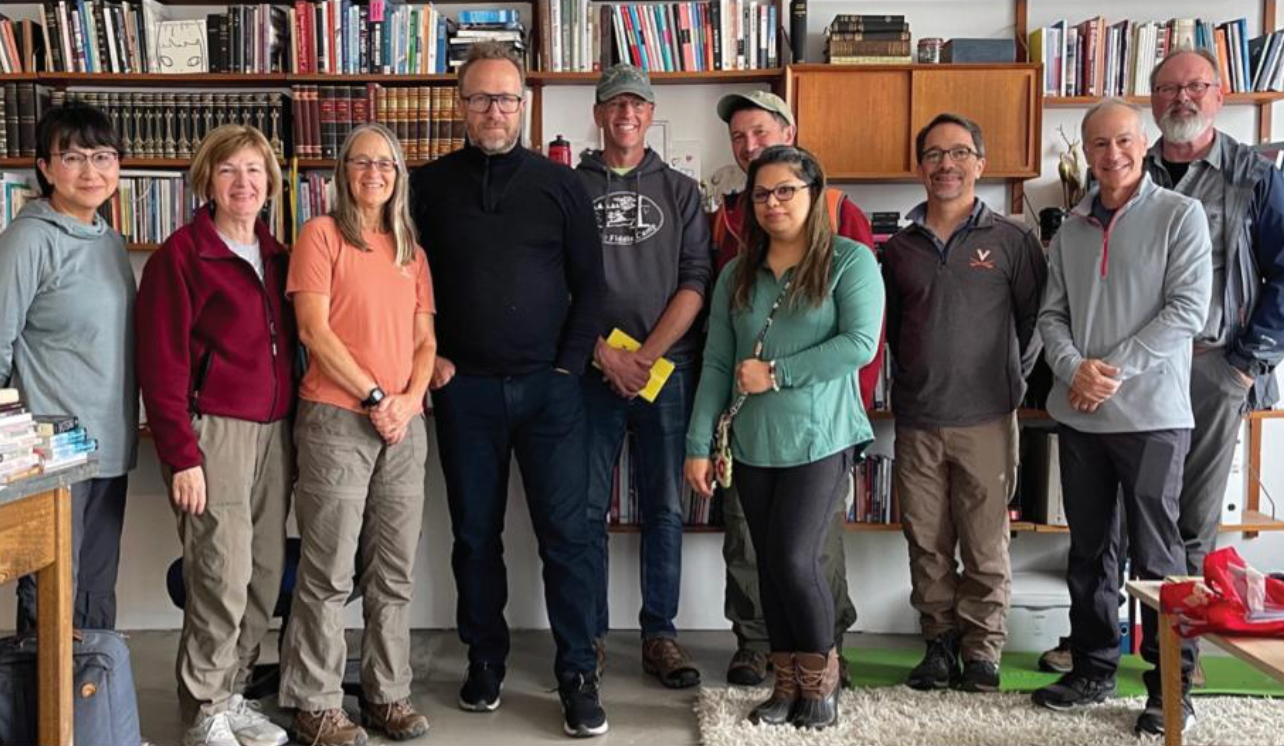
↑ “Our meeting with writer Andri Snaer Magnason was a much-anticipated event as we had read his book On Time and Water before the trip. Our discussion with Magnason was a master class on human psychology, shortcomings, possibility and hope for solutions.”
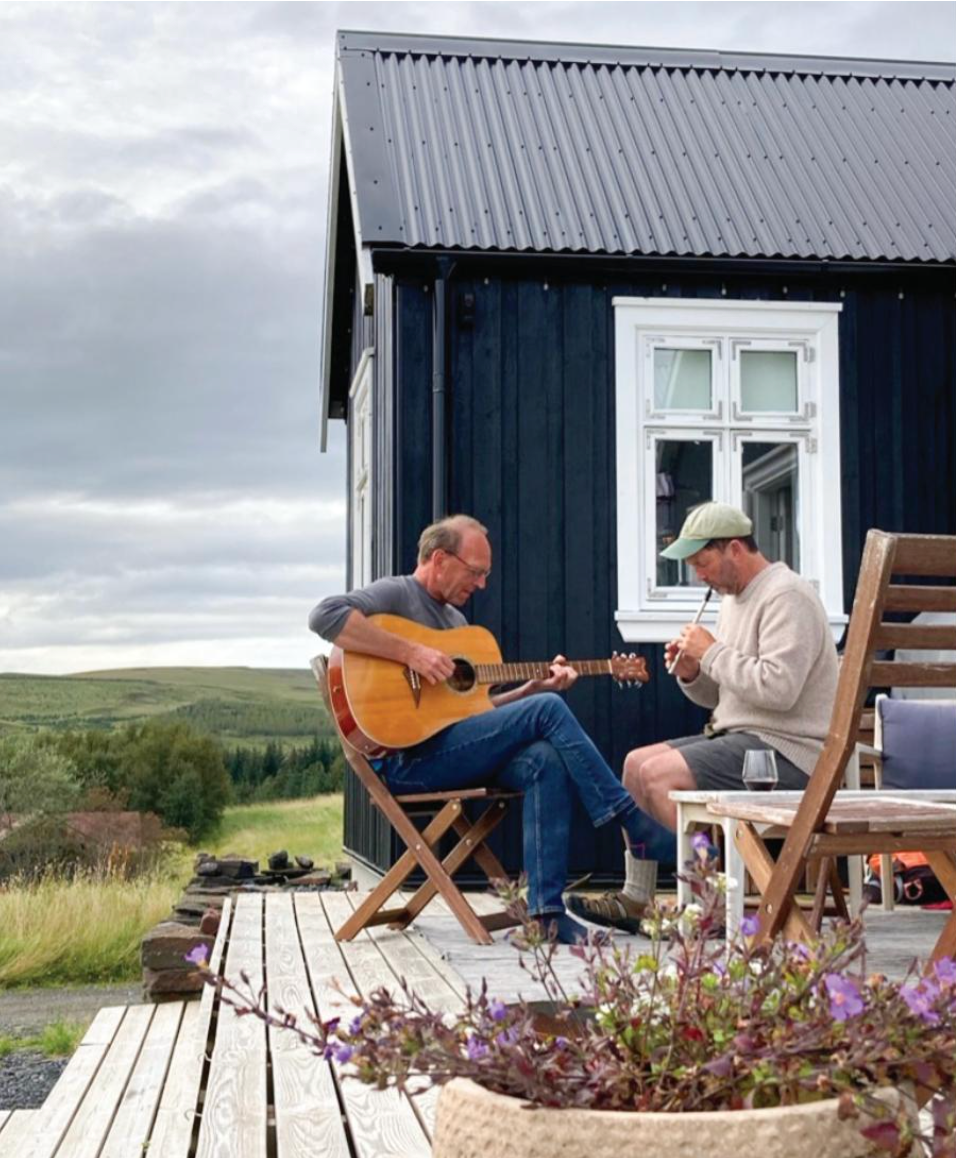
↑ “On our last evening, we were treated to a dinner cooked by our guides at their farmhouse. They keep instruments at home — for their guests! Oli read to us a bit of a saga, and [science instructors] Brad [Robinson] and Jim [DiCarlo] played guitar and whistle. The family joined in with a traditional song.”