Artificial Intelligence
How new technology is reshaping everything we do
By Debbie Kane
Spring 2025
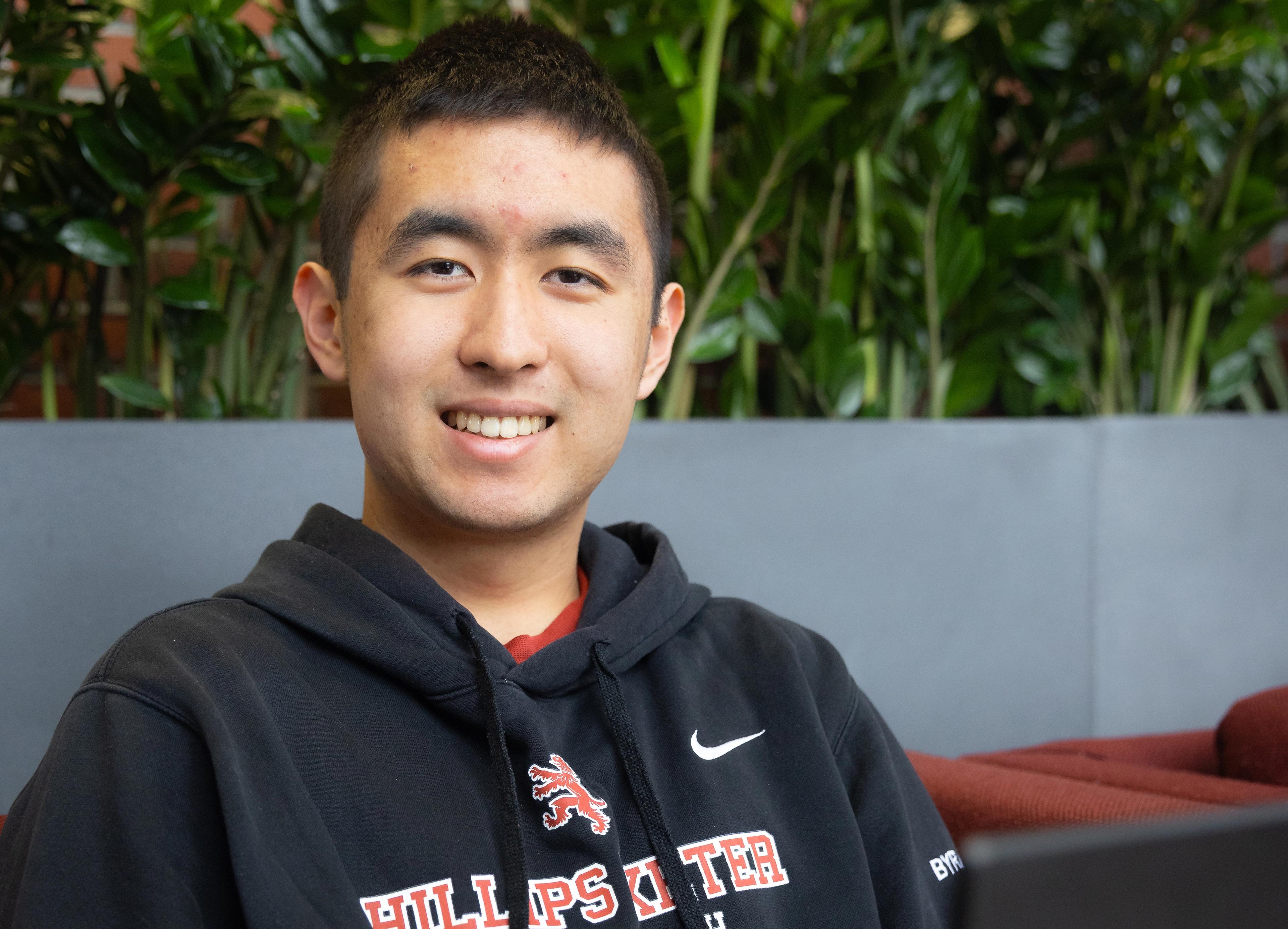
In 1994, Jimmy Lin ’97 predicted that artificial intelligence, or AI, would become a reality during his lifetime. He was 15 and competing against a small group of engineers and computer scientists for the Loebner Prize, awarded to the person who creates the most human-like computer program. Lin’s program was designed to recognize and respond to familiar key words in human speech. “I hesitate to call it artificial intelligence,” he told reporters at the time. “I like to refer to it as a bag of tricks.”
Although Lin didn’t win the prize, his comment that his “bag of tricks” was a precursor to something bigger was prescient. “In the late 1990s, chatbots were weird,” Lin says. “Now, chatbots are just chatbots and of course we can talk to machines.”
Computer programming has been part of Lin’s life since he was a child. “Among my earliest memories are sitting on my dad’s lap in front of an Apple II computer, and that was back when you had to hook the phone line up to a modem,” he says.
Today he’s recognized globally for his AI research, focused on natural language processing and building out data systems. A professor in the David R. Cheriton School of Computer Science at the University of Waterloo in Canada, Lin also co-directs the Waterloo Data and AI Institute. He’s chief scientist at Primal, a startup creating AI solutions for the legal and health care industries. “It’s my passion to share the power of generative AI,” he says.
The path to navigating the technology he says, is becoming AI literate. Lin coaches business and government leaders as well as educators — he has visited with Exeter students over the years — to understand AI and learn to use it. “The impact of generative AI will be no less than electricity and the steam engine,” he says. “As a society, we’ll be far richer for it.”

Jimmy Lin '97
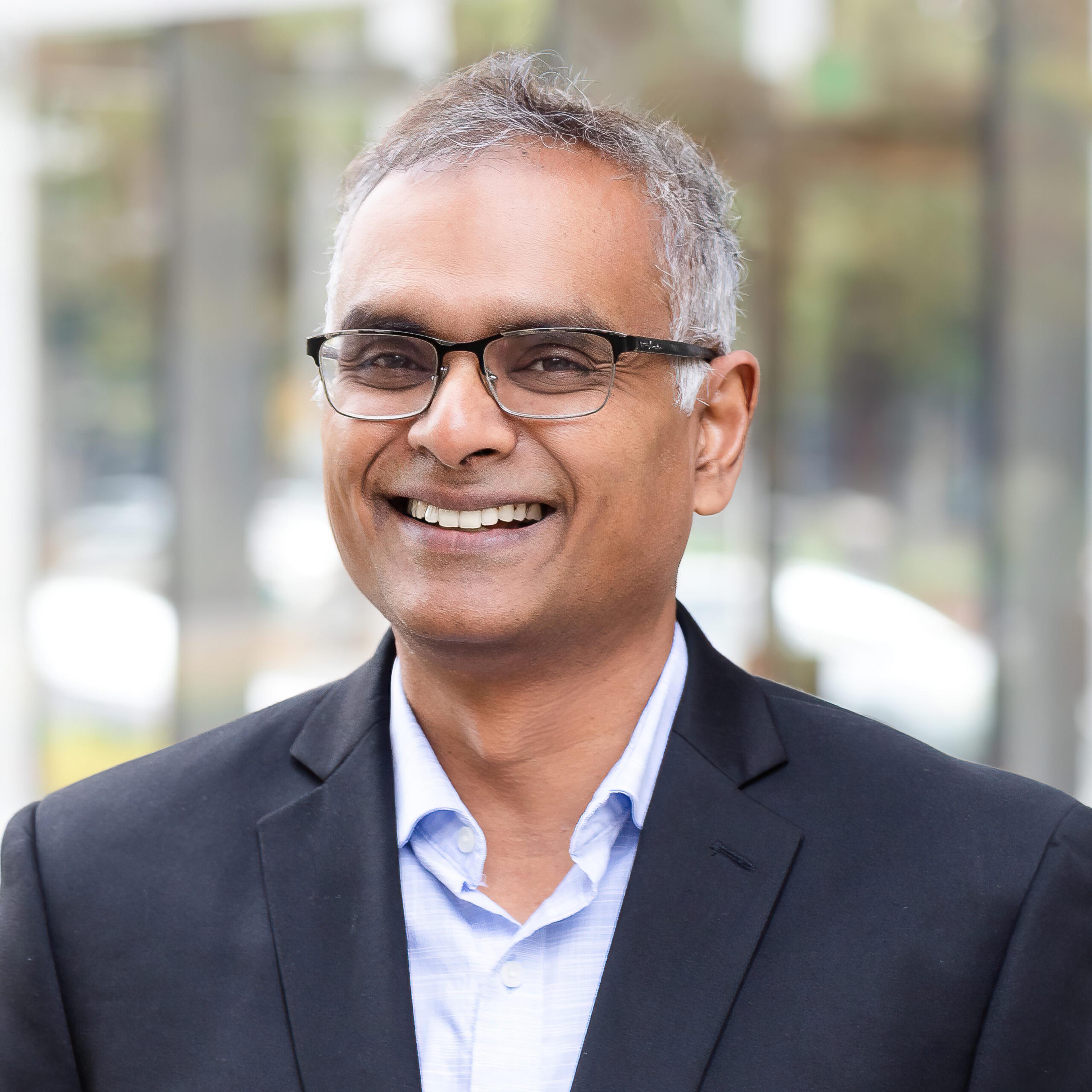
Vasu Parameswaren

Joseph Ahn '05
What is AI?
Once the purview of science fiction and dystopian movies, AI has become an integral part of our daily lives. Even if you don’t realize it, you have interacted with AI. It powers many behind-the-scenes processes, such as providing directions on your smartphone, assisting with online customer service or recommending movies on streaming services.
At its core, AI refers to a computer’s ability to mimic human capabilities like learning, problem solving and decision making. It can range from simple rule-based systems that follow basic “if-then” logic to more sophisticated algorithms that use reasoning to draw conclusions and make inferences from data. Large language models like ChatGPT are a type of AI designed to recognize, summarize, translate, predict and generate text and other content — including poems and college essays — based on user prompts or questions.
AI has also evolved to incorporate machine learning, in which computers can identify patterns in data and apply them to new tasks without being explicitly programmed for each one. In the case of a self-driving car, the car’s AI doesn’t just follow a preset route; it can assess traffic conditions, identify road hazards, recognize lights and pedestrians, and predict the fastest or safest route — all while making real-time decisions.
“What we thought of as AI in the 1950s and 1960s was based on algorithms: a sequence of steps to solve a problem,” says Vasu Parameswaran, chief technology officer and vice president of advanced development and science at percipient.ai. “But the real world is messy. It’s very difficult to mathematically model images. As computers became cheaper and data became more ubiquitous, the paradigm shifted to using neural networks to process information.”
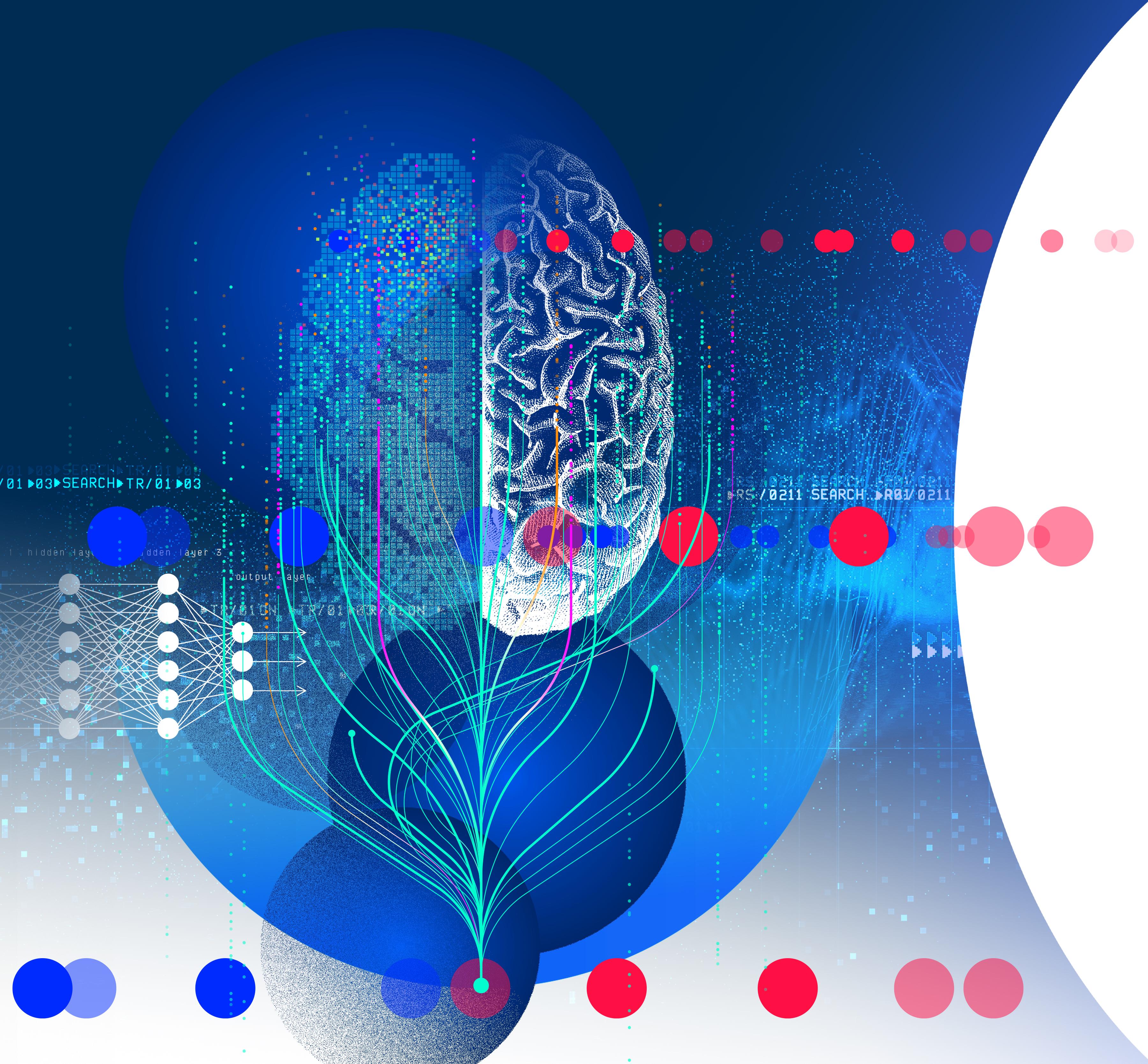
A neural network is a machine learning model that makes decisions in a way that imitates the human brain. By simulating how biological neurons work together, it can identify patterns, weigh options and draw conclusions.
Exeter alumni are at the forefront of the AI transformation. This winter, more than 200 alumni gathered remotely for an industry panel about AI. Hosted by the Office of Institutional Advancement and moderated by Director of Studies Jeanette Lovett, the panel featured Joseph Ahn ’05, Ayush Noori ’20 and Trustee Christine Robson Weaver ’99. They had a lively discussion about the implications of AI as well as its benefits and risks. “AI is a huge democratization force,” Ahn says. “Its ability to equalize opportunities for people by giving them more information is exciting.”
We spoke with the panelists and others about the ways the technology is reshaping their professions as well as its promises and challenges.
AI and finance
AI has the potential to democratize financial processes, minimize paperwork and make Wall Street knowledge available to more people, Ahn says. For years, the finance industry has leveraged sophisticated analytics and data from AI to improve efficiency. The technology gives stock traders additional knowledge to inform decisions; it’s also used to detect and enhance consumer credit card fraud by monitoring for unusual usage patterns. But AI’s ability to collect and analyze large amounts of data makes it particularly useful to an industry that thrives on information.
Ahn and his brother, Daniel, run Delfi, what Ahn calls “the first AI investment bank.” The AI financial “copilot” they developed enables Delfi to deliver balance sheet hedging strategies and analytics for banks, credit unions and asset managers. “AI and machine learning risk management algorithms makes this type of analysis available to everyone, enabling them to make better investment decisions,” Ahn says. “Our business model wouldn’t exist without AI.” Currently, he says, 50% of the world’s GDP does not engage in capital markets. “That’s a missed opportunity,” he adds. “We can expand that up to at least 75%.”
AI also automates tasks like risk identification and quantification in the field of mergers and acquisitions (M&A). Generative AI can examine public sources (like press releases, financial reports, prospectuses and more) for information on a specific company; it can also organize uploaded documents and screen for sensitive information, and analyze legal documents. With the increase in data access and resulting transactions, “I predict we’ll see smaller M&A firms created and more division of functions,” Ahn says.
He believes that AI’s greatest opportunity in financial services is financial literacy, enabling people to trade more effectively and make better investment decisions. More people than ever are participating in the stock market. “They should be given the tools to engage in it using best practices,” Ahn says. “A financial AI can tell you what choice to make and why. You’ll learn something from it even if you don’t agree.”
One challenge with using generative AI in the financial arena is overcoming privacy issues — for example, accessing sensitive financial data or exposing it through security breaches — and large language models’ tendency to “hallucinate,” or invent facts. Uneven access to the technology could expand the digital divide between modern and developing economies.
“I don’t know if we ever will be at the point where we’ll just trust financial AI to make all the decisions for us,” Ahn says. “But what it can do is democratize knowledge and best practices, and allow people to deal with the overwhelming amount of logistics and paperwork needed to execute a transaction.”
AI and national security
For decades, the American intelligence community has considered AI a critical tool to address national security threats. The U.S. military uses AI to create efficiencies in data analysis, procurement and more, says Creighton Reed ’90, a former Marine and a consultant in national security technology. “There’s been AI and machine learning to help sift and sort things in the intelligence world for a long time,” Reed says. “A lot of the technologies used by us now, such as GPS, email and the internet, was created by the military.”
The U.S. Department of Defense (DOD) started researching AI in 1958, when it formed the Defense Advanced Research Projects Agency (known now as DARPA). In the 1990s, the U.S. military used an AI program called DART (Dynamic Analysis and Replanning Tool) to solve logistical challenges like moving supplies or personnel and saving millions of dollars. The military has also funded research into the development of autonomous cars as well as robots, and has used autonomous weapons like mines, torpedoes and heat-guided missiles in warfare.
More recently, DOD’s Project Maven uses machine learning and deep learning (algorithms that help computers recognize objects and text in images and videos) to help intelligence analysts sift through thousands of hours of video or photographs to find objects of interest. “AI doesn’t replace the analysts that review this information,” Reed says. “It helps them with the huge amounts of data they get on a daily basis and saves them time going through it.”
AI-powered weapons — drones and robots — are actively deployed in warfare. The U.S. military is also building unmanned aircraft, ground vehicles and submersibles for data collection and, potentially, strike capabilities. Because this technology is developed by industry and academic AI experts outside the military, it raises ethical questions about the ways AI research is used.
“There’s a growing understanding that we need to invest in AI because we are up against adversaries, or what we call peer competitors, who are rapidly advancing their capabilities in this realm,” Reed says. “The fear is that you’re taking a human out of the decision loop. What happens if that decision making is done by a computer?”
Now and for the immediate future, Reed says, humans are making those decisions.
A student perspective on AI
By Sofiya Goncharova '25

When Sofiya Goncharova’25 noticed how immersed her peers and teachers were in AI, she decided to demystify the technology for others. For her senior project, she created Co[de]pendent: Living Alongside AI, a podcast she describes as a place “where we explore the quirks, questions and quiet revolutions of living in a world that’s not just human anymore.”
Goncharova’s interest in AI stemmed from research she did over the summer at Yale University’s Social Robotics Lab. Working on a study about human responses toward robots, she learned how manipulative AI technology can be. “We wanted to understand how people adjust their feedback based on how competent they think the robot is,” she says. “People’s sentiment about the robot would change depending upon the robot’s behavior. That got me thinking about AI and how it impacts us.”
An example of AI’s manipulative power are the algorithms used on platforms like YouTube and TikTok, she says, and how they shape what users see. “They actively steer our behavior by amplifying content that boosts engagement often in subtle or emotional ways,” Goncharova says. “I see that kind of influence in how quickly narratives or trends catch on with my peers, often without them realizing it. That deeply impacted how I view AI and inspired me to create the podcast.”
Goncharova’s podcasts, developed in consultation with Computer Science Instructor El Kaplan and Religion, Ethics and Philosophy Chair Tom Simpson, address timely AI topics. She examines the effect of AI on art with photographer and artist Derin Korman, a photography teacher at the Commonwealth School in Boston. Korman trained a machine learning model to compare his original work with the AI-generated work. “The takeaway is that you need to know your intention with using AI and acknowledge that it’s part of your work,” Goncharova says.
In other episodes, she tackles the influence of AI on politics (“The EU is much further ahead of the U.S. in terms of legal controls on AI,” she says) and has a conversation with Director of Studies Jeanette Lovett on AI’s effects on education and the workforce. “My goal is not to lead to conclusions,” Goncharova says. “I just want to inform people about the concepts.”
AI and healthcare
AI is being used in the health care industry in increasingly novel ways. With 4.5 billion people worldwide lacking access to essential medical services and a health worker shortage of 11 million anticipated by 2030, according to the World Health Organization, AI can help bridge the gaps.
“I’m excited about how we can use AI to advance scientific discovery and enable personalized, effective health care,” says Ayush Noori ’20, a Harvard University senior and Rhodes scholar, who is developing AI tools to personalize diagnostics for people with neurological disorders and participated in the Exeter panel. “AI will better help us understand disease pathobiology and work towards novel diagnostic and therapeutic options.”
This work is being done at the MassGeneral Institute for Neurodegenerative Disease, where Noori and a team of researchers developed machine learning-based methods (called a natural language processing-powered annotation tool) to review data and clinical notes, creating a faster, more reliable method of determining whether a patient has dementia or other types of cognitive impairment. A team of scientists and clinicians at Harvard’s Wyss Institute for Biologically Inspired Engineering, including Noori, are training large AI models to predict drug repurposing and develop more effective treatments for bipolar disorder.
“I’m excited about how we can use AI to advance scientific discoveries and enable personalized, effective health care.”
In addition to breakthroughs in diagnoses and treatments, AI is being leveraged to improve clinical care. “Eighty-one percent of doctors say they’re overworked; that affects their patient care,” Noori says. An AI model can be used as a clinical assistant to handle paperwork or do deep research on medical abstracts and more. As of this year, Noori says, 183 health care systems and providers across the U.S. have piloted or adopted 70 generative AI applications for tasks including clinical decision support, patient communication, clinical documentation, claims processing and health care administration.
For all its advances, AI-based clinical support systems that advance the quality and delivery of health care are still works in progress. “There’s always a human component to medicine,” Noori says. “AI won’t replace doctors, but it can make their jobs easier.” It will potentially relieve doctors of paperwork and other burdens, and help patients better navigate the medical system — paradoxically, making it more human.
AI and the future
AI is here and it’s changing everything we do, including how we bank, interact with our doctors and shop. (The use of AI in retail is predicted to grow to $54.92 billion by 2033 from $11.83 billion in 2024). As with any disruptive societal change, the technology raises questions about inaccuracy, biases, privacy, copyright and more. “What happens if generative artificial intelligence improves things across the board but creates a gap in access, for example, between men and women?” says Trustee Christine Robson Weaver ’99, a data product lead at Google who was a panelist. “You have to set a higher bar for the technology.”
Most of the leading companies creating AI technologies — including Google, Microsoft and OpenAI — have developed mission statements that outline their goals for using AI. Weaver was on an internal Google team that developed the firm’s AI principles based on improving the user experience while protecting their safety. “There is so much science fiction around AI and so many issues that people think about,” she says. “I favor AI safety decisions that are tactical, like AI alignment. Does the model do what I say it’s going to do most of the time? I’m interested in how it interacts with users.”
She favors the use of policy “layers” that define safety at different levels, both at the corporate level and through individual product policies. Those layers act as a final check before exposing the product to end users. “Having access to quality data is important for the development of AI models,” Weaver says. “Having compliant-safe data and the right tools to work with that data and track what’s being done is critical.”
Karl Cobbe ’09, a research scientist at Open AI, which created ChatGPT, shares Weaver’s concerns about the data that feeds the AI models and the validity of what the models churn out. “A big issue with large learning models are hallucinations: They make up facts,” Cobbe says. “We’re trying to make the models better at reasoning.”
AI development also taxes natural resources. According to the Allen Institute for AI, one query to ChatGPT uses approximately as much electricity as one lightbulb for 20 minutes. Each question a chatbot receives is routed to a data center, which uses a lot of energy and contributes to greenhouse emissions. Google and other tech companies are still engaging with that problem.
Exeter alumni working in and around AI are excited about its potential and cognizant of its risks. “We as a society need to grapple with the question of whether AI will take people’s jobs,” Cobbe says. “Progress made in the last four years is astonishing, and no one says it’s going to slow down.”
As the technology rapidly evolves, everyone should be familiar with what it is and offers, Jimmy Lin ’97 says. “The moment you hand your child an iPad, you’re giving them a tool with AI on it. You need to be aware of the potentially toxic content and the biases the technology has. Everyone from kindergarten age up to seniors needs to know how AI works and its effect on them.”
A brief history of artificial intelligence

1796
Jonathan Swift’s satiric novel, Gulliver’s Travels, refers to the Engine, a large contraption used by scholars to generate new ideas, sentences and books.
1950
British mathematician Alan Turing publishes an academic paper addressing whether machines can think. He developed the Turing Test, a way to measure machine intelligence by assessing its ability to mimic human conversation and behavior. (The Loebner Prize competition is based on the Turing Test.)
1956
Dartmouth College mathematics professor John McCarthy coins the term “artificial intelligence” during the Dartmouth Summer Research Project on Artificial Intelligence, a conference exploring how machines could simulate human intelligence.
1958
Perceptron, the first artificial neural network, is developed by American psychologist Frank Rosenblatt. The program makes decisions in a way similar to the human brain. It can distinguish between punch cards marked on the left and right and is described by its creator as the first machine capable of having an original idea.
1960
Adaline (Adaptive Linear Neuron), a single-layer artificial neural network, is developed by Stanford University professor Bernard Widrow and his student Marcian Hoff. It’s an adaptive system for pattern recognition and the foundation for future advances in neural network and machine learning.
1997
Deep Blue, developed by IBM, is the first computer system to defeat a reigning world chess champion, Garry Kasparov. The computer’s underlying technology advances the ability of supercomputers to tackle complex calculations to perform tasks like uncovering patterns in databases.
2012
AlexNet, a deep learning neural network with eight layers, is a breakthrough in image recognition, identifying images of dogs and cars at a level similar to humans.
2017
Google Research develops Transformer, a neural network architecture that can train a computer to recognize the next word in a chain of words.
2019
OpenAI’s Generative Pretrained Transformer 2 (or GPT-2) demonstrates the power of natural language processing. GPT-2 is able to predict the next item in a sequence, perform tasks such as summarizing and translating text. GPT-3, introduced in 2020, is able to produce text often indistinguishable from human writing.
2021
DALL-E, a neural network that creates pictures from language prompts is introduced by Open AI.
2022
ChatGPT, Open AI’s chatbot, built on a large language model, introduces generative AI, which can create new content based on existing data. It can produce text, images, videos, audio and more.
2023
Google Labs releases Notebook LM, which summarizes up to 50 sources, including documents, videos and books.
2024
Using Google’s AI algorithms, Google Research and Harvard publish the first synaptic resolution of the human brain. Open AI releases Sora, an AI tool that creates videos from text, images and other video.