A Life's Work: Teaching
The Academy says goodbye to nine esteemed members of the faculty who collectively provided more than 300 years of service
By Meg Foley
Summer 2026
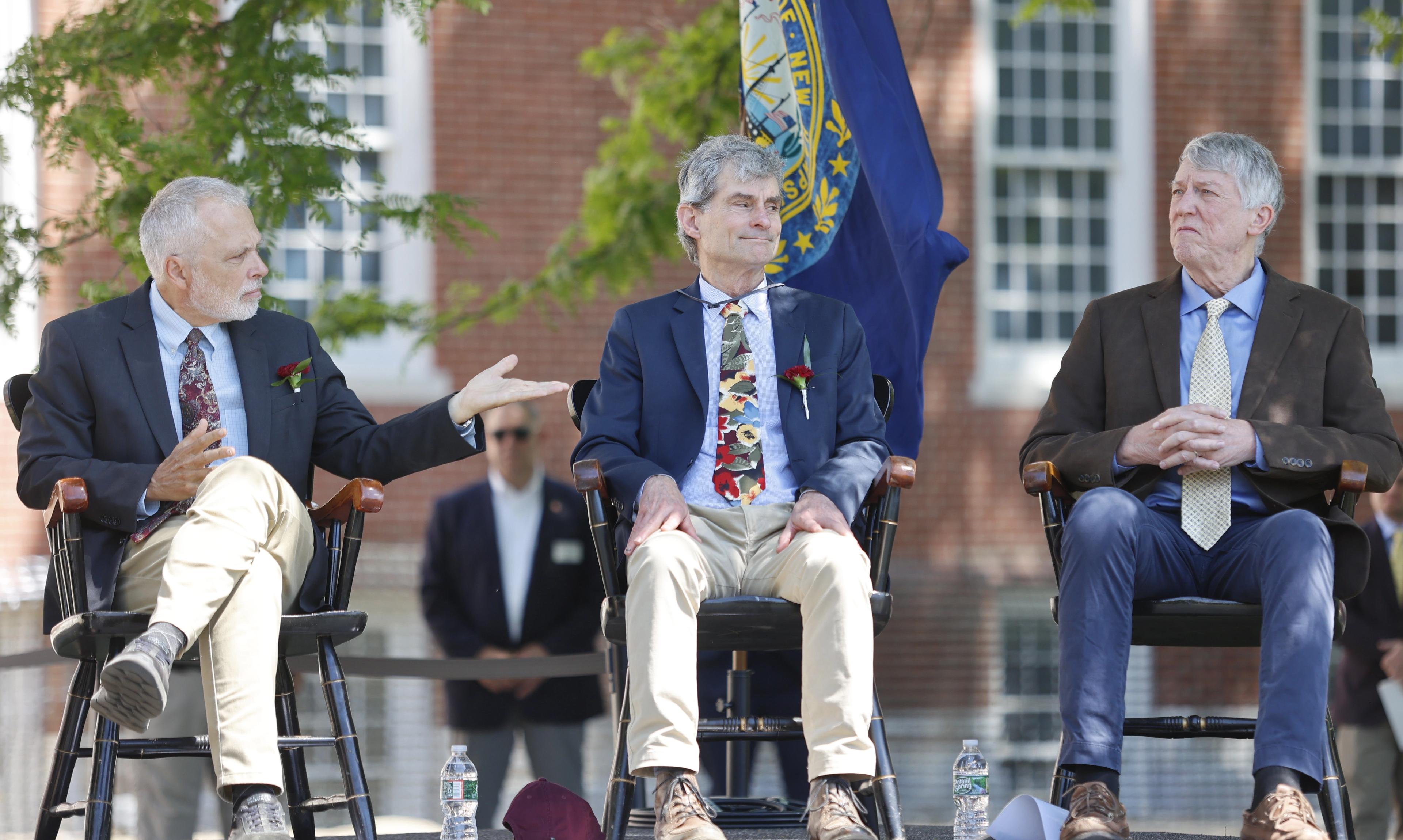
The bedrock of any great learning institution is its teachers. As we bid farewell to nine esteemed instructors and contemplate just how to fill the void they leave, Dean of Faculty Meg Foley captures the contributions and influence of her longtime colleagues: “This group stands out to me because they are deeply embedded in the fabric of our lives at the Academy and known by their accumulated smaller moments. This is a group who makes this place more connected. They will be sorely missed, and the rest of us will have to take up the baton in creating more moments of connection in their honor.”
The following are excerpts from the citations Foley shared during faculty meeting in tribute to her colleagues. They have been edited for clarity and length.
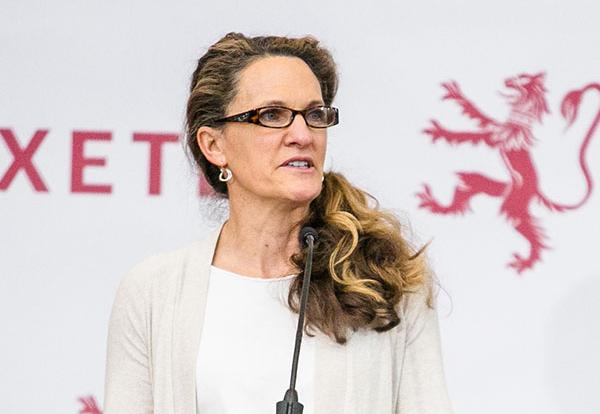
Hilary Hall
Instructor in Physical Education, Appointed 1983
Hilary arrived at the Academy upon graduating from Penn State University. Even in her first years, she was touted as a high-achieving teacher and coach. In 1984 an observer wrote: “Her (teaching) instincts are excellent and her joy for life in general provides all the right ingredients …. She always takes things one step beyond, adding the special time-consuming touches that make a practice that much better.”
Time and again, colleagues echoed those early sentiments, even as Hilary maintained the tremendous load of head coach of winter indoor boys and girls track and spring outdoor boys and girls track. She achieved Level 3 status as a coach for USA Track & Field, an achievement usually reserved for college coaches. Her teams brought home numerous New England championships, and she coached many athletes to the highest-level national events. One colleague writes: “I have never met anyone who cares about her students more. She has a great ability to connect with students and meet them where they are.”
Her level of organization is also legendary. She managed 100-plus athletes, an assistant coaching staff, and all of the logistics for hosting a meet. Several colleagues mentioned her meet-day energy.“Hilary is moving from one event to another at a purposeful pace with her hair in her ‘Coaching Pony Tail’ waving from side to side indicating she is all in,” one colleague writes. “She walks around the track saying, ‘AWESOME’ as she encourages her athletes.”
Hilary served as dorm head in Dunbar Hall and Moulton House, and on the Lamont and Dow teams as well — willing to pinch-hit to suit the Academy’s needs on several occasions. When Hilary had her sons, Kelly and Vaughn, in the mid-’80s, the school had no maternity leave policy to speak of. Hilary came up with the plan to make sure bases were covered, albeit in a far more limited scope than anything we would call family leave today. That’s Hilary, a pragmatic and positive team player who identifies the goal and strategizes the best way to get there.
After receiving a Brown Family Faculty Award in 2013, Hilary wrote a letter to the family that said: “I arrived in 1983 thinking that this would be the ‘perfect first job.’ I had no intention of staying this long! But as you well know, this place, specifically the kids at this place, pull you in so tightly that the thought of leaving disappears. ... I am so aware of how lucky I am.”
Several colleagues point out how lucky they felt to learn from Hilary. “She has long served as a role model, not just for her players, but also for her fellow coaches and colleagues, demonstrating a commitment to the sport and wisdom in conducting groups,” one colleague writes. “She focused on the ‘soul’ of her teams, ensuring that every player walked away with a stronger sense of responsibility toward their teammates and themselves.”
Melissa Pacific, a Physical Education Department colleague, notes Hilary’s impact on Exeter athletics: “Coach Hall leaves behind a legacy that extends far beyond the track. She built her success by forming teams rooted in strong character and by instilling a true team-first mentality across every program she led. That foundation is why her athletes not only had success at Exeter, but continued to thrive long after their time here. Coach Hall is one of the most humble members of this community, but it deserves to be said that she is one of the best coaches Phillips Exeter has ever had.”
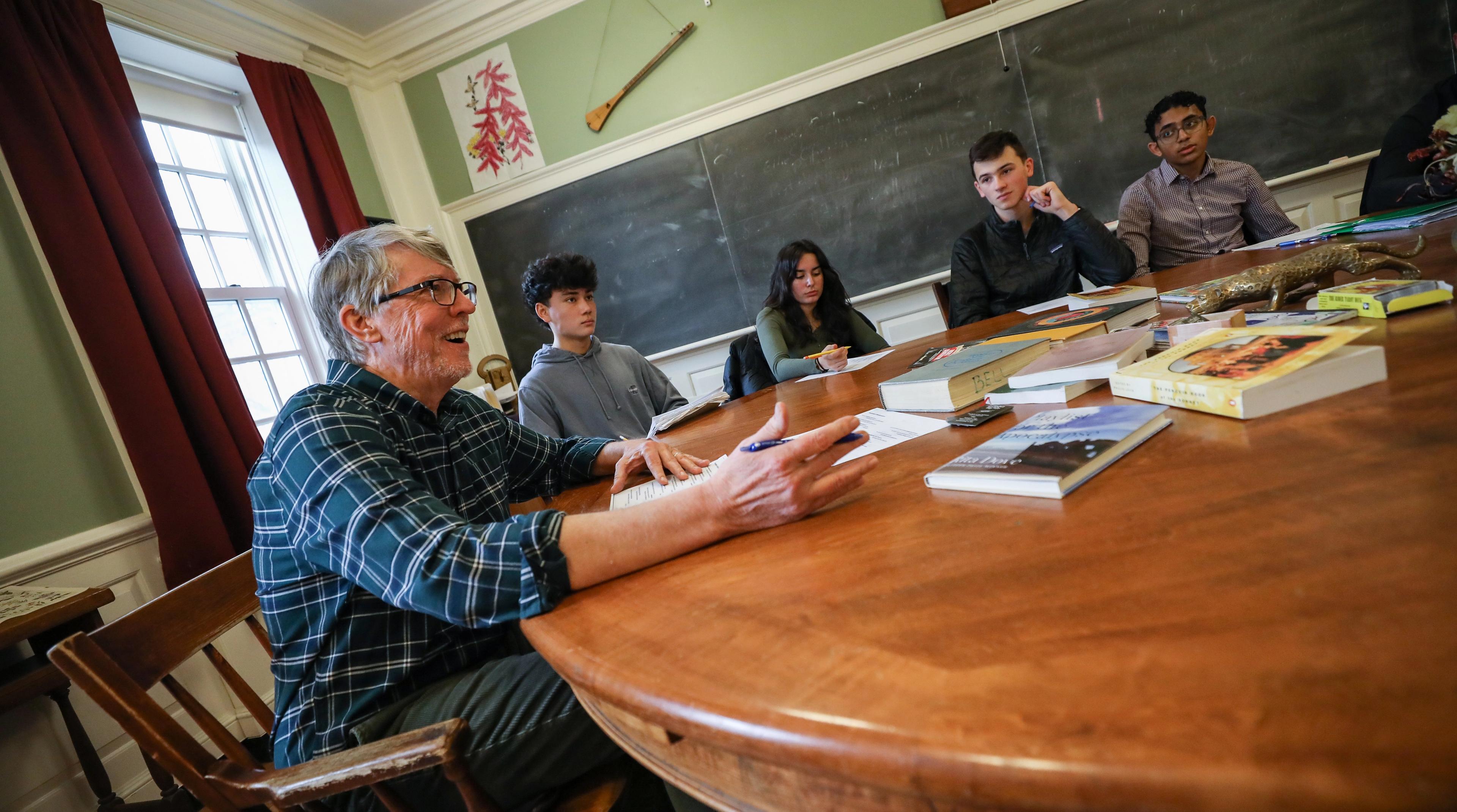
Duncan Holcomb
Instructor in English, Appointed 2004
Duncan, along with his wife, Elizabeth, and baby, Spencer, arrived from Indian Springs School near Birmingham, Alabama, where he had served as director of residential life and English instructor. He had also taught at the college level and at St. Andrew’s School in Delaware.
Over the years Duncan invested in every part of Exeter life, whether as boys varsity tennis coach or as boys JV soccer coach. He and Elizabeth led the Stratford program in fall 2011, and he continued as program director. He was an adviser to numerous clubs. Time and again, colleagues noted that Duncan was ready to assist: mediating dorm problems, keeping time at basketball games or flipping burgers at a Dunbar barbecue.
Jamie Hamilton, a former Dunbar dorm head, said Duncan had a “sense of humor and easy comfort” with adolescents. In working with advisees, Hamilton wrote: “We appreciate the way he helps to ‘create a plan.’ And he understands that his advisees are in the midst of their own development and all of this takes time, a process that involves sympathy, encouragement and hope. … His cheer and positive attitude creates a happy place.” Dunbar was a happy place where Duncan and Elizabeth raised their boys, Spencer, John Henry and Benjamin, while still opening their home to girls from the dorm who needed a sofa and a listening ear.
When Duncan received continuing appointment in 2008, he wrote to Principal Ty Tingley that he wanted to be a teacher like the colleagues who inspired him, “always examining my teaching style and relationships with students, looking for ways to grow, and new ways to help students grow as well. … Every successful teacher needs to be a metateacher as well, and that I will.”
Duncan’sself-reflections, brimming with insights on Harkness teaching, show that his “metateacher” mindset remained foundational. In one, he wrote about his approach to starting the term: “Those first few weeks I try to exercise a greater restraint, and thereby a self-sufficiency amongst the group that can carry through over the term.” He continued: “And yet, despite what I’ve said thus far, I don’t think I show as much restraint as I could or should. I get real pleasure from making a smart or funny comment.”
Jane Cadwell noted Duncan’s purposeful ease with his students, including his famous icebreaker games. She wrote, “I think this is Duncan being who he is and allowing others to do the same in a risk-free situation.” Another observer wrote, “He creates an atmosphere of unanxious high expectations.” One student last term agreed, saying, “He’s GOATed.”
In his meditation last fall, Duncan took us on a tour of the personalities and establishments around town that have meant the world, and made a world, for him and his family. One locale was the backyard of Shooters Pub, where Duncan and friends played music occasionally. He also entertained us from the Assembly Hall stage and at Cabaret nights with Elizabeth singing along.
I was in Phillips Hall in May when a group of young alumni spotted Duncan and shouted: “There he is! Mr. Holcomb!” They swarmed him. It was a fitting image in his final month.
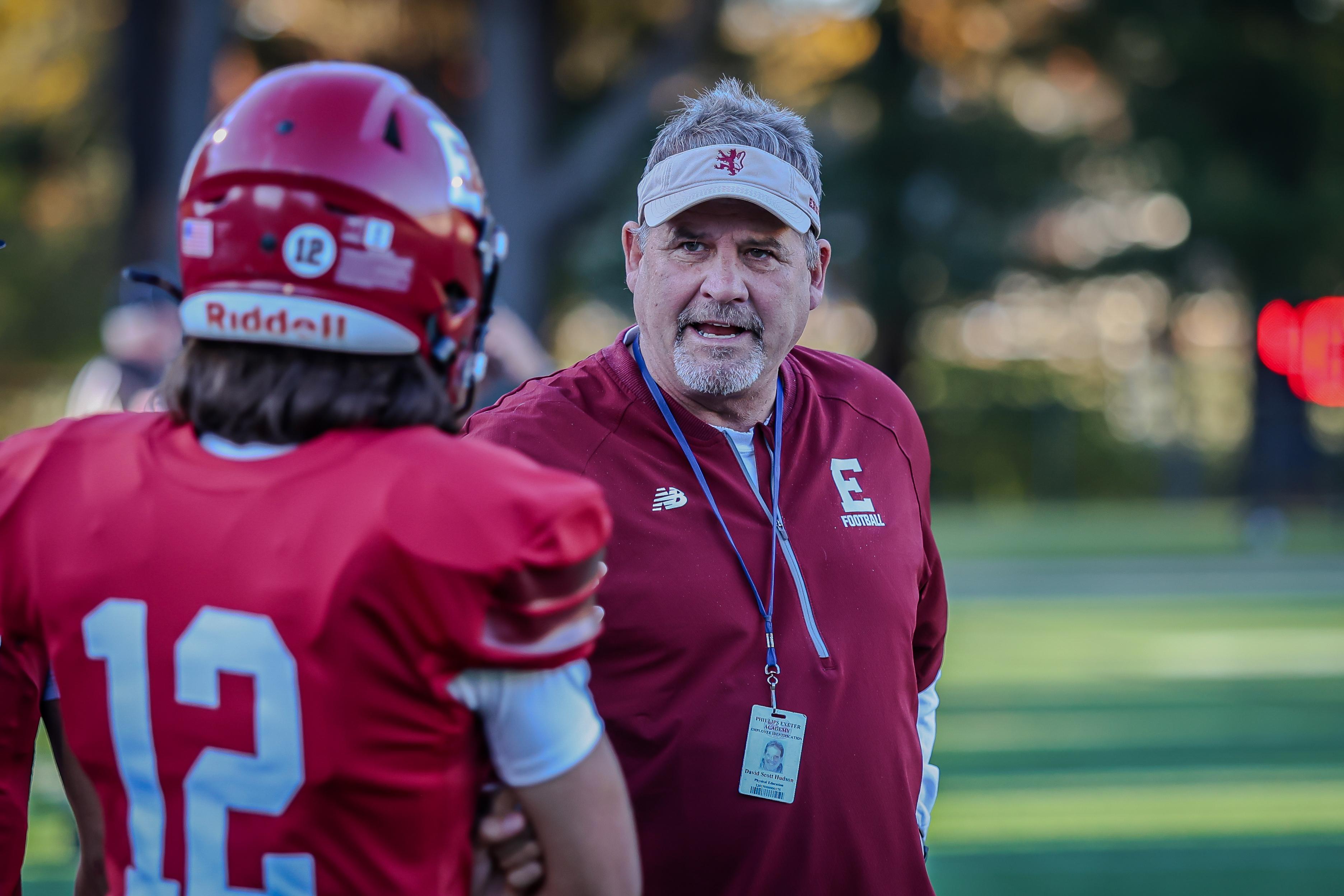
David Hudson
Instructor in Physical Education, Appointed 1982
and 1999
Stroll over the footbridge toward the stadium on a spring afternoon and you’ll hear his coach’s voice booming across the JV lacrosse field. Then you’ll see Dave, wearing his visor and Exeter windbreaker, leaning on a lacrosse stick, patiently and emphatically teaching boys to play the game. A lot of athletes learned the basics of lacrosse from this master teacher for more than 25 years.
Dave first arrived at Exeter in the fall of 1982 from St. Lawrence University, where he completed his undergraduate degree in physical education and was an All-American in football and wrestling. He returned to St. Lawrence for several years in the 1990s to coach football and wrestling, hence his two appointment dates.
Dave returned to Exeter in 1999 as athletic director and chair of the Physical Education Department after serving as athletic director at The Governor’s Academy. His seven years as Exeter’s AD were a period of a rapidly changing interscholastic sports landscape with more parental involvement and more sports specialization. The pressure became intense, but Dave never lost his cool. Besides his beloved wrestling and JV lacrosse, he coached football and tennis. His committee assignments are too numerous to list. Dave was dorm head in Peabody, Soule and Dow House, and also served on dorm teams in Wentworth, Cilley and Main Street.
Dave’s colleagues say they’ve grown through his keen yet low-key mentorship. He always taught by example. His JV boys lacrosse coaching partner Brooks Moriarty writes: “I learned more about coaching from Dave than from anyone else. He deepened my understanding of coaching as teaching.”
Dave loved coaching wrestling and he was exceptionally skilled. At St. Lawrence, he was named NCAA Regional Coach of the Year. At Exeter, his teams won numerous championships, including four New England championships.
The year Dave left Exeter, the New England wrestling coaches made him the first recipient of their coach of the year award. His former coaching partner Ethan Shapiro wrote: “He was excellent at developing beginning wrestlers and dealing with the high-end kids as well. He was tough and demanded hard work but always very fair and patient, and all of his wrestlers loved and respected him. He was always great to work with and he created a positive environment for coaches and kids alike.”
Don Mills shared fond memories of Dave in the rowing barge with the preps: “Patient, clear and direct. It is fun to see their progression each fall as he guides them through the steps. ‘Ready now!’ he commands. All done with a sense of humor and fun. He will pause the lesson to point out a dogwood tree on the bank. ‘How do you know it’s a dogwood?’ coach Hudson would ask. ‘From its bark.’”
Dave’s sense of humor is legendary. In particular, he was known for ad-libbing rule changes (“Syracuse rules”) with a fake authoritarian voice and for having dizzy lizzy spinning games for lacrosse boys’ birthdays.
Always a warm and steady presence in his department and on campus, Dave greeted and checked in with everyone. One colleague writes: “I am going to do my best to offer spaces for my colleagues to come in and just chat and connect, and be a tremendous listener and partner to them because that is what Dave has done his entire time here at PEA.”
Another colleague writes, “He is always the first one to show up on someone’s doorstep when life gets curvy. I know no better human.”
Bill Jordan
Instructor in History, Appointed 1997
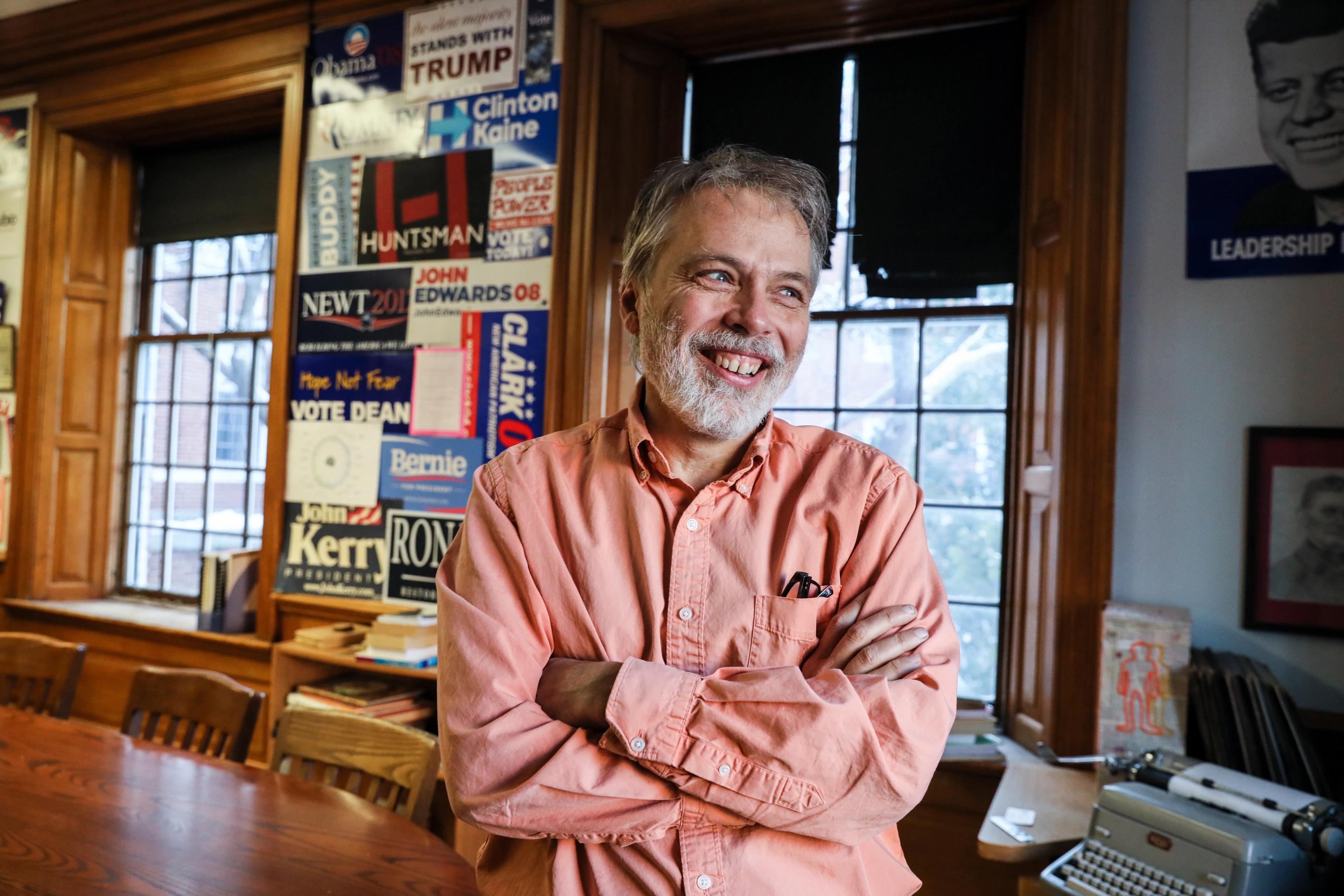
Bill had a sticker saying “I could be wrong” outside his classroom door in the Academy Building and on the back of his phone. If you asked him about it, he’d hand one to you. It was both a reminder to himself and a signal to others that he was willing to be persuaded on virtually any topic. This ethos has pervaded all of Bill’s work: evidence matters, new information can lead to new understandings, and people ought to enjoy that complexity, not resist it. For Bill, the fun is in understanding how two people can come to completely different conclusions from the same facts. This deep well of curiosity has been inspiring to students and colleagues alike.
Bill received his B.A. from the University of Massachusetts, Lowell, and his M.A. and Ph.D. in history from the University of New Hampshire. He and his wife, Wendy, arrived at the Academy for a one-year position. They obviously stayed, with Bill eventually serving as the Amen Hall dorm head for several years, raising Jamie, Lindsey and Emma there.
Previously a journalist, Bill spent years as adviser to The Exonian. He was also adviser to the Exeter Political Union, chair of the Agenda Committee, chair of the History Department, boys varsity cross country assistant coach, and director of the Washington Intern Program. He taught across the history curriculum, whatever was needed. Students across the political spectrum lined up to take his beloved senior elective, HIS550: American Politics and Public Policy.
Fermín Perez-Andreu writes: “For years, Bill Jordan has taught American history with the same dedication and passion he brings to modern politics. But what truly sets him apart isn’t his knowledge of events; it’s his unmistakable humane touch. Unassuming, warm and mentally agile, he is a man who can find common ground with anyone.”
Alexa Caldwell writes: “I will always remember how Bill’s eyes twinkle when he talks about politics. The stacks of papers on his desk. … How every time you sit down with him at a meal he would talk to you about what he was reading. How balanced and measured he could be, even when so passionate. How much he cares about fairness and distribution of power. And giving voice to people.”
Those who had basement classrooms in the Academy Building often gathered in Bill’s. His political memorabilia was legendary. If you lingered longer, you might be privy to one of his elaborate political cartoons, which he would devise over many days on his dusty chalkboard — maybe the Election of 1844 or the monetary policies of the 1890s. He was always trying to find new ways of understanding complicated political and economic mechanics. He was always thinking, innovating and sharing.
Jane Cadwell noted Bill’s attention to curating sources for his classes that are “used to create opportunities to expose various perspectives.” She continued, “I sense a commitment to more than teaching history class; I see Bill’s commitment to helping create responsible and caring citizens.” His students loved keeping a conversation going long after class ended. How fitting that for this last term he has been immersed with students and politics while stationed at Exeter’s Capitol Hill outpost.
Paul Langford
Instructor in Classical Languages, Morison Distinguished Professor of Latin,Appointed 1985
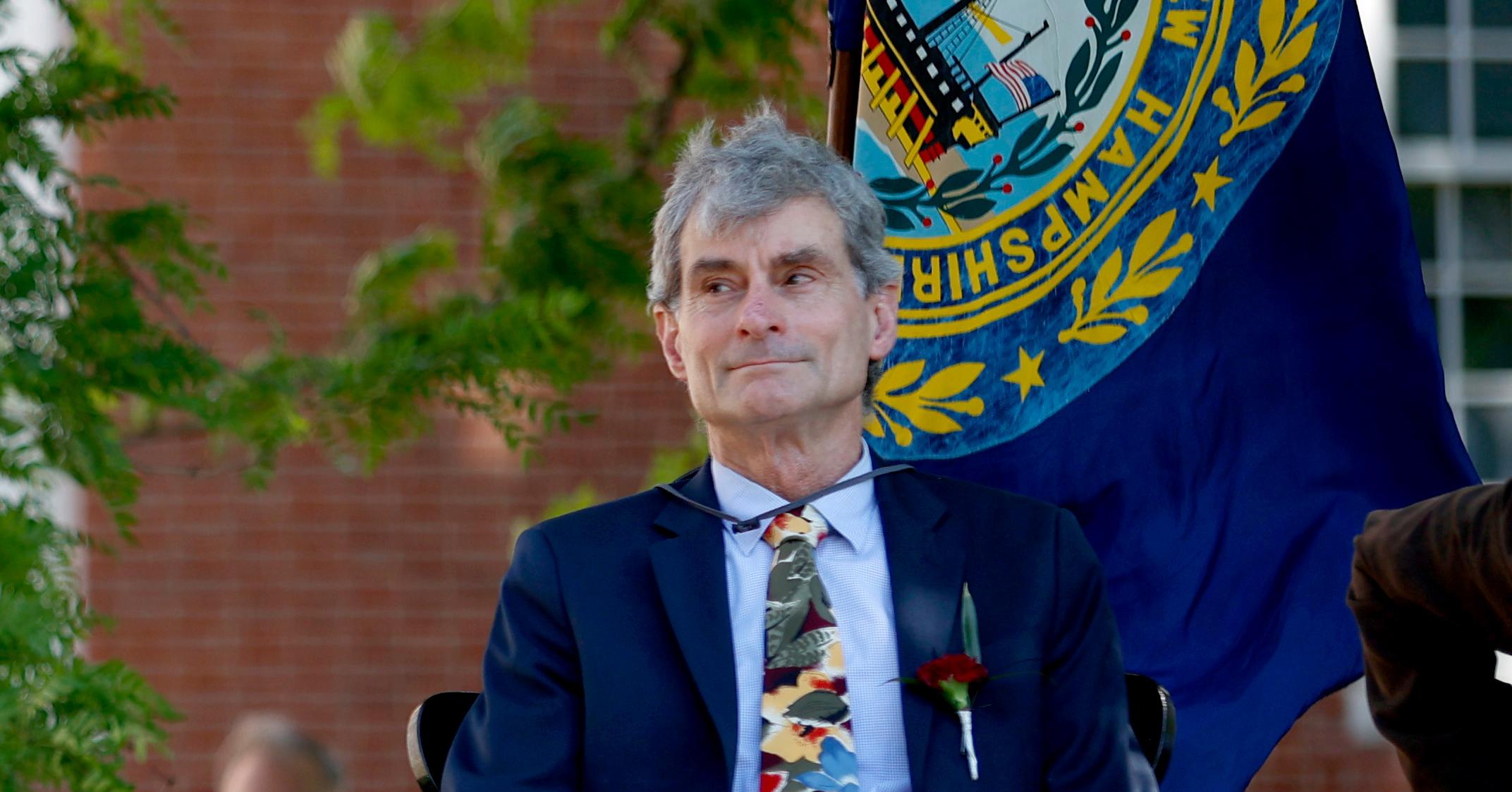
Having earned his degrees at UNC-Chapel Hill and Princeton, Paul joined the Classics Department in 1985. He was described in an early letter to the Appointments and Leaves Committee as a young teacher with “moral persistence” and a “deep-seated drive to improve himself.” The letter continued that Paul always “tries to give more.” Those qualities, along with a fierce advocacy of the classics and of language-learning writ large, have been through lines of Paul’s 41-year Exeter career.
Paul received continuing appointment in 1988 and prioritized professional development opportunities that directly contributed to his department’s curriculum and his students’ experience. On rereading Horace, he wrote, “I’m surprised how much I have forgotten but also eager to tangle with the material again.” Beyond pursuing professional growth, he committed to numerous study tours with colleagues and students. He is known for his art and history lectures on the classics tours to Italy and recently worked alongside Exeter students on archaeological digs at Bibracte, France, and Mount Lykaion in Arcadia, Greece, where he was recognized for his outstanding work.
In Paul’s commitment to development as a teacher, he has shown great humility while exhibiting excellence. In 2010 he volunteered for the trial run of the Continuing Professional Development program. He took the work seriously, reflecting: “I find enduring guidance in the idea that the chief responsibility for an excellent school falls on the shoulders of the instructors who must set and maintain the highest possible standards.”
In 2016 Nick Unger, Classics Department chair at the time, wrote: “We all believe in the importance of setting high standards, but I think Paul succeeds more often than the rest of us.” Paul tempered his expectations, Nick noted, by “creating an atmosphere that is supportive, not intimidating.” Sally Morris wrote: “His sharp sense of humor keeps us all on our toes. I heard that students try to sit next to him to catch all of his sotto voce remarks.”
Paul led the Classics Department as its chair for 12 years. His department reports and correspondence show his care for creating excellent materials for students, maintaining consistency and fairness, advocacy for his colleagues and for all the languages.
Paul is known for speaking up — albeit quietly — when he believes his voice can make a difference. He was on the earliest study group on same-sex faculty couples living in dorms, and he supported students in the earliest years of the Gender and Sexuality Alliance.
Paul worked in nearly every part of the school: part time in the College Counseling Office, coach of boys junior varsity squash, clerk to the Trustees and member of numerous committees. Of his early days in Peabody Hall, one observer wrote that Paul made “all of the large and small sacrifices in terms of personal time that are so necessary when living with adolescents. Quite simply, he can be counted on to be there when needed.” As a dorm head, Paul hosted ski trips to Attitash, pancakes for preps, softball games and pizza nights.
We all look up to Paul as a model of deep investment in students, coursework and the Academy itself.
Chris Matlack
Instructor in Science, Raymond W. Ellis Distinguished Professor, Appointed in 1984 and 1989
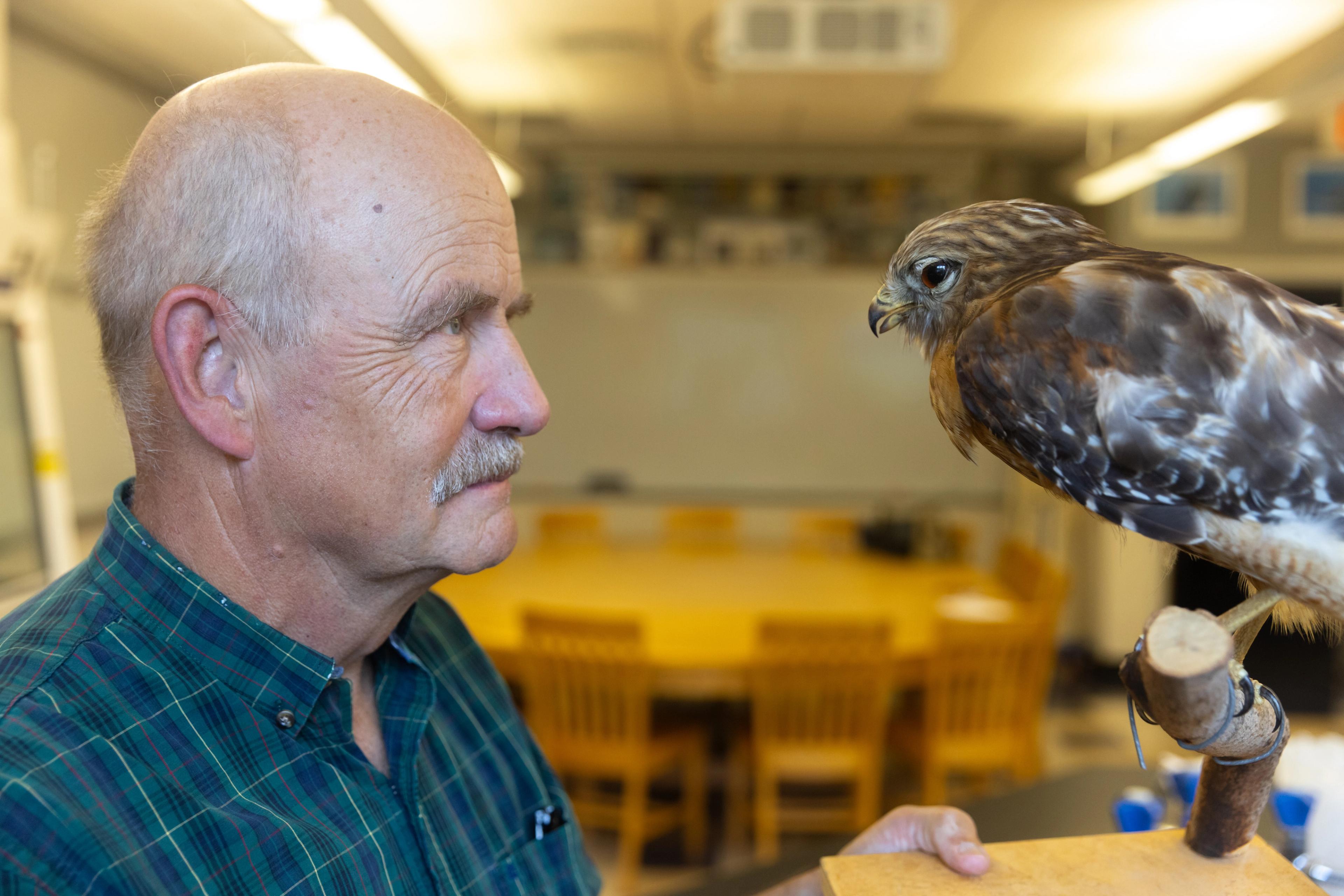
How many early-morning field trips to Plum Island or the Academy woods or a kettle bog has Chris led? We can all picture him in his rain boots, binoculars in hand, with a gaggle of students encircling him. Whether in Ecology and Ornithology double formats, or behind the Phelps Science Center with his preps during an F format, Chris shows students how to look and listen, training them to be observers of the world, one butterbutt or oak leaf at a time. One former student wrote that Chris was as much a guide as an instructor, but perhaps the two are synonymous with an excellent Harkness teacher.
Chris received a B.A. in wildlife biology from the University of Vermont, then served as a Peace Corps volunteer in the Central African Republic. He later earned his master’s of science degree in biology from Acadia University in Nova Scotia. He came to Exeter for one year, then taught at Hackley School in New York for four years before returning in 1989.
About Chris’ arrival at Exeter, his dear friend Rich Aaronian wrote: “I was on a yearlong sabbatical in Scotland and he was hired for that academic year. When I returned, more than one of my colleagues told me how much they enjoyed working with Chris. I kept hearing how they were secretly hoping I would have liked Scotland so much that I would have stayed there, and Chris could have been a permanent replacement! Jokingly said? I am not so sure. I have the greatest respect for Chris as a friend and colleague.”
Chris and Margie raised their three children — Ryan, Laura and Will — in Abbot Hall while creating a nurturing second home for the students. He stepped down as Abbot Hall dorm head when he became Science Department chair. Responding to Chris’ final dorm report, Dean of Faculty Jack Herney wrote: “What a significant stake you take in the welfare of the students in your charge. You have established traditions of both frivolity and good fun as well as good manners and responsible behavior.” Chris went on to be a beloved affiliate in Bancroft and Soule.
He served the school in myriad ways: boys JV hockey and JV baseball coach, Earth Day coordinator, Athletic Policy Committee chair, co-founder of the Biology Institute at Exeter, and Principal’s Search Committee member. But perhaps the biggest task was leading the move to the Phelps Science Center from the Thompson Science Building. The goal with the new building was to truly bring Harkness to the sciences.
Encouraging students to ask questions and modeling with his own questions are familiar elements of Chris’ classes. In 2013 Ralph Sneeden noted: “What I learned about Chris’ classes — and what is difficult for most teachers to ‘learn’ — is how he cultivates a fun and sometimes boisterous environment where serious scientific inquiry unfolds.”
Chris has been recognized as an outstanding science educator by Intel Science Talent Search, Westinghouse Science Scholarship Program, the University of Chicago and Cornell University. One colleague writes: “Even inhabiting a different department and building, it has been impossible not to hear the echoes of Chris’ impact. … My own child was lucky enough to be one of his students, and ‘Mr. Matlack’s stories’ were often mentioned with a joyful giggle or grin at home, a testament to a teacher who knows how to make a lasting, positive impression on his students’ hearts.”
Bradford Robinson
Instructor in Science
Steyer Distinguished Professor, Appointed 1988
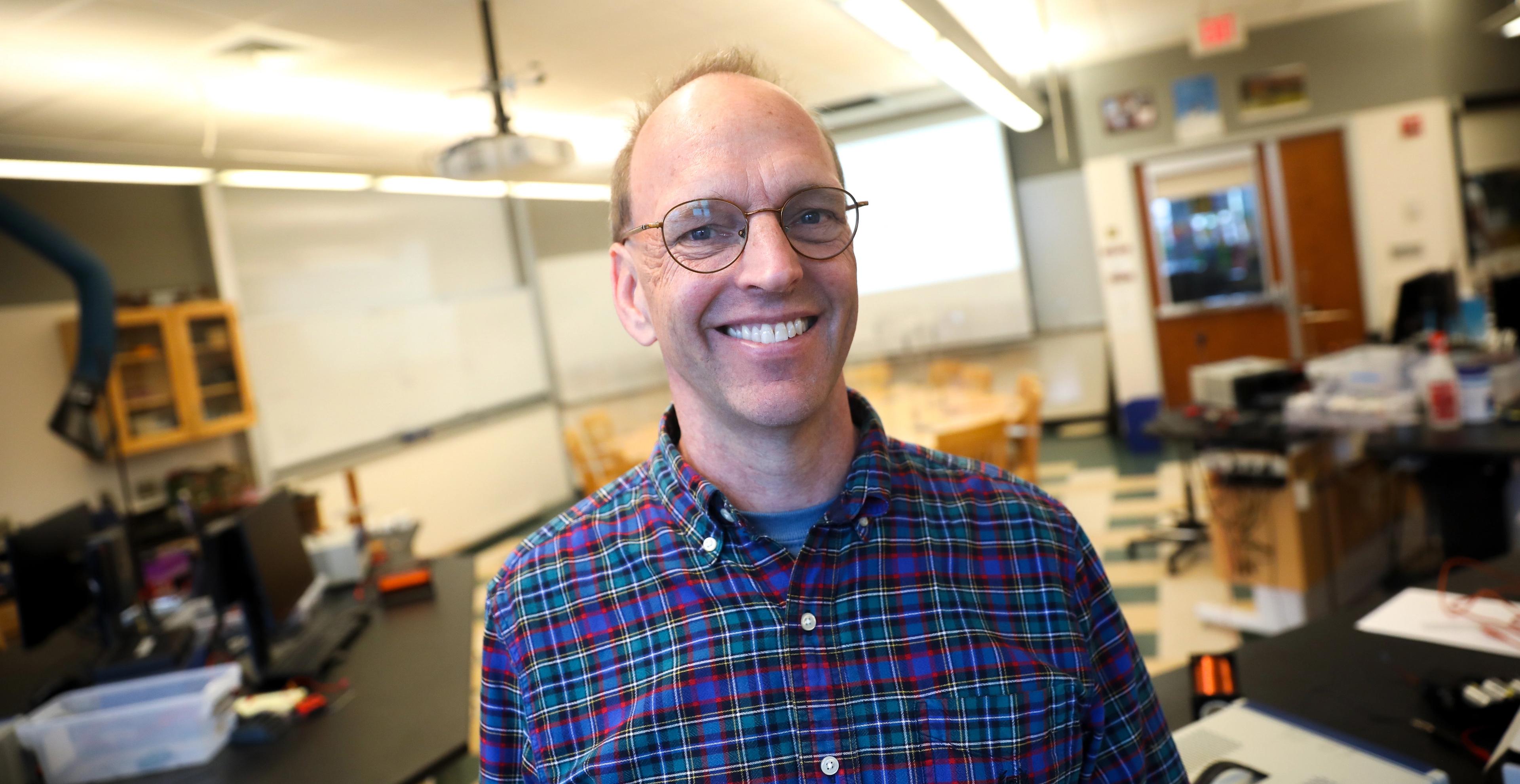
Several years ago, for a Thanksgiving assembly during which community members talked about gratitude, Brad spoke about the amazing work of beavers on his property in Brentwood. He described their tasks, and what that collection of individuals did for the ecosystem of their little watershed, protecting and propagating it. It was perfectly Brad, observing the world, teaching us to look more carefully and to think more deeply about what it means.
Brad received his bachelor’s degree in physics from Clark University and his master’s degree in education from Harvard, and he began his teaching career in Vermont. When he interviewed at Exeter, Jack Heath, dean of faculty at the time, left a note saying, “I liked this guy — serious, dedicated, reasonable experience for a 27-year-old.” Brad dived into Exeter life, developing an electronics course, including writing the text for the class, coaching prep crew, and making a home with his wife, Amy, and children, Hannah and Silas, as the dorm head in Dow House.
During Brad’s early years at Exeter, Rich Aaronian wrote: “When one goes into his room, it is evident that here is a teacher who loves demonstrations. In every corner of the room lies some sort of apparatus/gadgetry designed to excite his students.” Many years later, Ralph Sneeden said: “I spent part of a fall term visiting Brad’s prep class to try to understand how ninth graders learn Harkness skills in physics, and I saw that every bit of weird data became a space for excitement and inquiry. I realized that the point wasn’t about the data at all. It was about the opportunity to practice being wrong, and being OK with being wrong, in fact realizing that being wrong drove curiosity.”
Former Science Department chair Allison Hobbie wrote: “Brad works tirelessly to ensure that every student finds both self-confidence and success. … His students are so at ease with him, and by extension with each other around the Harkness table, that his classroom is a space full of wonder and discovery.” Brad’s excellence as a teacher was cited by the Westinghouse Talent Search, and he was named a distinguished teacher by MIT and the University of Chicago.
Brad has been a model of collaboration in the Physics wing, often popping between classrooms to discuss a class or get a new perspective on a demo. David Gulick described Brad as having an “inner-eye centered on empathy,” and as a true consensus-builder. In a thank-you note upon winning a Brown Family Faculty Award, Brad wrote, “Exeter is a place where one can work happily for decades … (I have) the best job a person could have.”
Brad has always thought about the larger lives of students and colleagues. He contributed to the Curriculum Review of the early 2000s, supported the Milton Mountain School, and hosted numerous Academy-adjacent gatherings with Amy. Inspired by Exeter alumnus Patrick Lydon ’68, Brad and Amy spent part of a sabbatical year living in Callan, Ireland, in a Camphill community. I remember a favorite phrase they picked up, “Pressure is for tyres.” A good one to keep in mind at Exeter.
Brad always brought people together, reminding us what we share, why we ought to tend to our little ecosystem at Exeter, and that we ought to delight in depending on one another.
Mark Trafton
Instructor in Modern Languages and Cultures, Appointed 1987
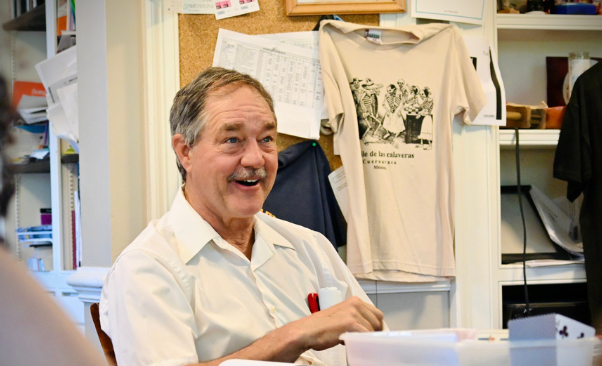
Run into Mark on the path between EPAC and Phillips Hall and you are in for a special conversation. He’ll gesticulate, holding a sloshing cup of coffee, mail tucked under his arm, praising a comment you made in the last faculty meeting. He’ll also talk about the recent Red Sox loss, ask about your spouse, or your old car. And then he’ll march off to his class with a missive in Spanish, or “keep fighting the good fight,” or some other optimistic imperative. One conversation at a time, Mark weaves together institutional knowledge, pedagogical challenges and down-
home humor.
Mark was appointed instructor in modern languages in 1987, after growing up in New Hampshire, attending Oyster River High School and completing his B.A. at the University of New Hampshire. He taught previously at Pomfret School. He completed his M.A. at California State University, Sacramento, during summer breaks from teaching at Exeter.
Current Modern Languages and Cultures Department Chair Fermín Perez-Andreu described Mark as “our own modern-day Don Quixote,” adding that “he embodies the noble spirit, intellectual depth and linguistic mastery of Cervantes’ greatest creation. Though not a native Spanish speaker, his command of the language is, quite frankly, staggering.”
Fermín continued, “He is always the first to charge forward, eager to try something new for the benefit of his students up to the last term of his teaching career. He is a tireless defender of fair causes, always standing up for his colleagues and championing what is right with a knightly sense of justice. He has shown us that one can be both a dreamer and a doer.”
A longtime defender of the environment, Mark has advocated greater safety measures at the Seabrook Nuclear Power Plant. In 1989 he began, with students, the campus’s first recycling effort. He put in scores of hours organizing blood drives, advising the campus Amnesty International chapter, and taking students on beach cleanups.
He coached club hockey and, for nearly 40 years, JV baseball, for which co-coach Tom Simpson calls him “simply a legend” with “limitless energy and love for it.”
For years Mark and Cheryl lived in Dutch House with children Drew, Claudia and Seth. In the 1991 dorm report, Mark wrote: “We took on the qualities of a family. My family, Tom Seidenberg and his family, and the students spent a lot of time together, arguing, joking, working and, of course, eating. This time was fertile soil, cultivating mutual respect, lasting friendship, appreciation of diverse natures and an atmosphere conducive to achievement.”
Mark volunteered to direct the term-abroad program in Cuernavaca, Mexico, and dedicated himself to spreading a deep knowledge and respect of the Spanish-speaking world. In one report on his teaching, Department Chair Vicki Baggia wrote: “Anyone walking in his room will find realia everywhere. … His room speaks to Mark’s love of the cultures of Spanish-speaking countries, his multiplicity of interests, and his strong commitment to give all that to his students and colleagues.”
Mark brought his full self to the Academy. One colleague wrote: “Beyond anything else, Mark Trafton’s true hallmark is his immense heart. He is the colleague who shows up with his pickup truck when you’re in a bind, who clears snow paths for his neighbors and friends, and who is the first to offer a book or a set of classroom exercises just because he thought it might help.”
Tanya Waterman
Instructor in Science, Appointed 2004
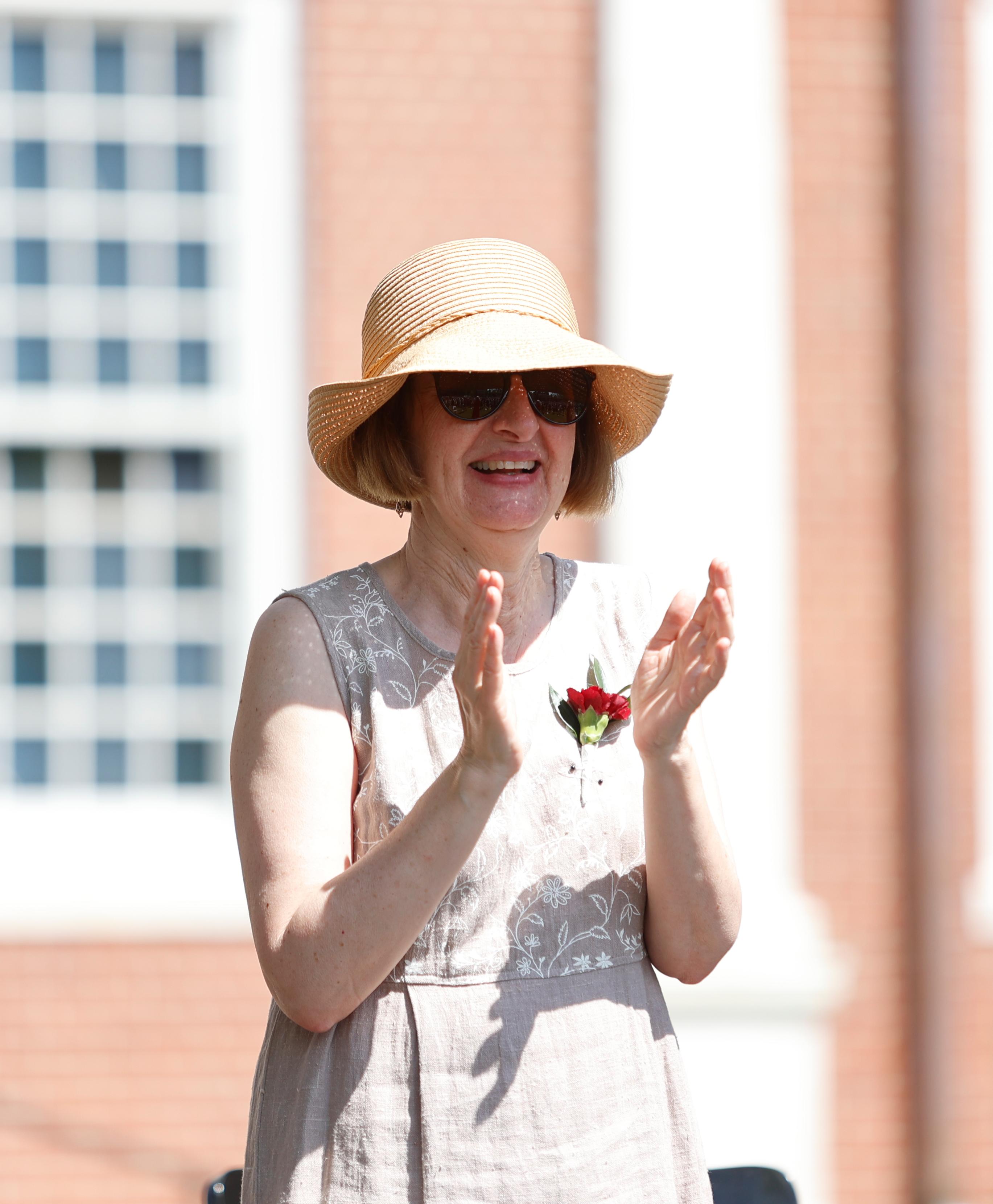
Known for her little notes of encouragement, a news article passed along, a poem tucked into a shared book, or a drop-in to say hello, Tanya is beloved by many for her simple acts of welcoming people, paying attention to them and trying to brighten their days. An exemplary science instructor — she was named a distinguished teacher by MIT and the University of Chicago — Tanya is known also as a lover of literature, art and music. A member of the Lamont Poet Committee since 2007, she rarely missed a student concert or play.
Tanya received a B.Sc. in physics from the University of Thessaloniki, Greece, and an M.Sc. from Brown University. Before Exeter, she taught at The Masters School in New York and St. Christopher’s School in Virginia.
Early on, Dean of Faculty Kathleen Curwen wrote, “Tanya is a trailblazer and a person who will leave her mark in the field of education.” After receiving the inaugural Koshland Professional Development award, Tanya wrote to the donor: “I am a physicist with great fondness for the stories behind the equations: who discovered them, how did they fit in their times and places, and what do their stories convey about the human spirit to my students. … Thank you for giving me this gift of learning. ... I will try my best to spread its effect.”
And spread it she has, with her signature course, INT552: Science, Technology and Profit in Societies, and with her interdisciplinary teaching at Exeter. This year, Tanya connected PEA with Icelandic poet and climate activist Andri Magnason, an association that is sure to influence Exonians long past her retirement.
In her continuing appointment acceptance note to Principal Ty Tingley, she mentioned about 32 colleagues who helped her in her first four years: science instructors, women in Academy leadership who inspired her, IT staff and others. This gratitude is quintessential Tanya.
Tanya lived in Merrill and Bancroft, and served as an affiliate in Bancroft and Kirtland. Sarah Ream wrote, “Tanya keeps her eyes and heart open to all in need. … The girls go to her frequently. … In return for their trust she provides simple honesty. … If she believes a romance is ill-fated, she will provide Kleenex but no rosy view of the future.” And she offered Kleenexes many times after a bad grade on a test.
Tanya is as at home as a mentor of Physics Olympiad finalists as she is teaching preps. She wrote about her physics classes in her 2013 self-reflection: “I tell my students my three goals are: 1. To laugh at least once per format; 2. To develop thick skin — i.e. to forgive themselves when something goes wrong; 3. To develop ‘shockproof crap detectors’ — i.e. skills ofthinking, analyzing and communicating.” As much as Tanya is a physics teacher, she is also a teacher of life.
A colleague writes, “I will never forget how she could detect something wrong and quietly position herself to be visible but not intruding, available without demanding attention.”
Another writes, “She was the first person to really check on me during my first year and make sure I was adapting and on my way to thriving at the Academy. I hope I can be more like her going forward.”
Embracing the whole package of working at a boarding school — 12 years as Admissions reader, five as assistant track coach, seven as coordinator of new-to-PEA colleagues — Tanya made her mark across campus. Her legacy reaches far as she connected with a varied group of students and colleagues, grateful for her teaching, friendship and mentorship.
Meg Foley is the dean of faculty and Michael Ridder, Class of 1958, Distinguished Professor in History.