This summer, cities and towns around the country — including Exeter — held celebrations to mark the 250th anniversary of American independence, with parades, picnics, fireworks and readings of the Declaration of Independence. At this celebratory moment, we asked Exeter students, teachers and alumni to consider the importance of studying the nation’s history, not only to understand the events of the past, but also to use them as a rudder as we navigate the complicated waters of the present.
When History Instructor Betty Luther-Hillman teaches HIS410: United States History, Colonial Origins to 1861, she has students read a selection of the notes that statesman James Madison took during the debates over the adoption of the Constitution in Philadelphia in 1787. Often, she says, they are taken aback when they learn that the delegates argued about certain issues, such as whether members of the House of Representatives should be directly elected by the people or selected by state legislatures.
“What they were essentially debating was whether or not the people could be trusted to elect their representatives,” Luther-Hillman says. “Students are sometimes shocked to read this — like, how could they be saying that the people shouldn’t be able to vote? Clearly, even things that we think are so obvious today were subject to debate.”
Larry Lyu ’28, who took HIS410 with Luther-Hillman last fall, considers the founding era one of the most intriguing and resonant for understanding politics today. The founding era’s debates, he says, are mirror images of more modern political struggles, such as balancing power between the executive and legislative branches of government. “There are just so many things that reflect across U.S. history that you get to see, oh, this is a pattern,” Lyu says. “This is how people have dealt with it historically. This isn't some new thing.”
Luther-Hillman puts the issue succinctly: “If you want to understand America today, you have to understand how we got here. That’s what studying American history is all about.”
“The founding era’s debates...are mirror images of more modern political struggles, such as balancing power between the executive and legislative branches.”
—Larry Lyu '28
I.
U.S. history courses do not appear in the earliest course catalogs among the Archives and Special Collections in the Class of 1945 Library, which date to 1849, nearly 70 years after the Academy’s founding.
At the time, Exeter students could enroll in the Classical Department or the English Department, each with different course requirements. Classical students took mostly Latin, Greek and mathematics, but two history courses — Worcester’s Ancient and Schmitz’ Rome — were included in the curriculum. (The courses appear to have taken their names from the authors of the texts that students used.) Students in the English Department took the Roman history course, as well as a course in natural history and a history course simply titled Modern.
By the mid-1870s, this focus on ancient history had given way to a more varied course listing, and both the Classical and English Department tracks included a course called Higginson’s United States. Students in the class most likely read Young Folks’ History of the United States, a survey text published in 1875 by Thomas Wentworth Higginson. A Unitarian minister and Civil War veteran who commanded the first authorized regiment of freed Black soldiers, Higginson also helped edit and publish Emily Dickinson’s poems after her death.
Exeter’s history offerings have expanded in the 150 years since that early course, but American history has remained at the center. Today, four-year seniors are required to earn six term credits for history, including the U.S. history course sequence HIS410, 420 and 430. The sequence is a graduation requirement for all students, except those who take U.S. history in 10th grade or above at another school before arriving at Exeter. Over the three terms, instructors guide students through the nation’s history from colonial times to the present day. The culmination of the sequence is “the 333,” a lengthy research paper written in the spring term for HIS430: United States History, 1941 to the Present that is among the most arduous assignments students will complete during their time at Exeter.
“In some ways, the U.S. history sequence is the hub around which a lot of our department curricular discussions and ideas circle,” History Instructor Kent McConnell says. “We see the 333 project as a moment where students, who have gained exposure to the department curriculum and have the emotional and mental maturity needed, can tackle a large semi-independent writing project that ultimately is akin to afirst-year or second-year college paper.”
II.
“Doing” history at Exeter isn’t about memorizing dates or battles. It is about careful reading, critical thinking, humility and thoughtful consideration of alternative points of view. “We want students to really ask questions and debate what they’re reading,” Luther-Hillman says. “Maybe they don’t agree with what they’re reading, and have to think about why they disagree. We’re asking them to respond to what they’re reading rather than just repeating what they’ve learned, which is so often what students feel like they have to do in history class.”
Sophia Butler ’27 didn’t have a strong interest in history before beginning the U.S. history course sequence in her upper fall. But the research and writing drew her in. In HIS410, she wrote about Phillis Wheatley, an enslaved woman who became one of the late 19th century’s most famous poets; in HIS420, she explored the World War I-era Espionage Act, drawing almost entirely on newspapers from the time and other primary sources.
“I love researching,” Butler says. “I find the process really fascinating — formulating an argument, reading all the different historical documents, and comparing them to each other and to secondary sources.” For her 333, Butler sought a topic related to disability rights. She ended up writing about the Walter E. Fernald Developmental Center in Massachusetts, the nation’s first publicly funded institution serving people with developmental disabilities, and its ties to the notorious eugenics movement in the late 19th and early 20th centuries.
“We’re asking [students] to respond to what they’re reading rather than just repeating what they’ve learned.”
—Betty Luther-Hillman, instructor in history
McConnell, who taught Butler in HIS430, says the type of deep reading and analysis required in Exeter’s U.S. history classes, combined with the challenge of building an argument and supporting it with historical evidence, is how he and his colleagues seek to instill in students a more nuanced understanding of the content they’re learning.
He adds: “I hope we’re creating ways in which students understand the broader contours of history well enough that — even if they’re not a history major in college or going to grad school — they might remember from their high school training to be at least a bit skeptical or questioning, and to seek multiple perspectives to better understand contemporary events. ”
Butler appreciates those lessons. “Studying U.S. history at Exeter, I learned a lot of information, but the way I approached history also changed a lot,” she says. “I feel like I can better look at events that are happening and think about what led up to this and what is the meaning of this, rather than just memorizing something about an event.”
From the Archives
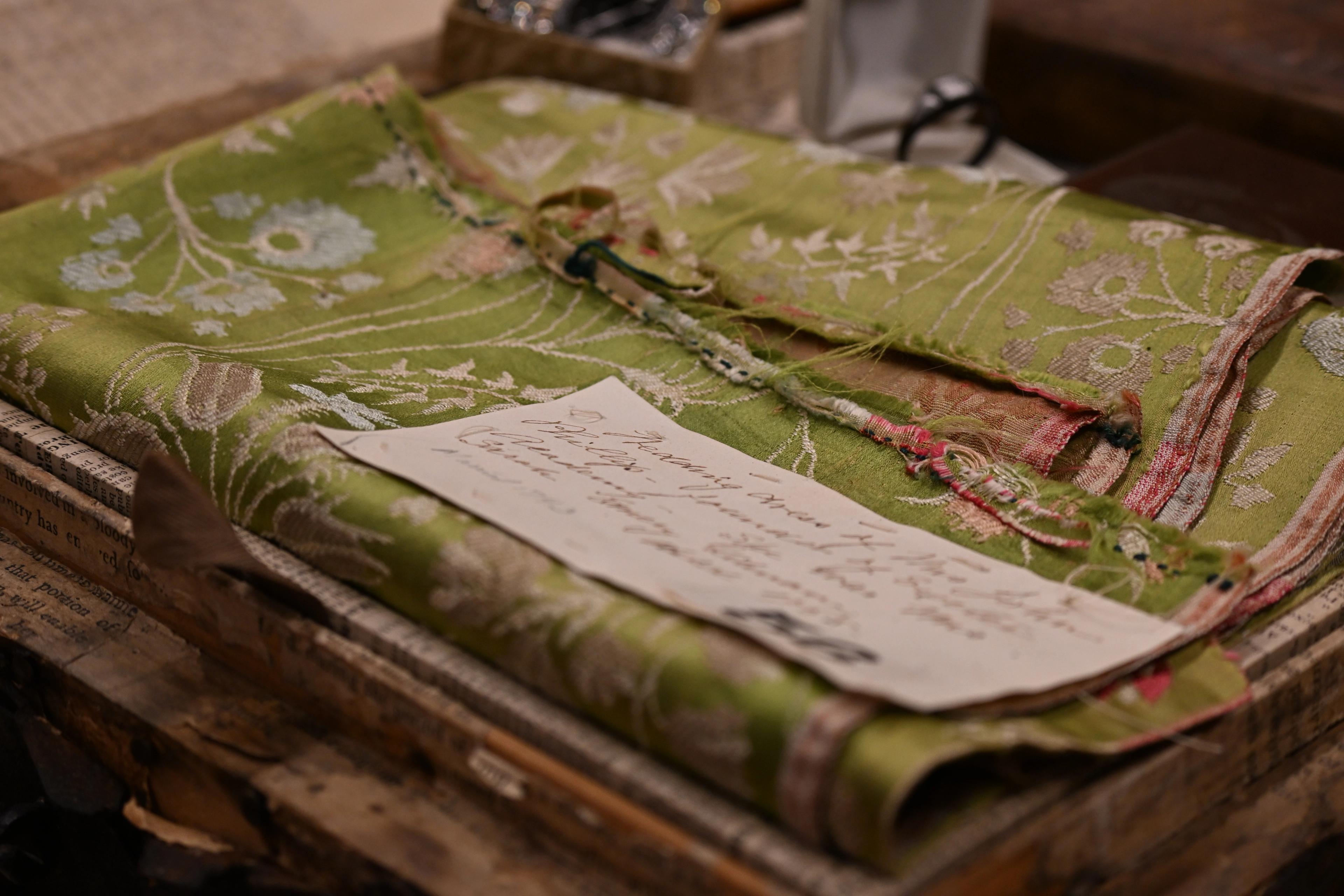
The Center for Archives and Special Collections in the Class of 1945 Library is home to a diverse collection of ephemera related to U.S. history. “Visiting the Center makes history more tangible,” says Magee Lawhorn, the center’s director. Here’s a peek at a few items available for instructional use as well as for inclusion in special exhibits.
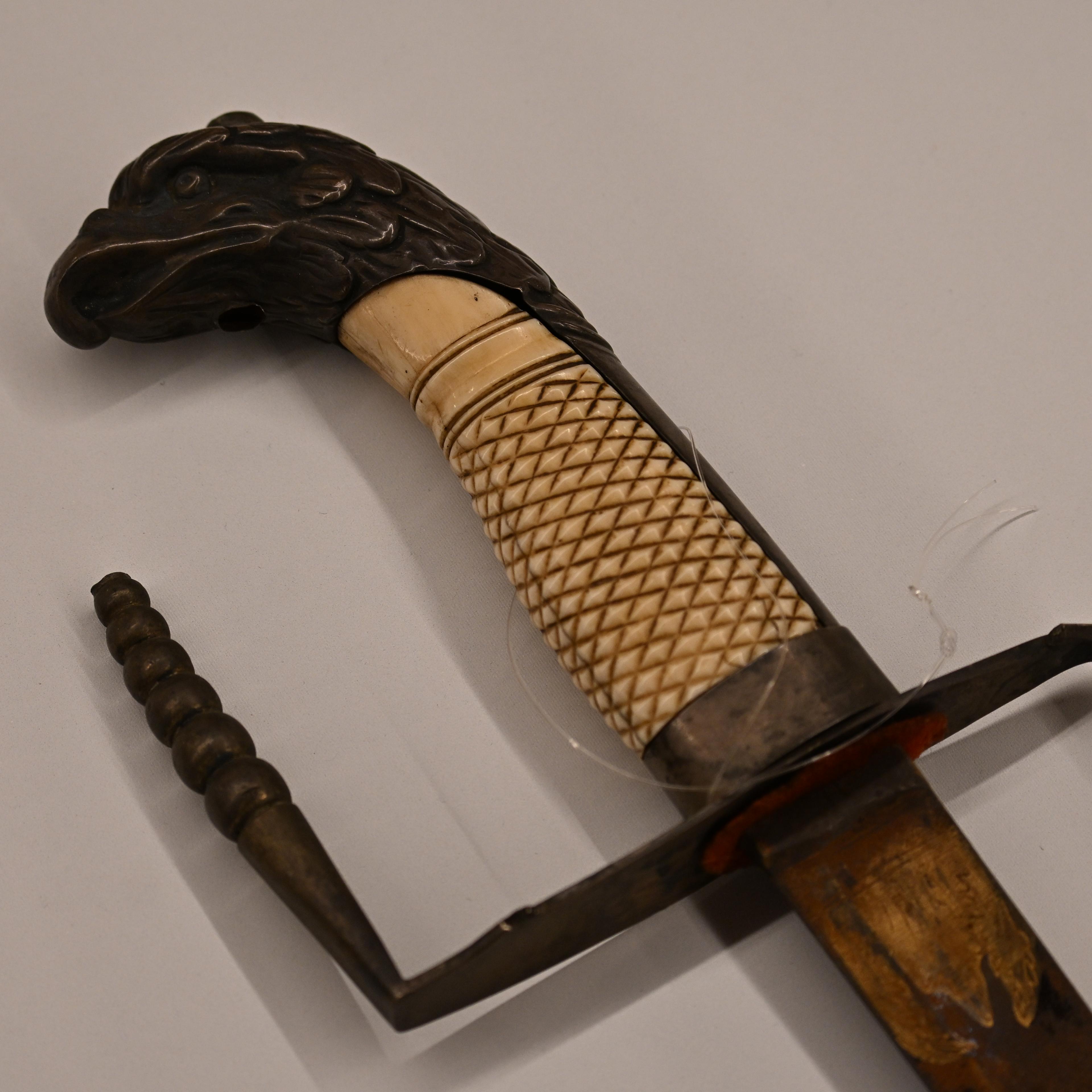
Revolutionary War officer’s sword, in metal and leather scabbard, used at the Battle of Bennington by an ancestor of Vernon Munroe, class of 1874.
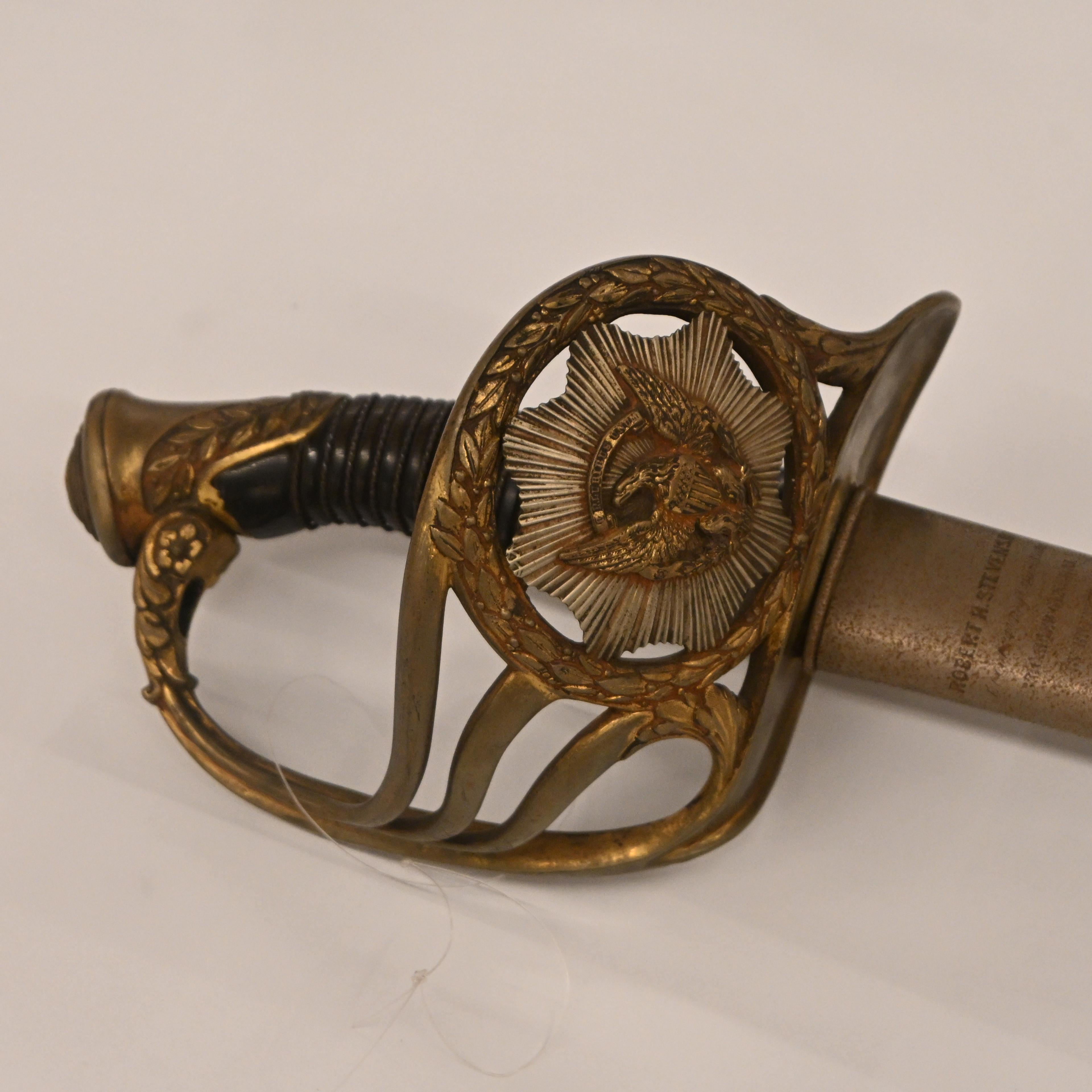
Civil War sword belonging to Brig. Gen. Robert H. Stevenson and inscribed with battles including the Battle of Goldsborough Bridge (December 17, 1862) and the Siege of Fort Wagner (July 1863)
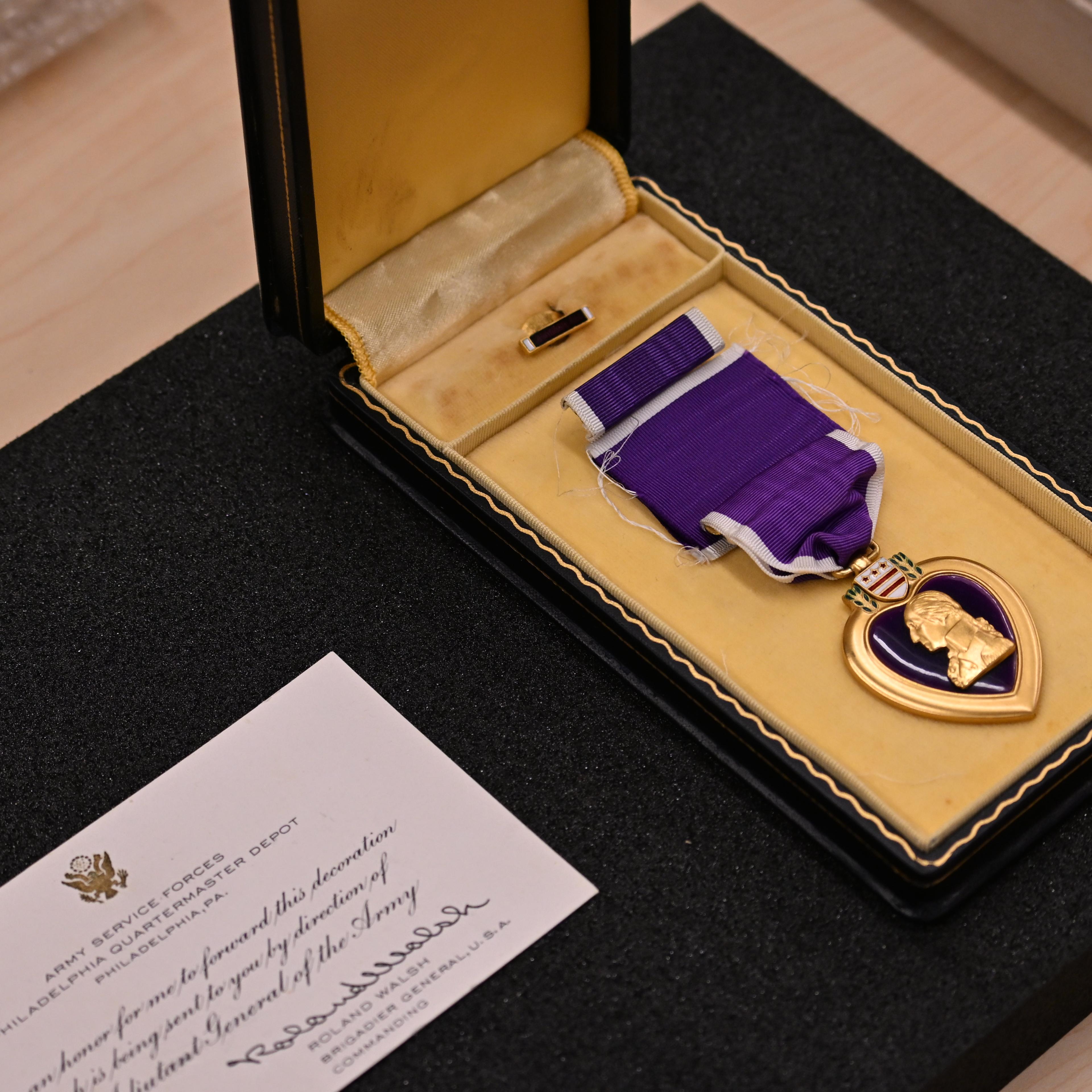
Purple heart awarded during World War II to Stephen Crabtree, class of 1942, who died in combat on April 10, 1945
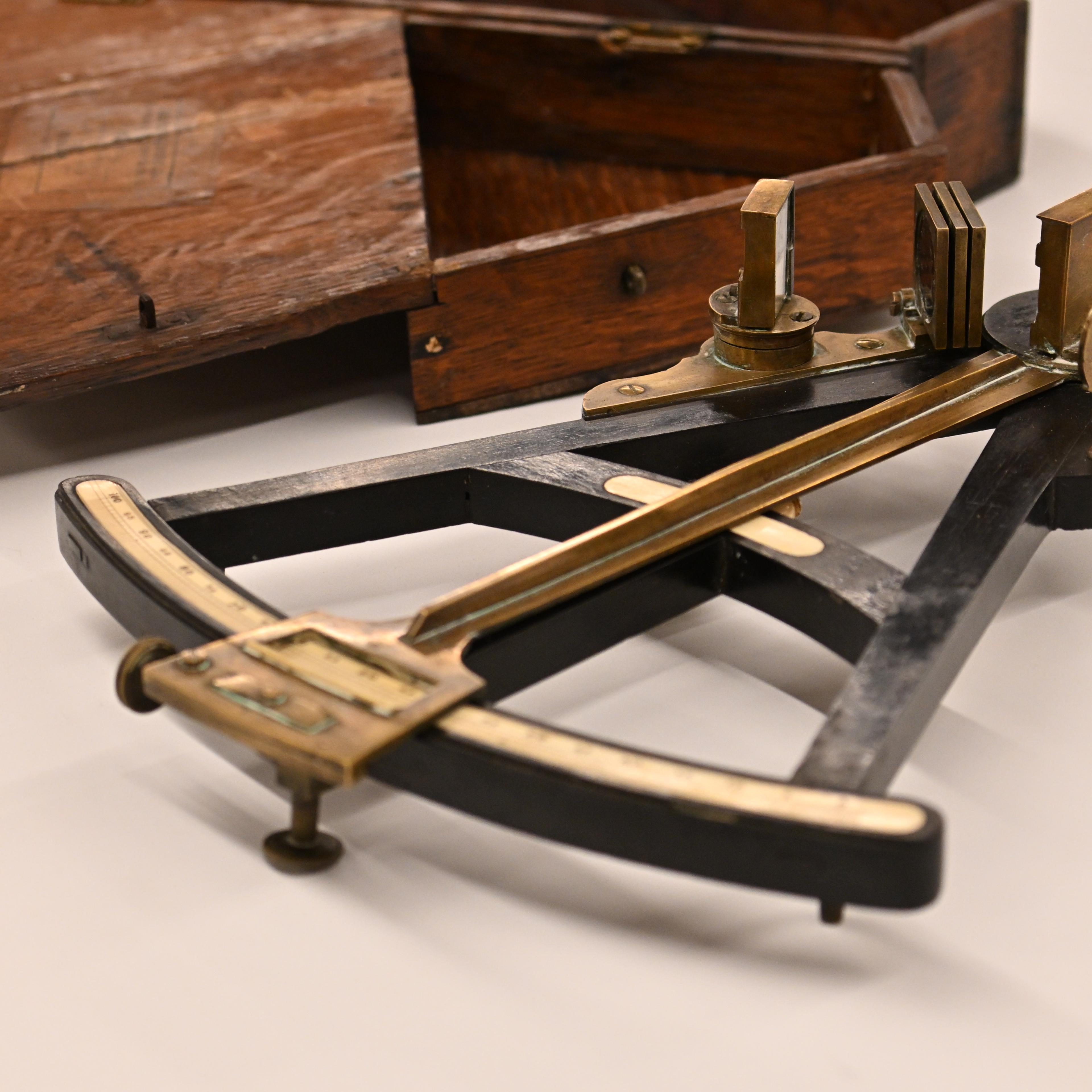
Octant, used for navigation, donated in memory of Leonard Rhoades, class of 1925, an instructor in math who taught classes in navigation during the World War II period
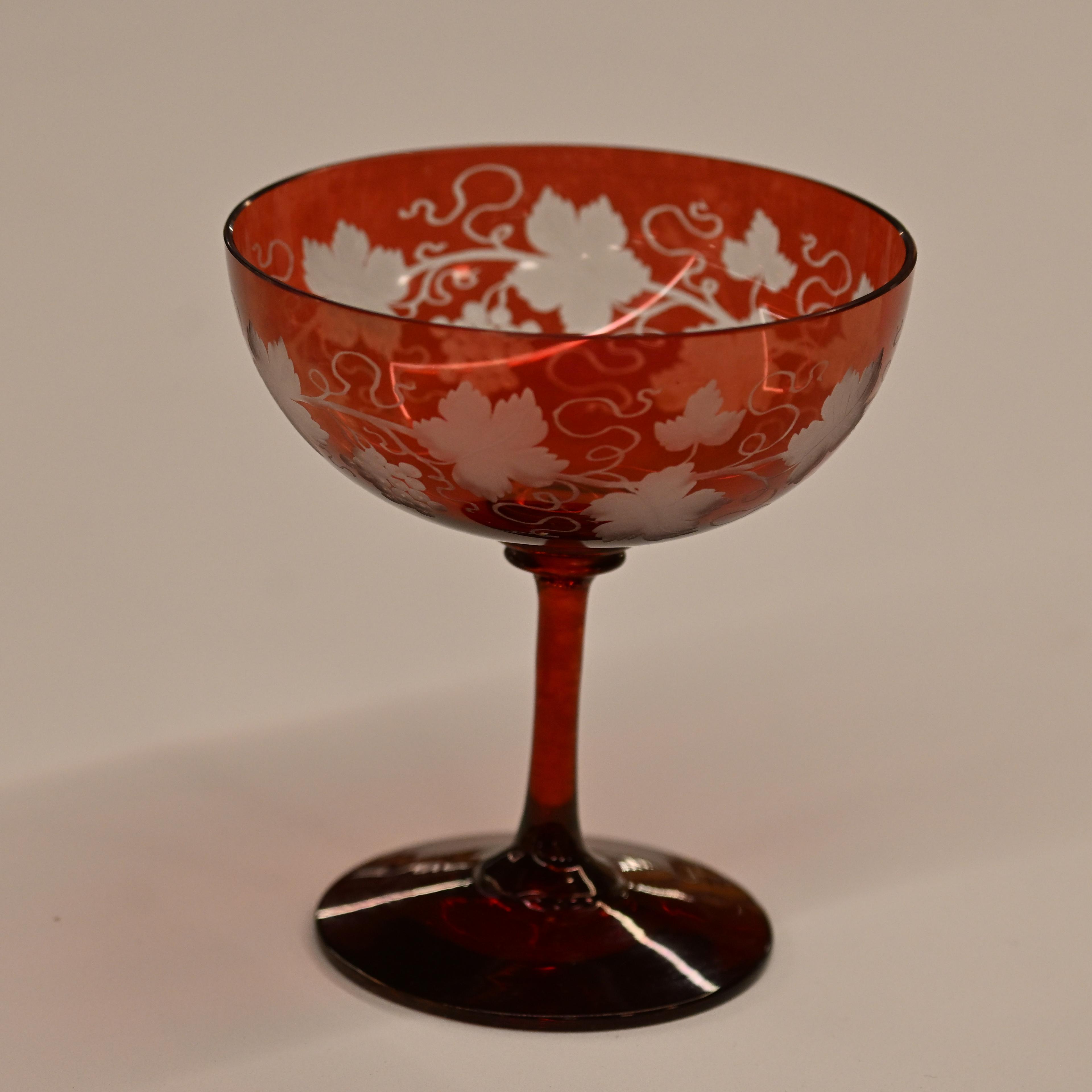
Wine glass owned by Daniel Webster, class of 1797. As a lawyer, Webster successfully argued more than 200 cases before the Supreme Court. He later served as secretary of state and in Congress, in the House of Representatives and the Senate, and sought to preserve national unity amid sectional tensions over slavery.
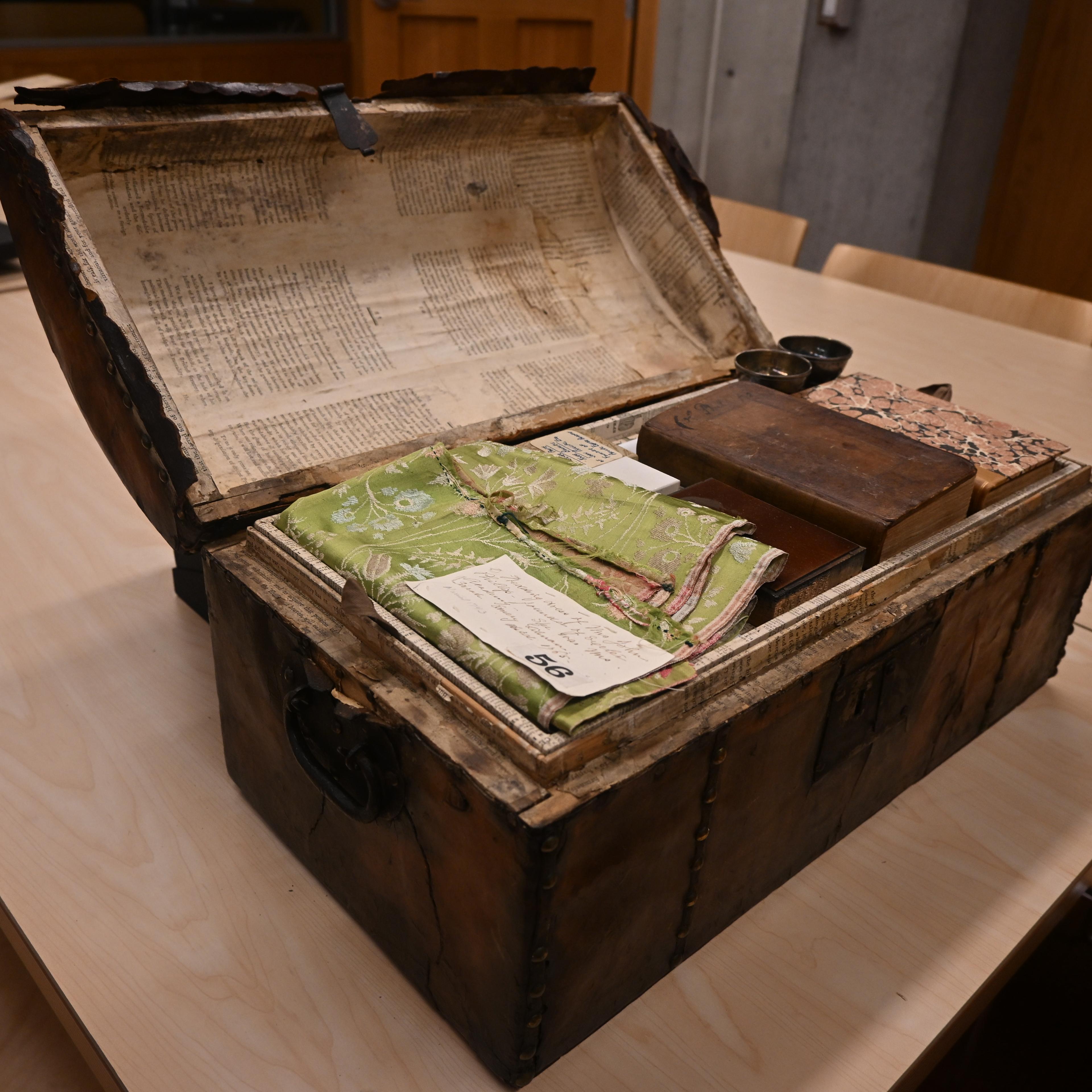
Academy cofounder John Phillips’ trunk and contents, including an examples of the mourning rings that were presented to important relatives and friends, such as the Trustees of the Academy, at the death of Phillips in 1795, Phillips’ jeweled buckles (worn at the calf), and fabric from the wedding dress worn by Phillips’ first wife, the former Sarah Emery Gilman
III.
As one of many Exonians who developed their love of history around the Harkness table, Doug Smith ’83 went on to major in history in college and earn his master’s degree and Ph.D. at the University of Virginia. When researching and writing his books — Managing White Supremacy: Race, Politics, and Citizenship in Jim Crow Virginia and On Democracy’s Doorstep: The Inside Story of How the Supreme Court Brought “One Person, One Vote” to the United States — Smith delved into topics that have a clear and enduring impact on the present day.
“I don’t think we can fully appreciate or understand the circumstances we’re in unless we do have a thorough understanding of the past,” Smith says. “As historians, we are trained to interpret the past, not to predict the future, but I think it’s quite helpful to understand what the similarities and differences are between what is happening versus what has happened previously.”
Walter Stahr ’75 worked for more than two decades as a lawyer before returning to the interest in history he developed at Exeter, where he studied with longtime instructors like Donald Cole, Arthur Gilcreast and Jack Herney, and visited the Oval Office while participating in the Washington Intern Program. Stahr is now the author of acclaimed historical biographies on John Jay, Edwin Stanton, William Henry Seward and Salmon Chase. His newest book, a biography of William Howard Taft, will be published in November.
In choosing a biographical subject, Stahr says, he doesn’t think specifically about drawing parallels between history and the present day. “When I write a history book, my aim is to write a history book, not a current affairs book,” he says.
In writing his latest book, however, Stahr says he was particularly struck by the parallels and contrasts that emerged between the present and the past. “Taft was a modest conservative president who avoided foreign wars, worked closely with allies, lowered tariff rates and reduced the federal deficit,” Stahr says. “He was the only president that we’ve ever had who spent substantial time before the presidency as a federal judge. All of the legal questions that arose during his presidency and the choice of judges — his highest priority was to get those right.”
A Town’s History
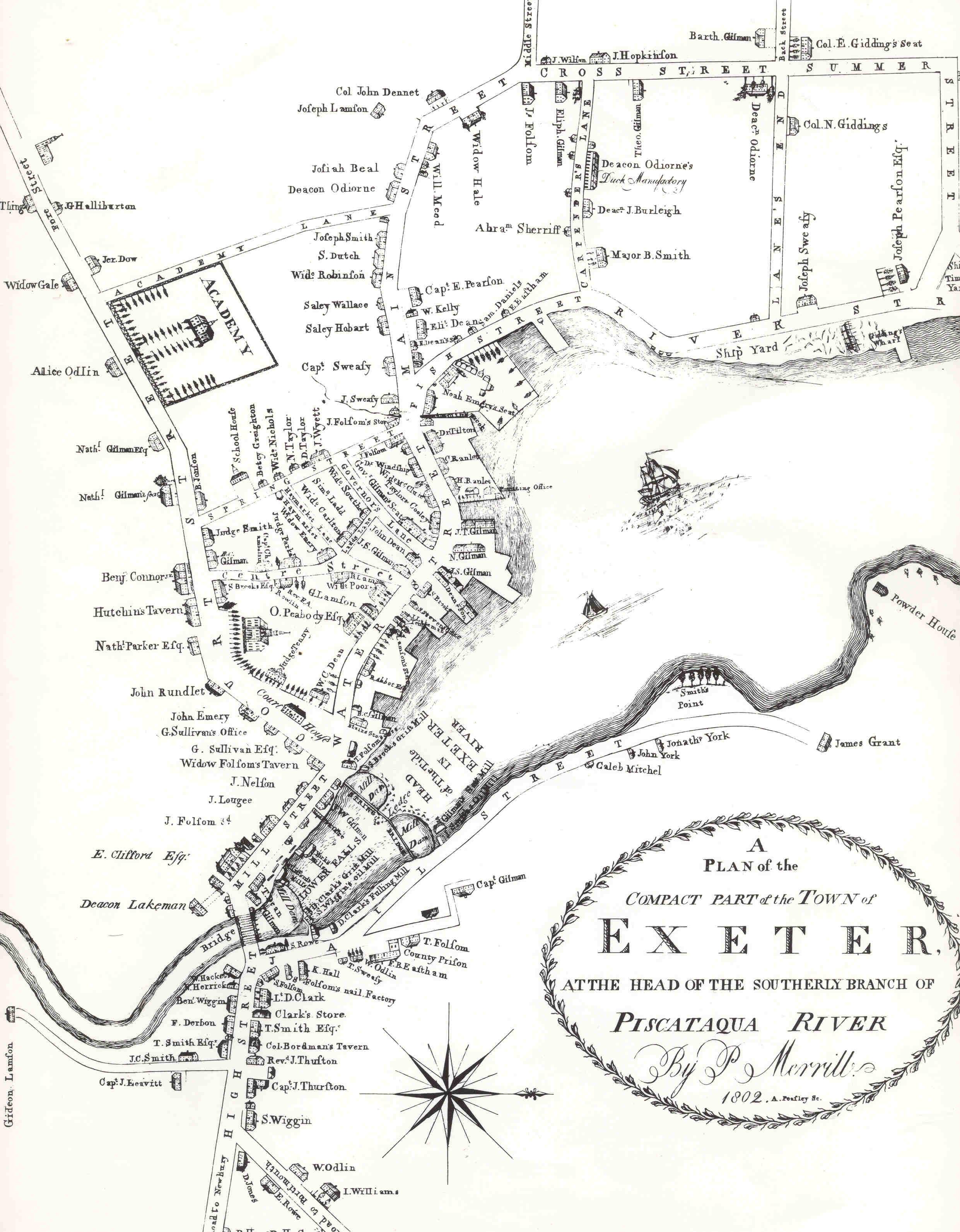
Exeter in the American Revolution
Exonians studying the nation’s founding era might not know that they are living and learning in a town that was a vital Patriot stronghold during the American Revolution,
In mid-1775, after the British governor of New Hampshire fled Portsmouth, a new capital was established at a more rural, inland location that was considered safer from British naval attack.
“It’s very hard to attack Exeter,” Barbara Rimkunas, curator of the Exeter Historical Society, says of the decision to form the state capital in town. “We have one river way that comes into town, and because of that it’s easily defensible.”
Delegates from around New Hampshire soon met in Exeter and in January 1776 they adopted what would be the first state constitution in America. Exeter remained the capital throughout the Revolution, and was home to the first state treasury, the state legislature and the Committee of Safety, which took charge of raising, paying and supplying all of New Hampshire’s troops during the conflict.
When the first printed copies of the Declaration of Independence, produced in Philadelphia by printer John Dunlap, were distributed to the 13 colonies, Exeter held a public reading on July 16, 1776. The Declaration is read each year during the town’s Independence Festival. One of the original Dunlap broadsides (out of 26 still existing) belongs to the American Independence Center in Exeter, a museum dedicated to U.S. history housed in the former home of Nathaniel Gilman Jr., state treasurer during the Revolutionary era.
John Phillips held various local and provincial offices in Exeter leading up to the American Revolution. As a successful merchant, he largely stayed on the sidelines of the conflict because of the uncertain effect independence would have on business. Instead he remained focused on leaving an educational legacy, culminating in the founding of Phillips Exeter Academy in the spring of 1781 — several months before the Revolution effectively ended at the Battle of Yorktown.
IV.
In addition to the founding era, Lyu’s other favorite period of U.S. history is the modern era, after World War II drew to a close and the Cold War dawned. “The postwar time, especially the development of the courts and law, really informs our reality today,” he says. “You get to see all the forces that shape the emerging world and our nation.”
For his 333, Lyu wrote about the 1987 Supreme Court decision in McCleskey v. Kemp, in which the Court upheld the death sentence for a Black man in Georgia for the killing of a white police officer, even though statistical evidence showed systemic racial bias in death penalty sentencing. “When I first heard about my case,” Lyu says, “I thought perhaps the majority was right. Perhaps it was not really constitutionally possible to do the sort of analysis the defense wanted.”
Through his research and analysis process,however, Lyu concluded that the Court set an unjust precedent by making it essentially impossible to prove intentional racial discrimination in a court of law. “I think that writing history to some extent forces you to get acquainted with a specific topic, and to find nuance, as well as where you might be wrong,” he says.
As the nation celebrates its 250th anniversary this year, Lyu says that understanding the repeating patterns in the past is just one of the benefits of studying U.S. history. He also sees the need to go beneath the surface of contemporary debates and struggles, and trace them back to their origins.
“There are events in history that have led to this moment, and we can’t really be mindful of our problems now if we don’t know how they happened,” Lyu says. To underline his point, he fittingly draws on the wisdom of the past and the words of Justice William Brennan, who dissented in McCleskey v. Kemp.
“There’s a famous line in the dissent of the opinion that I read while researching my paper about the case,” Lyu says, pausing briefly before summoning Brennan’s words from memory:
“‘We remain imprisoned by the past as long as we deny its influence in the present.’”
How well do you know your U.S. History? Take our quiz and learn more about the answers.
Sarah Pruitt ’95 is a staff writer for The Exeter Bulletin and a longtime contributor to History.com.