All Rise
How Exeter’s mock trial teams prepare for the courtroom — and find camaraderie and confidence along the way.
By Sarah Pruitt '95
Winter 2026
It’s 7:30 on a Monday night in October and Lauren Lee ’26 is examining a witness in a small classroom on the third floor of the Elizabeth Phillips Academy Center.
“When approached by the defendant, Ms. Grant wasn’t holding a weapon, was she?” Lee asks Jillian Cheng ’27. Except Cheng is not exactly Cheng at the moment — she’s playing the role of Cameron Rodriguez, a military veteran and retired police officer with more than 30 years of experience.
“No, she wasn’t,” Cheng says.“However, her appearance matched that of the dispatch report. … He had a reasonable suspicion, and so he approached her.” Lee continues, her tone sharpening. “And did she cooperate when Officer Smith asked for consent to search her person?”
“Initially she cooperated, but she quickly became violent,” Cheng says without hesitation.
Sensing an opening, Lee presses further: “That’s a yes to my question, She cooperated when he asked for consent to search?”
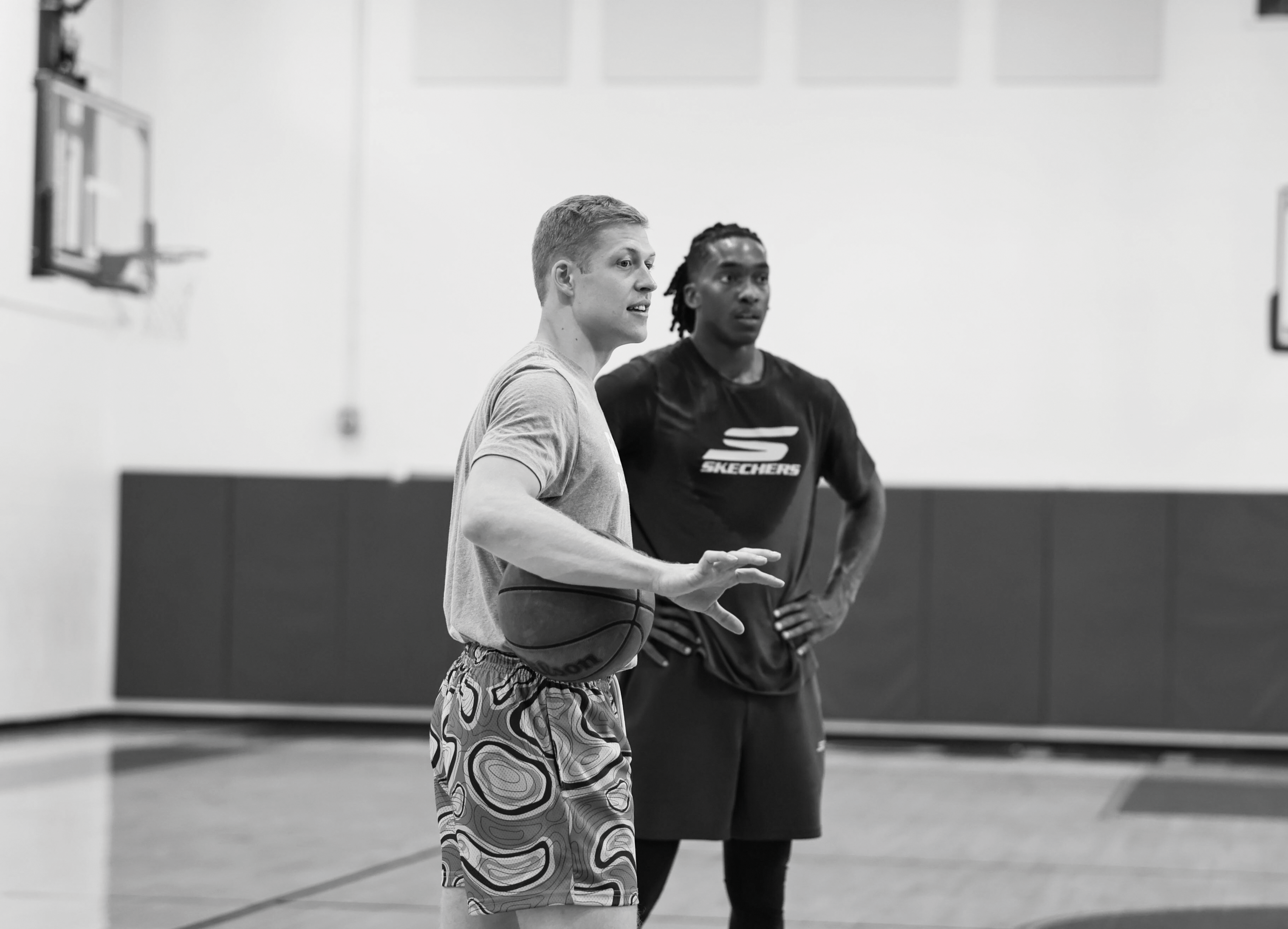
“Initially, yes,” Cheng concedes. Lee and Cheng — acting as lead attorney and expert witness — are working through Addison Grant v. Sam Smith, a realistic (but fictional) civil case in which a police officer stands accused of using excessive force when arresting a homeless woman with a seizure condition. Along with two other A Team members of Exeter’s Mock Trial Association, they are practicing direct and cross-examinations for a mock trial invitational competition in early December. Over the next several weeks —encompassing fall term finals, Thanksgiving break and the start of winter term — club members will devote significant practice time, individually and together, to prepare. The invitational is an opportunity for all three Mock Trial teams to hone their material before the 2026 state competition.
When Lee wraps up her cross-examination, it’s time for feedback. Zoe Miller ’26, a witness leader for A Team, says Lee should consider splitting many of her long questions into two parts, to make them clearer and more straightforward.
“Jillian, for your cross responses, one habit you have is saying ‘Yes, and,’” Miller continues. “I think rather than saying that, you should say, ‘Well, not entirely’ or ‘Not quite.’ Saying ‘yes’ gives them too much.”
Lee chimes in from the lawyer’s perspective, as Cheng takes the note. “Yeah, when I hear a ‘Yes, and,’ then I’m like, hmm, I’m just going to ask, ‘Was that a yes?’ and move on,” she says breezily. “But if I hear ‘Not quite,’ I kind of have to listen.”
On a campus with students hailing from 45 states and 39 countries, many living several time zones from home, clubs are one of the important ways Exonians find community and connection.The Academy has 190 student clubs, says Kelly McGahie, Exeter’s assistant director of student activities.
Joining a club is “a way for students to explore their passions, develop new passions and new curiosities,” McGahie says. “It’s also a way for them to maintain and develop friendships and meet new people that they might not have met before.”
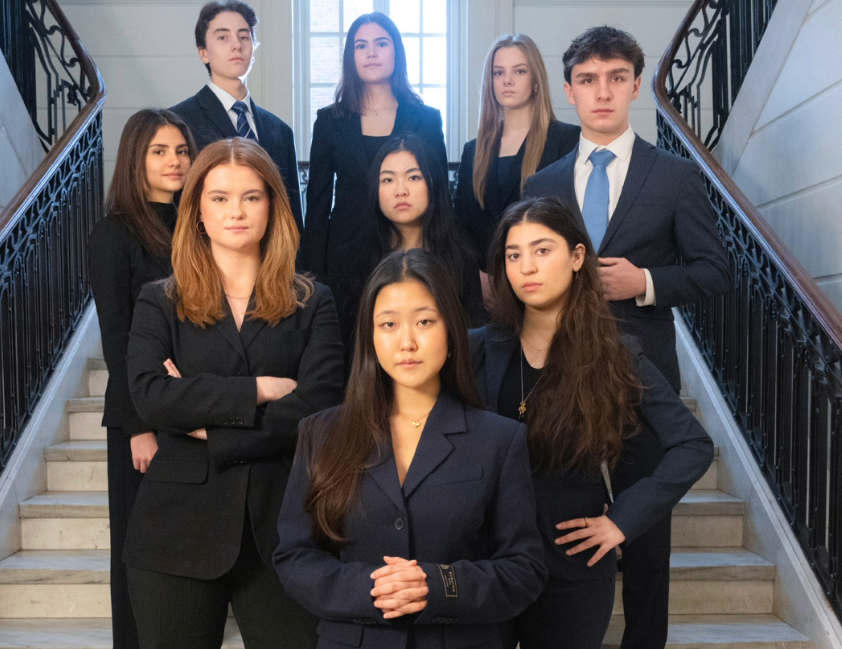
Among student clubs, the Mock Trial Association stands out as one of the strongest and most active. Mock trialers at Exeter range from experienced debat-ers and aspiring lawyers to self-described “theater kids,” all seeking to sharpen their public speaking skills and legal acumen in a competitive, intellectually stimulat-ing and enjoyable team environment. Each year, nearly 100 students audition for the club. About 30 are selected, then separated into A, B and C teams and assigned attorney or witness roles.
Other perennially popular clubs like the Daniel Webster Debate Society and Model United Nations emphasize similar skills — public speaking, logical reason-ing and persuasion — and tend to attract some of the same students. But the clubs have important differences.
In parliamentary debate, the style practiced by debaters at Exeter, stu-dents face off against each other in teams of two to argue opposing sides of a given proposition (affirmative and negative). Mock trial simulates a legal proceeding, with students performing as attorneys and witnesses in front of a panel of judges. To succeed, lawyers and witnesses alike must combine superior preparation, confident public speaking and legal acumen with flexibility and improvisational skills, not to mention a considerable flair for the dramatic.
“Debate’s a very solitary activity — you’re speaking, and then you’re done,” says Lee, who is a co-head of the Mock Trial Association as well as a co-president of the debate team. “Whereas mock trial is a very collective activity. It calls upon everyone to be capable of contributing through independent work, but also be open to suggestions.”
In Model UN, a simulation of the United Nations, students act as dele-gates from different countries, placing even more emphasis on collaboration. “You have to interact with your competitors; you have to build relationships,” says Ethan Benenson ’26, a co-head of both Exeter’s Model UN and Mock Trial Association. “The best person at Model UN is the one who can work with every-one and put themselves out there and talk a lot without making other people hate them. In mock trial, you’re perform-ing for the judge, and it’s all about total domination of the other team. But what’s common in both is that you need a lot of charisma and you need a lot of swagger.”
Mock trial has a strong presence on Exeter’s campus but a relatively short history — especially when compared with debate, which traces its roots to the founding of the Golden Branch Society in 1818. Before the renovation of Phillips Hall in 2012, generations of Exeter debaters met in a dedicated room on the building’s fifth floor, which was outfitted with a wooden stage, a large throne-like judge’s chair and wall-to-wall bookshelves. The renovation replaced that room with three classrooms.
Although mock trials most likely took place on campus earlier, as part of the Golden Branch Society’s activities, the first official interscholastic competition was held in 2008. According to an article published in The Exonian that spring, Exeter’s team defeated a more experi-enced Andover squad by one point. That initial success led to the growth of a ded-icated mock trial club and a consistent record of achievement. Exeter teams have won six of the last eight state titles and have finished as high as ninth in the national championship.
This year, Exeter achieved another milestone, capturing first place at the Yale Mock Trial Bulldog Invitational, which brings together some of the nation’s best high school teams each year.
“Exeter mock trial is just so storied,” says Lee, citing the inspiration of older Exonians who inspired her to try out for the club when she was a prep. “It’s amazing to see just how quickly the club has grown and come together.”
All of Exeter’s clubs are student-led, but faculty advisers play an important role. Lori Novell, a disbursement manager in the Finance Department, has been the adviser to the Mock Trial Association since 2016.
Before coming to Exeter, Novell developed an interest in the legal system while working as an advocate for A Safe Place, a nonprofit organization serving victims of domestic and sexual violence. Over the years, she has appreciated watching Exeter students grow in confidence and public speaking ability through their participation in mock trials.
“It’s great discipline because they spend so many hours doing this,” Novell says. “I’d like to see it become a credited class because of the amount of time they have to take to prepare for competition.”
She says Exeter Mock Trial teams are experienced at competing against each other — and supporting each other even when the result doesn’t go their way.
“It’s a very cohesive team,” she says. “Even though we have three teams, one of the things I really stress to these kids is: We are one team.”
Novell’s office is lined with trophies from past mock trial competitions, and she enjoys keeping in touch with some of the many graduates who have gone on to compete in college. Anderson Lynch ’23, a member of the Exeter squad that finished ninth at nationals his senior year, now competes for the University of Chicago, where his mock trial team is coached by another Exeter alumnus, Sam Farnsworth ’20.
Lynch says that mock trial “really changed the way I’ve been able to look at problems, see two sides to a story, and craft an argument that is persuasive but embraces aspects of the other side.” He adds: “I think it really went hand in hand with Harkness, in the sense that it taught you … how to listen to others and under-stand what they’re saying. That’s a very crucial aspect that separates great mock trialers from good mock trialers.”
Being part of the club at Exeter also had a more practical effect on Lynch. “I went into Exeter not knowing exactly what I wanted to do, and I came out of Exeter really wanting to be a lawyer,” he says. “That was almost entirely because of mock trial.”
It’s Sunday afternoon, the day before finals begin. The entire A Team — nine students, including five attorneys and four witnesses — is practicing for the last time before Thanksgiving break. The students gather in the small class-room adjoining the Library Commons area in the Class of 1945 Library. The day is chilly, and everyone is wearing sweat-pants and sweatshirts, a far cry from the pantsuits, blazers and ties in which they will compete.
Despite the cozy vibe, the mood is high as they toss ideas back and forth, mulling over the exact wording of the opening statement one of the lawyers will deliver. It’s like a turbocharged Harkness discussion, with far more interruptions and bursts of laughter.
Tamar Moskovich ’26, a club co-head and witness leader for the team, stands at the whiteboard. “A badge is not a pass to __,” she writes, drawing a line representing the unfinished sentence.
“A badge is not a pass to ignore the facts!” someone cries out.
“I think there’s too many rhymes in there,” Cheng says. On a similar note, they decide the words “regret” and “threat” don’t work together.
“He wore the badge, and ignored the facts,” someone suggests.
The raucous back-and-forth continues until they decide that “he betrayed the badge” is the right wording and move on. Over the next hour, Theo Stien ’28 cross-examines an eyewitness, Bailey Wilson (played by Miller), and conducts a direct and cross-examination of a sea-soned police officer and expert witness, played by Alex Eggers ’28.
The lawyers and witnesses have pre-pared their own questions and responses, and the group follows along in a shared document, giving both oral and written feedback. Moskovich watches each wit-ness closely, sometimes gesturing to make sure they look up at the other team members rather than down at their material. “Louder, more spark,” she advises.
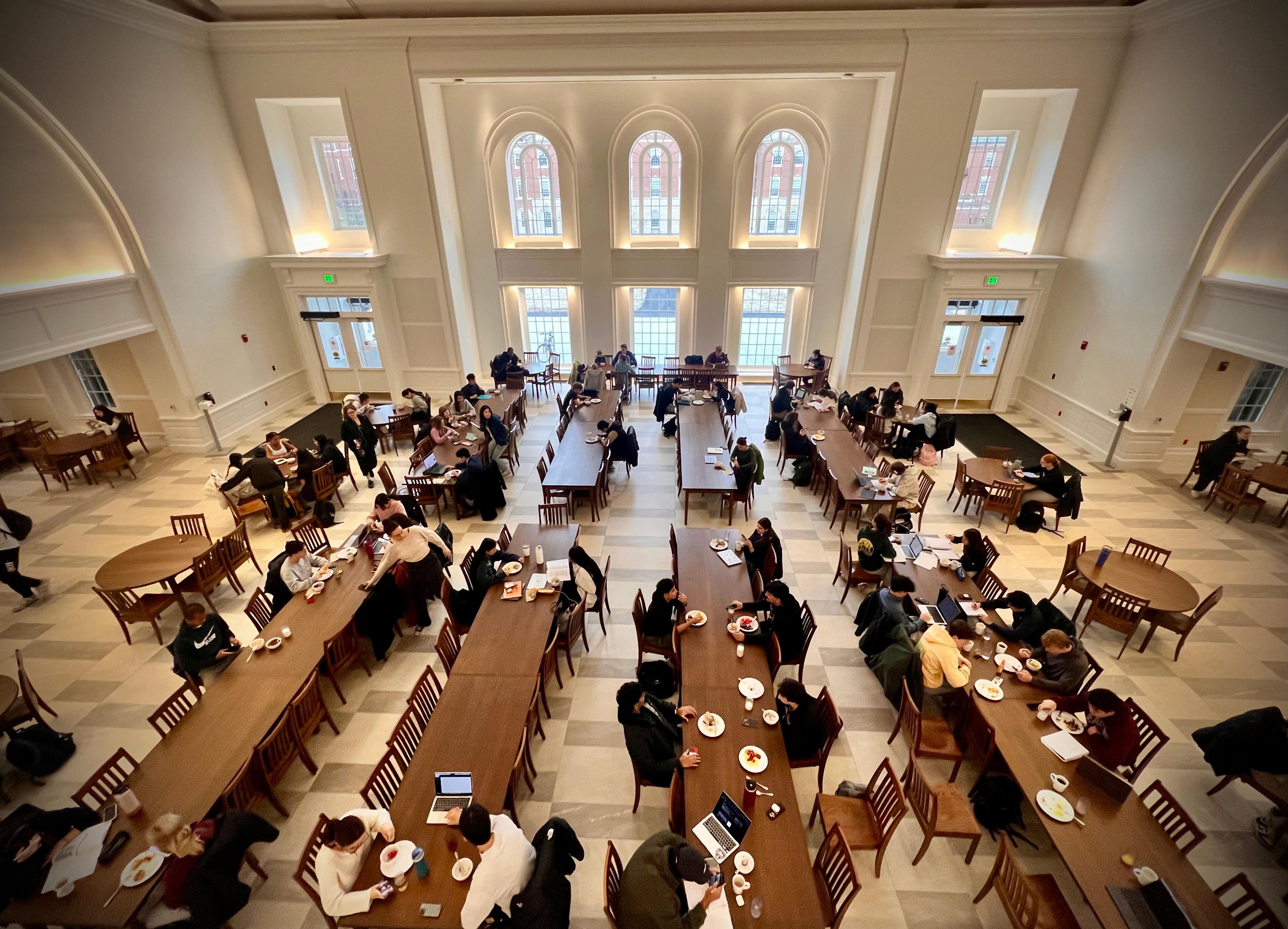
As practice wraps up, a few team members promise to send drafts of their material so others can review it over the break. Most of them are heading to Elm Street Dining Hall to eat dinner and continue discussing their case.
Before leaving, Moskovich adds a last piece of advice for Eggers, the expert wit-ness. “When you’re picking and choosing what to really respond to, those are the moments that we’re going to remember,” she says. “You can’t fight everything. What’s really the important fact?”
At each mock trial competition, a team must prepare to argue both sides of the case, prosecution and defense. In addi-tion to a presiding judge, who will sustain or overrule lawyers’ objections, a panel of judges sits in the jury box and scores each trial. Lawyers and witnesses are scored individually on aspects of their performance, adding up to total team scores that determine the trial’s outcome.
“Being a witness is very fun, and I enjoy the improv aspects of it, and put-ting on a character,” says mock trial co-head Benenson. “It allows more cre-ativity and freedom than being a lawyer, where you kind of have to stick to a very serious, more rigid personality.”
Lee, who has taken on both roles in competition, views them a bit differently. “As a witness, you’re constrained by time, you’re constrained by your cross-ing attorney,” she says. “As an attorney, though, I have a lot of freedom to move about the well. I can ask whatever questions I want. Witnesses have their affidavits, but lawyers don’t really have a foundational text that grounds us, so it requires a lot of imagination.”
In both roles, they agree, preparation is key. “When you get in a courtroom, it’s very nerve-racking,” Benenson says. “At every moment, someone’s watching you and giving you a score for everything you do. But when I feel extremely prepared, I have the confidence to know that I can perform at my highest level, no matter the scrutiny or the pressure of the spot-light that’s on me.”
Although other high school mock trial teams typically are guided by experienced attorneys, Novell emphasizes that Exeter’s teams are largely self-taught. “They like it that way,” she says.
In recent years, the club has begun a tradition of choosing seniors to captain the C Team, so they can guide and men-tor newer club members. “It’s helped to strengthen the program going forward,” Novell says.
Benenson was on the A and B teams during his first three years at Exeter and went to nationals twice. In the spring of his upper year, he applied to be a co-captain of C Team.
“I thought about how I could make the biggest impact on the club and do work that feels most important to me,” he says. Leading C Team has helped Benenson improve his mock trial performance. It also has been rewarding, he says, watching his teammates “connect with each other and grow as peo-ple and into more confident lawyers and witnesses.”
With their material (presumably) memorized, the members of A Team return from Thanksgiving break for winter term classes and an intense week of practice. Before competitions, they meet every night, including a planned three-hour session the night before they depart for the invitational.
“We’re very committed to practicing, especially in the week leading up to a tournament,” Moskovich says. “It’s also important that we’re very comfortable with each other, so we know that when we’re in trial we trust each other and our abilities.”
Eggers, for one, plans to run through her witness material one last time in front of a mirror on the morning of the competition. “Just so I really get it in my brain, and I’m fully into my character before I go on the stand,” she says.
On a bright Saturday morning in December, Novell joins the members of the Mock Trial Association on the bus for the 50-minute drive to Bishop Guertin High School in Nashua, New Hampshire. Over the next two days, they emerge with a clean sweep of the Peter Champagne Memorial Tournament, with A Team taking first place, C Team sec-ond and B Team third. In the individual categories, Moskovich is honored with an Outstanding Witness Award, while Forrest Zeng ’26, Benenson’s C Team co-captain, is named an Outstanding Attorney.
The club can now look ahead to the state competition in February and, per-haps, the 2026 national championship in May in Des Moines, Iowa.
“It’s a confidence booster to win our first trial together as a team,” says Rhys Cunningham ’27, an attorney on A Team. “Now that we have that under our belt, we can go into states confident in ourselves.”
For Benenson, the most memorable moments in mock trial happen on the eve of big competitions.
“You’ll pretty much be with your team from dinner to check-in, getting final work in,” he says. “You’re under pressure, but that’s when everyone really comes together, and it feels like you’re truly part of a group, and you’re really building something together.
“Thirty years from now, when I look back on the feeling of doing mock trial at Exeter, I think those are the nights I’m going to remember the most.”
Sarah Pruitt ’95 is a staff writer for The Exeter Bulletin and a longtime contributor to History.com.