Paws and Reflect
Stephanie McGrath ’94 studies dogs to better understand human aging
By Debbie Kane
Fall 2026
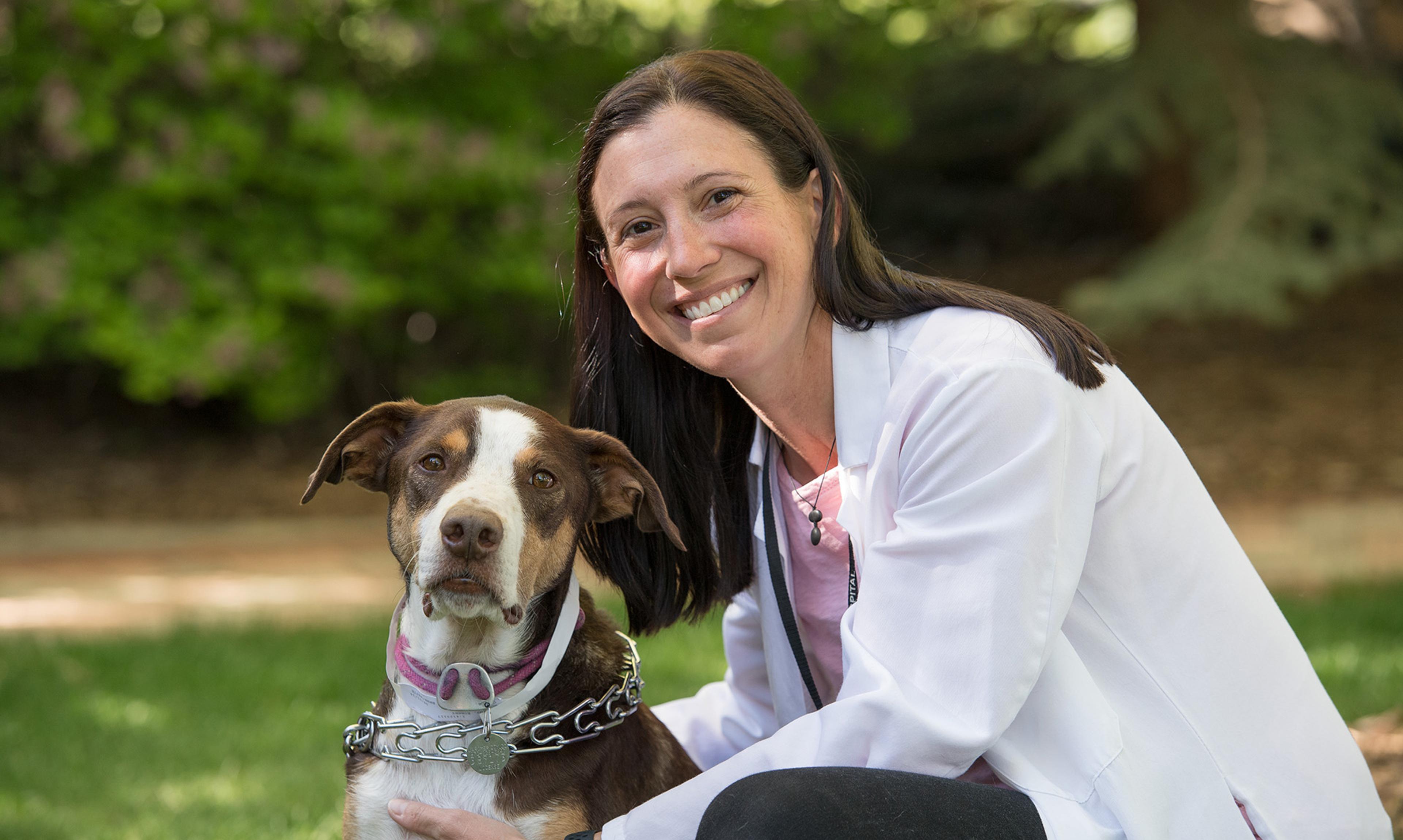
Hundreds of dogs and their owners bound, trot or amble into the Colorado State University Veterinary Teaching Hospital each year for a medical checkup that includes agility tests and games of hide-and-seek. But veterinary neurologist Dr. Stephanie McGrath ’94 isn’t teaching old dogs new tricks — she’s studying how their brains change as they age.
McGrath is director of CSU’s Brain Research Center and a lead researcher on the Brain Health Study, a regional cohort of the Dog Aging Project, a national program and collaboration of dog owners, scientists and veterinarians studying dogs over decades. The Dog Aging Project spans research sites at colleges and universities around the country; more than 50,000 dogs have participated since the project began in 2014.
The research is not only aimed at helping dogs become healthy agers. Because dogs’ genetic diversity closely mirrors humans’, the McGrath team’s findings could help unlock the mysteries behind human cognitive disorders like dementia and Alzheimer’s disease.
“Dogs can have naturally occurring diseases of aging, like heart, liver and kidney disease, cancer or dementia — diseases we also see in humans,” McGrath says. “One long-term goal with the information we collect is to see how closely it mirrors similar diseases in humans. It’s a new model for understanding human disease.”
Because dogs live in the same home environments as their human companions and are exposed to similar stressors like heat, cold and indoor air quality, they provide particularly valuable insights. They also age faster than humans, making it easier to study cognitive health, McGrath says.
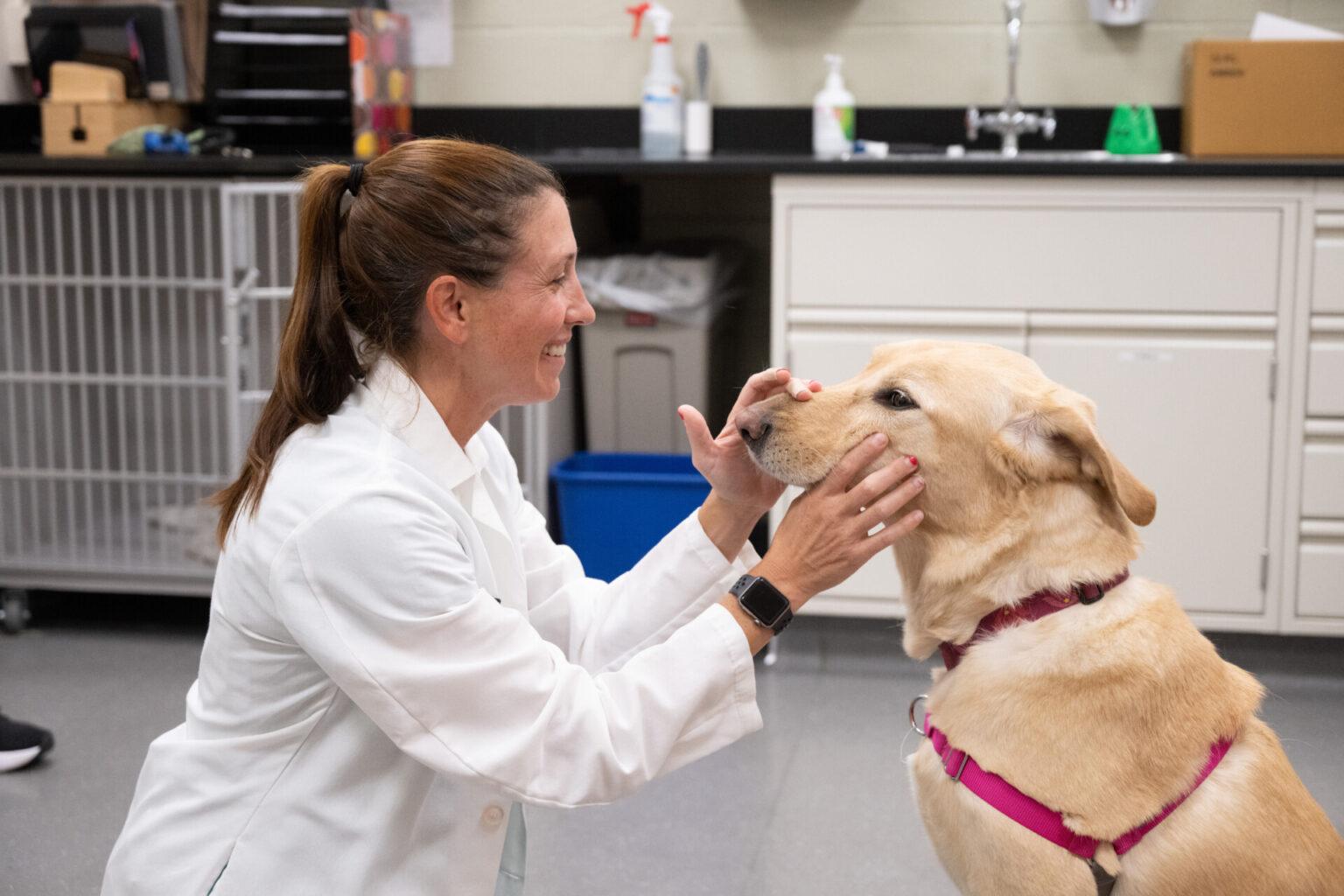
CSU’s Brain Health Study has enrolled more than 500 dogs ages 1 and older. McGrath’s 2-year-old black Lab, Lulu, is a study participant. “We’re sending the research team lots of information” about her, she says. During their visits to the veterinary hospital, the dogs have their blood drawn (it’s eventually analyzed for biomarkers that indicate signs of early cognitive issues), have DNA samples taken, and have an MRI and a spinal tap, all under anesthesia. Testing includes examining each dog’s gait and memory tasks, which usually include treats. “The dogs love it,” McGrath says. “They play lots of games, get tons of pets.” When dogs die, their brains are donated for further research.
A Latin American Studies major, McGrath didn’t intend to study medicine. Her career path changed after she graduated from Columbia University. She credits Exeter with fostering an ability to think creatively about pursuing her passions. “Most veterinary students pursue their degree because they love animals,” McGrath says. “What drove me was learning anatomy and the systems of diseases.”
After receiving her Doctor of Veterinary Medicine from Michigan State University, McGrath studied neurology. “Neurology and neurosurgery are the same disciplines in veterinary school,” she says. “I liked that I could perform surgery while also studying the nervous system.” She joined CSU as a clinical veterinary neurologist and associate professor of neurology in 2008.
At CSU, McGrath works on the Brain Health Study with neurotoxicologist Dr. Julie Moreno, who analyzes McGrath’s data to explore parallels in the human brain and inform treatments for pediatric brain cancer. Early results are promising.
“The brain of a dog with dementia mirrors what we see in the earliest stages of Alzheimer’s disease in humans,” McGrath says. “That gives us a chance to better understand the disease in dogs and use those insights to guide targeted therapies.”
She is also directing clinical trials on the effects of certain medications on the canine aging process. One focuses on using the immunosuppressant rapamycin to treat dogs with brain tumors. Another, performed in conjunction with the Institute of Cannabis Research, looks at the effects of CBD on dogs with epilepsy.
The ultimate reward of her work, McGrath says, is “helping both the animals we took an oath to help … and the person at the other end of the leash.”