Shooting for the Stars
Russ Schleipman ’67 reverse engineers 1923 telescope for today’s backyard astronomers
By Danielle Cantor
Fall 2026
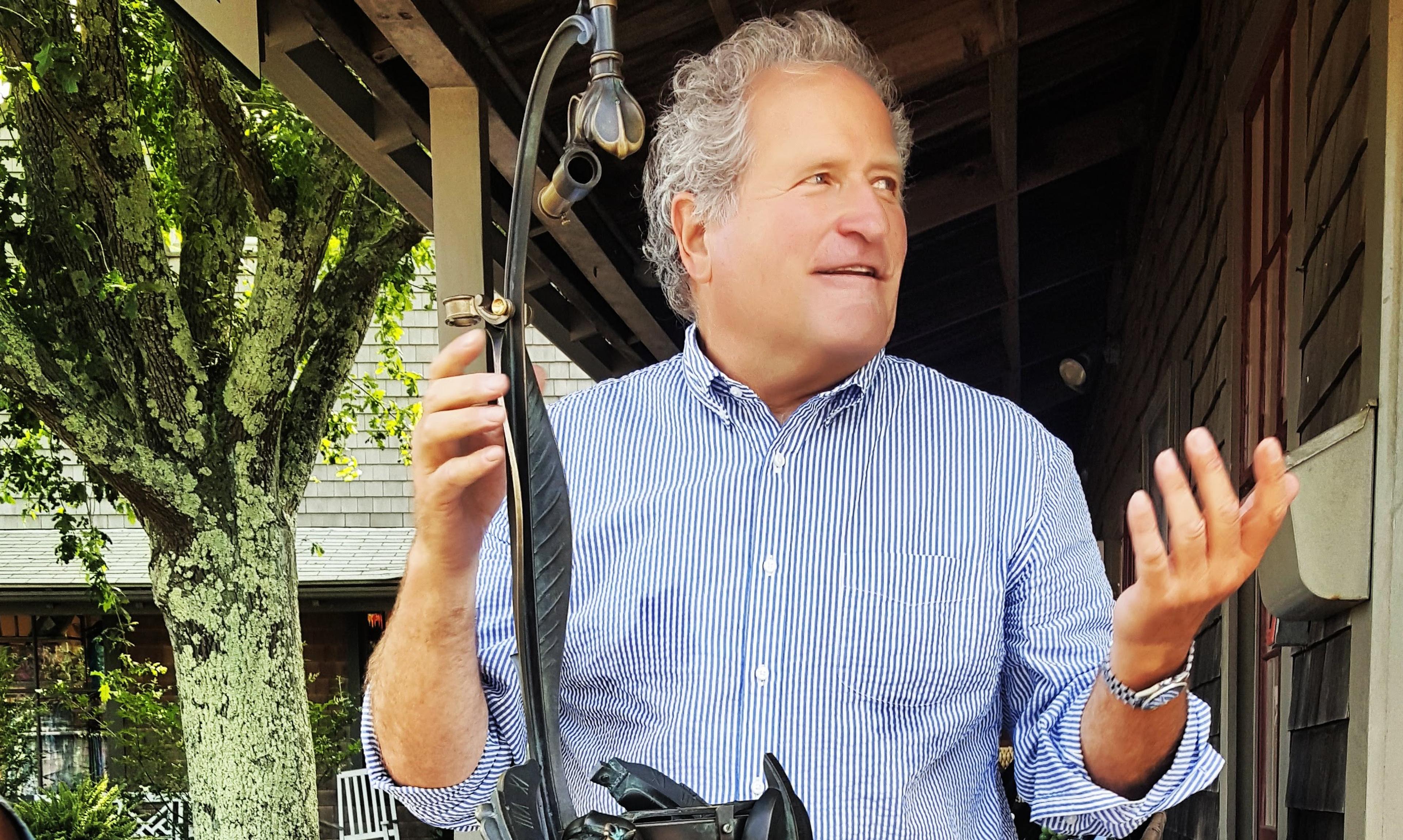
Russ Schleipman ’67 is accustomed to seeing the world through a lens. An award-winning commercial photographer who found his calling in the darkroom at the Academy, he has captured scenes for the likes of RTX, Rockresorts, Sikorsky, the Vatican and Vera Wang. His assignments have taken him around the world, from Tiananmen Square in Beijing to Mont-Saint-Michel in France, always seeking the beauty in the unexpected details.
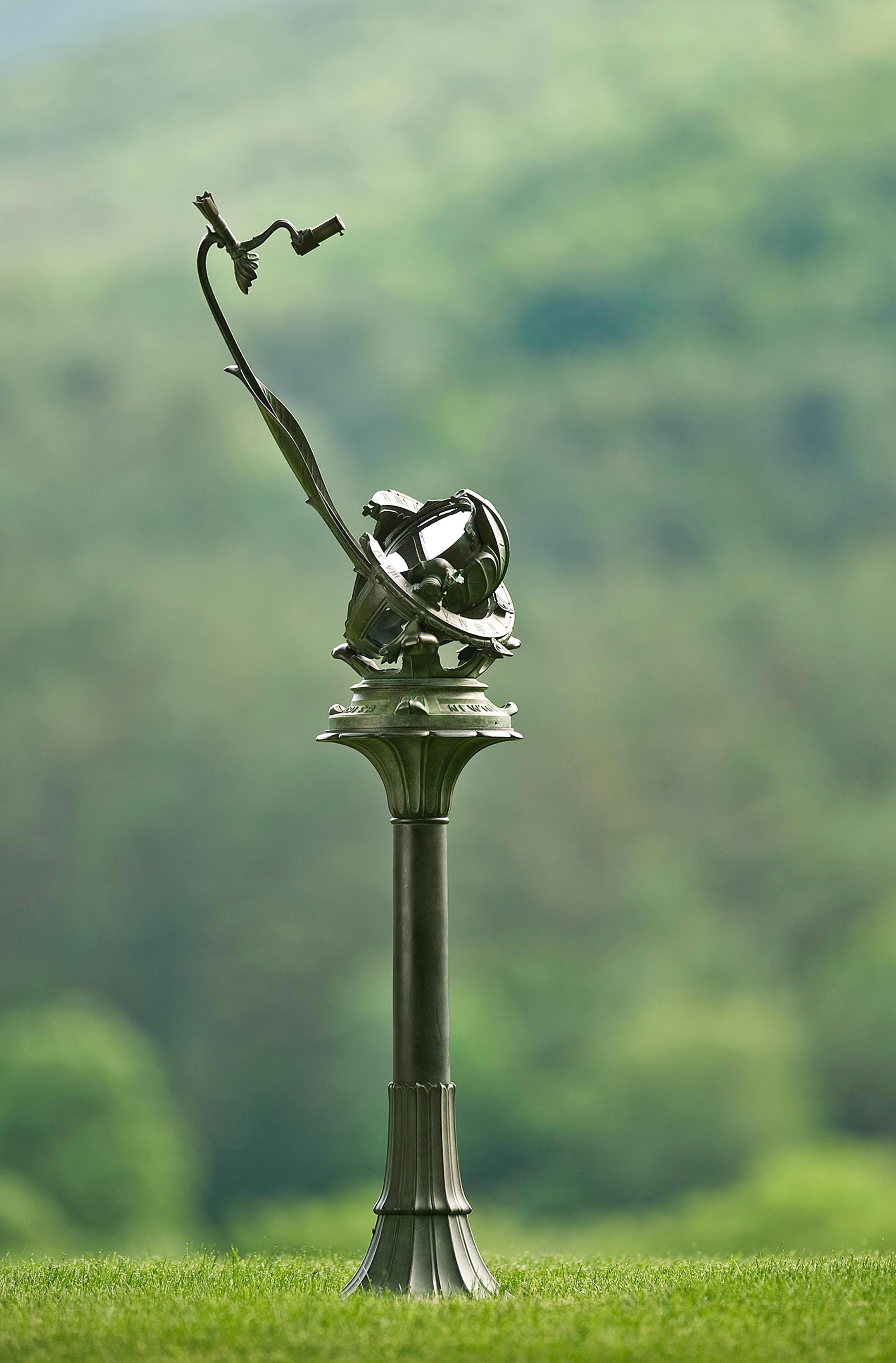
But for the past two decades, he has been equally captivated by the view through a different type of lens — one that requires no focusing, and no travel beyond a stroll to the back-yard. Schleipman has championed the revival of the Porter Garden Telescope, an elegant Art Nouveau sculpture created in 1923 by Russell W. Porter, an architect and artist often called the father of amateur astronomy.
A perfect blend of art and science, the piece encased the optical elements of Newton’s classic reflecting telescope within gracefully sculpted botanical elements and featured a working sundial.
Fewer than 100 were produced, one of which resides in the National Museum of American History in Washington, D.C.
Today Schleipman’s company, Telescopes of Vermont, produces near-perfect replicas.
“Russell Porter was a real giant among astronomers and artists,” Schleipman says. In the 1920s, Porter set out to invent a telescope that could make a view of the heavens more accessible to amateur stargazers, but his work had a lasting effect on astronomy far beyond the gar-den. Many of his movements from that project, such as a split-ring equatorial mount, found their way into his next, the 200-inch Hale Telescope at the Palomar Observatory in California.
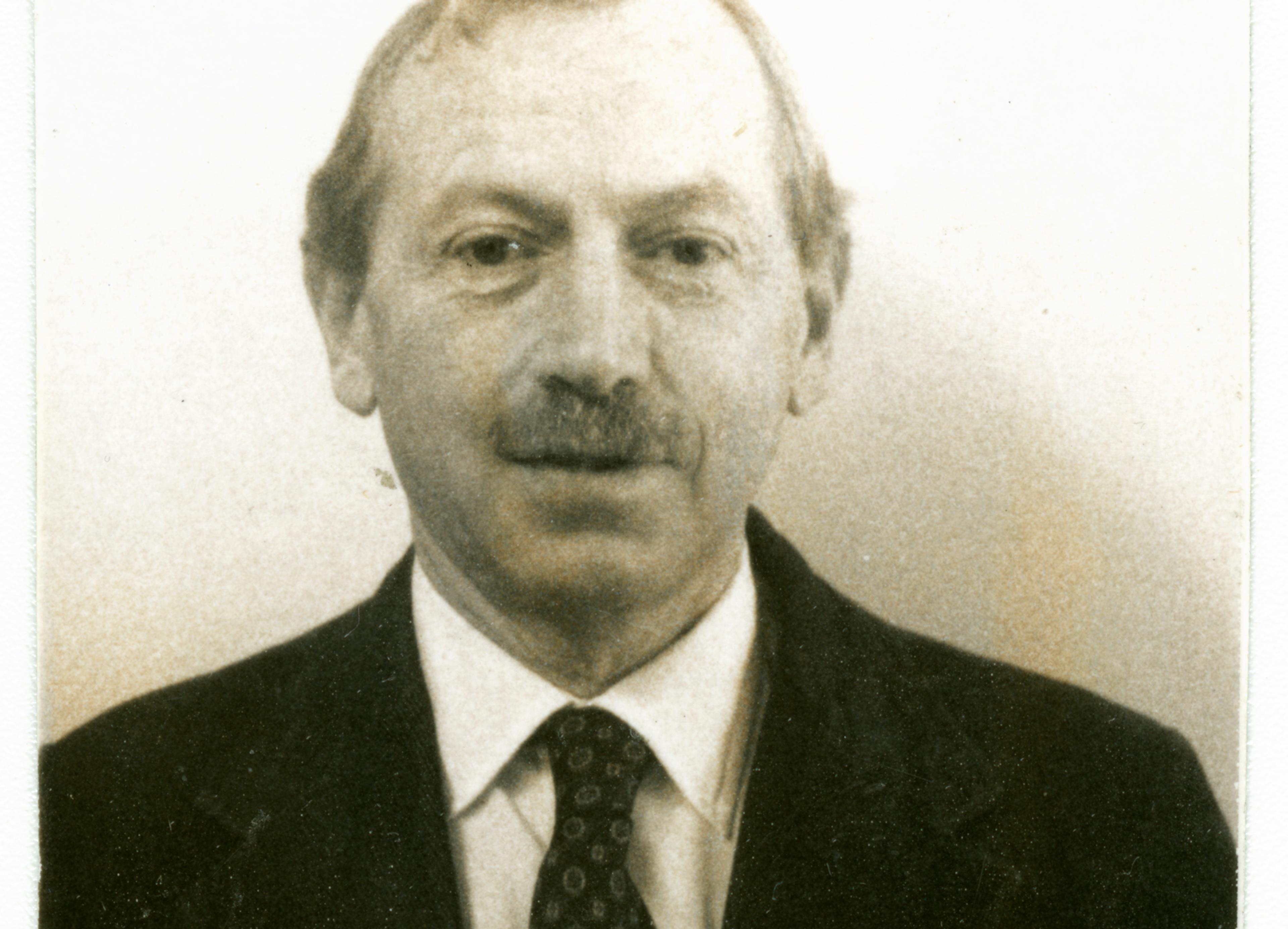
Schleipman’s father, Fred, drew him into this endeavor. A skilled machinist and instructor for the engineering pro-gram at Dartmouth College, Fred fell in love with the garden telescope upon first seeing it at the Springfield Telescope Maker’s museum in Vermont in the late ’70s. He was certain he could modernize it. It took 30 years to persuade the museum to let him try. Complicating matters even further was the fact that the original patterns were lost.
“The whole thing had to be reverse engineered,” Schleipman says, “to create the patterns to make the castings. And there’s shrinkage when you cast bronze and as it cools. So to match the existing dimensions, the patterns had to be a little bit bigger, which all required a lot of computer design work.”
Russ and Fred recruited a team of optical engineers, machinists and pat-tern makers from foundries in New Hampshire, Maine and Montana to join their cause. They were lent the original telescope for just three weeks, during which they were able to scan it and begin creating new patterns. They worked through the meticulous casting of more than 30 unique components and hundreds of machining operations in which thousandths of an inch made all the difference. After years of refinements, the team was successful. To date, 40 of the handcrafted new telescopes exist.
The reborn telescope, captured in all its glory in Russ’s photographs on the company website, is exquisite, perfectly proportioned and engraved with deli-cate botanical details. Made entirely of hand-cast bronze, it stands 66 inches tall with its pedestal and weighs approximately 110 pounds. A 6-inch f/4 mirror and 50- and 75-power eyepieces deliver satellite-grade views of the moon, Jupiter, even Saturn’s rings.
“The moon fills the circular field in the eyepiece almost concentrically, just almost a perfect fill at 75 power,” Schleipman says. “And on a nice half moon, with cross light and rubble and texture, you could look at it and feel like you’re there. You’d say, ‘Gosh, this is kind of like what the folks who landed there saw as they were approaching it. It’s close, it’s crisp, it’s beautiful.’”
Over the years, the telescope has dazzled the astronomy world and art collectors alike. It even landed Schleipman five minutes with Queen Elizabeth II, who went to the Chelsea Flower Show in London to see a replica.
When Fred Schleipman died a couple of years ago, Russ was left to shepherd the legacy of the resurrected garden telescope. He says he now spends about half his time marketing the company, traveling from his home in Yarmouth Port, Massachusetts, to do demonstrations for potential clientele. Then he goes back behind the camera, shooting landscape work on Cape Cod and waiting to see where his next assignment will take him.