Retention Takes a Village
Hadley Camilus, associate dean of multicultural affairs, on his transformative decade at Exeter
By Hadley Camilus
Fall 2026
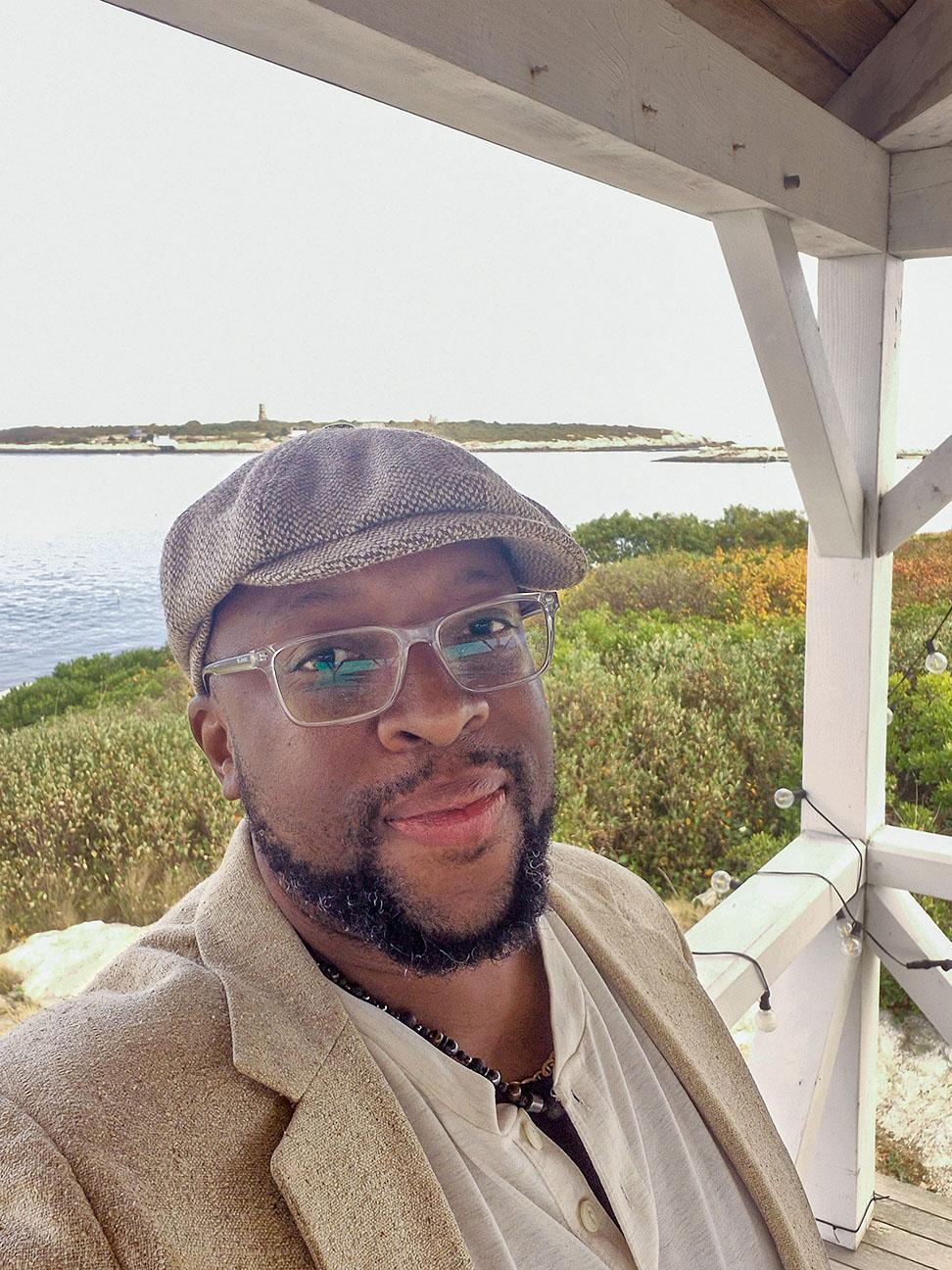
As I begin my 10th school year at the Academy, I'm thinking about a few critical moments that helped me get to this point.
On a hot afternoon in July 2017, I pulled up to the Wentworth parking lot on Court Street in a U-Haul truck that needed maintenance. That was on the heels of hauling furniture with a handful of helpers out of the single-family home I rented in Worcester, Massachusetts, for the previous 18 years.
Unfortunately, most of the volunteers couldn’t make the trip to Exeter — leaving my brother-in-law, my wife and her best friend as the moving crew. I stared at my new home, Wentworth Hall, hoping that if I looked at the building long enough, everything in the truck would just magically appear in the apartment. After a few minutes, delusion gave way to my stark reality. It was time to get back to work.
As I painstakingly slid out of the driver’s seat to lift the latch off the rear cargo door, an angel appeared — actually, two of them. They were father and son, Sean and Angelo Campbell, my new neighbors. After a quick introduction, they volunteered to help, going as far as carrying my washer and dryer up two flights of stairs into our apartment. They even refused to accept compensation afterward. I was floored by their generosity of spirit.
The next day I found a bouquet of fresh flowers resting on my door with a welcome note from a neighbor (Meg Foley, then a history instructor, now dean of faculty). It was the first time anybody had ever welcomed me into a community in that manner. After receiving an email dinner invitation a couple of days later from another colleague (Math Instructor Panama Geer, now chair of the department), I was convinced that the Academy had made some type of coordinated grand retention effort. To date, nobody has confirmed my suspicion.
Coming into this role, I had a goal of seeking collaborative opportunities with different departments. Before I could canvass the community, a colleague from the Theater Department (Sarah Ream) reached out with a cool idea. She wanted to develop a staged play-reading series for students with marginalized identities, particularly students of color. I hadn’t even been here a full month and she seemed to trust my instincts and guidance. And to boot, she offered my 4-year-old daughter a cameo in the first play to be held on the main stage in The David E. and Stacey L. Goel Center for Theater and Dance.
After the initial rush of goodwill, the shock of working at an elite boarding school in a predominantly white state slowly crept in. Long-suppressed insecurities about race and class resurfaced unexpectedly. I found myself not being able to employ tried-and-true methods to connect with students. On a regular basis, I was grappling with feelings of being an outsider in one form or another.
Students reflected on visiting parts of the world I hadn’t heard of. Growing up in a working-class household, my family didn’t travel much. Many students didn’t get my humor. Some remarked that I was intimidating, which was feedback I had never received from youth. Several colleagues had terminal degrees and were published. I had yet to complete my master’s degree and my claim to fame was developing a leadership conference at my alma mater. Few people nodded in acknowledgment as I spoke in different settings; they just stared, seemingly bewildered about a point that I felt was abundantly clear. Faculty meetings often felt hostile. The words people used were scrutinized in a way that I had never experienced. Students coming through the Office of Multicultural Affairs wanted immediate solutions to longstanding grievances that weren’t simple to resolve. I also didn’t always agree with the solutions they proposed. There were eyes on me everywhere in town. I couldn’t find a restaurant with flavorful food, or a capable barber. Suddenly, sleep began to elude me. Within months, I no longer felt like my confident self anymore.
After a club meeting one night in my first or second year, I resolved that maybe PEA wasn’t for me. While sitting with that thought, a colleague (English Instructor Willie Perdomo) suggested we link up off campus to hang out sometime. Days later, we were seated at a restaurant in town, chopping it up. I understood his humor. We laughed and talked about our roots and shared appreciation for hip-hop, among other things. Afterward, he suggested dining together with our wives — both of whom are Puerto Rican. As I waited to sit at his dining room table during that gathering, a can of Café Bustelo, my Haitian mom’s preferred brand of coffee, came into view in his kitchen. No wonder he felt familiar, I thought. The delicious dinner his wife prepared further confirmed my instincts.
That connection offered a boost, but I was still trying to get my swagger back. As I sat in OMA one day, a new hire (Director of Equity and Inclusion Stephanie Bramlett) walked in and asked if I wanted to take a ride to the University of New Hampshire. I accepted her invitation.
We visited a federally funded program that supported underserved college students. Coincidentally, my first job out of college was also with a government-subsidized initiative in Worcester. The position confirmed that my life’s work was to advise and support students with marginalized identities. Bramlett didn’t explain why we ventured to UNH that day. I chalked it up to divine intervention. Since then, we’ve hung out plenty of times in a variety of venues, and I always manage to glean some wisdom from her.
I’d be writing for a while if I recounted every interaction and act of kindness that resulted in my decade-long tenure in the Office of Multicultural Affairs — a department that embraces all of me. I can be myself there in ways I didn’t think were possible professionally prior to working here. Deep dives that I call “riffs” with my OMA and Office of Equity and Inclusion peeps act as daily pro-fessional development. My next door neighbor in the office (Jennifer Smith, international students coordinator) and I regularly check in for “Monday Mash-ups” and “Tuesday Turn-ups” where we talk through random ponderings and life. And finally, my supervisor (Dean of Multicultural Affairs Sherry Hernandez) encourages me regularly to lead initiatives and pursue professional development opportunities. At my last job, growth wasn’t encouraged in the way that it is here.
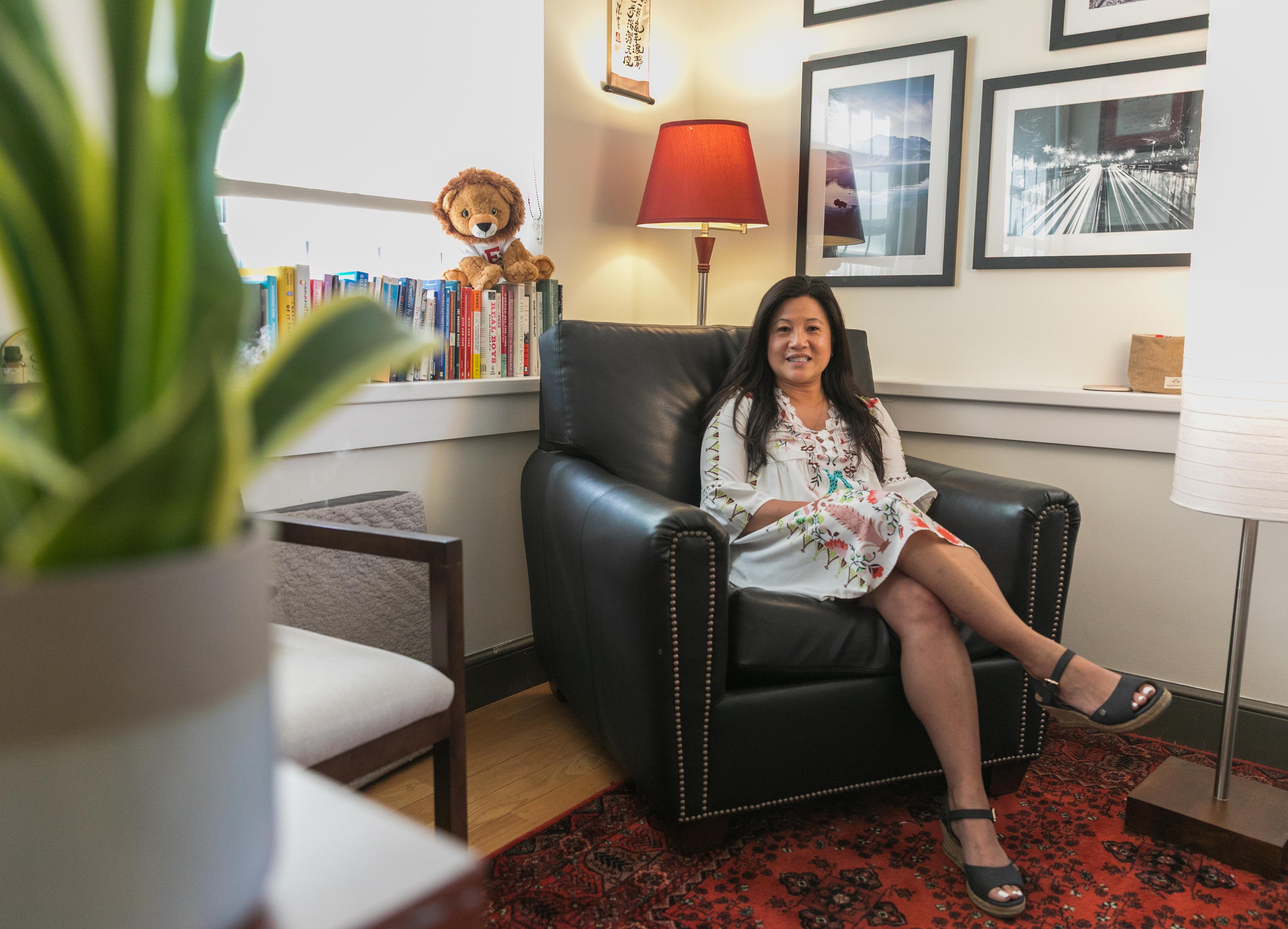
My work here inspired me to start a podcast, Identity-N-Me, which has deepened my understanding of how people experience their social identities. I’ve interviewed several colleagues and a few former students, and featured Director of Counseling and Psychological Services Dr. Szu-Hui Lee — another central figure in my renaissance here — on a handful of episodes.
After recording conversations for a few years, I’ve paused on that project to work on a memoir. My desire to write it was put in motion when Bramlett asked me to lead a discussion of The Prince of Los Cocuyos by Richard Blanco, which was assigned as a common read here several years ago. I was fortunate to meet and spend time with Blanco during his visit later that evening at Perdomo’s place.
More recently, I’ve started linking up off campus with a few colleagues affectionately known as the “Cornifellows” that have me laughing so hard that I’m either left crying or gasping for breath. It’s wonderful to end my week with people who can relate without explanation.
In sum, this experience has been hard yet transformative. A decade later, I’m still at the Academy because different people reached out in different ways when I needed a boost, or affirmation. I’ve thanked them many times for their selflessness and show of care. I’m walking around these days “on 10” because of my community. Never underestimate the power of outreach, or a kind word. Retention truly takes a village.
Hadley Stena Camilus is the associate dean of multicultural affairs at the Academy and has been co-chair of the MLK Committee. He earned a bachelor’s degree in American history from Clark University and a master’s in academic advising from Kansas State University.