Roots of Discovery
Toby Kiers '94 reveals the hidden fungal networks shaping ecosystems beneath our feet – and perhaps a powerful ally in the fight against climate change
By Miles Howard
Spring 2026
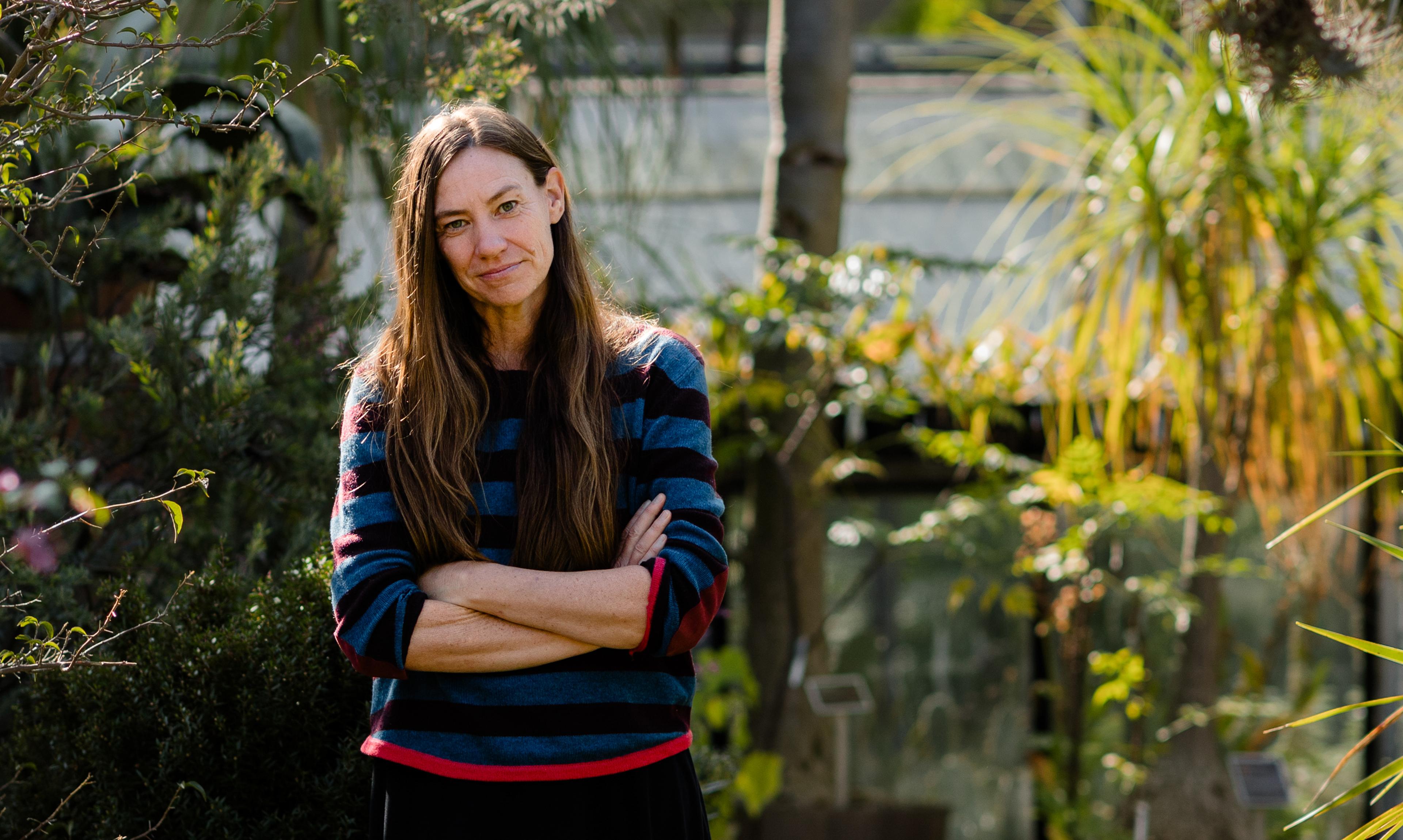
Evolutionary biologist Toby Kiers ’94 arrived at the forested base of Africa’s Mount Kenya in 2011 to collect soil samples — with her husband and two children, ages 1 and 3 at the time, beside her. “I wanted to have this career in science and be out in the field,” Kiers says. “I also had young children and a very supportive husband. I was determined to be with them.”
Like trailblazer Jane Goodall — who raised her only son in the 1960s and ’70s while studying chimpanzees in the jungles of Gombe Stream National Park in Tanzania — Kiers chose to bring her full self into the wild as a scientist, a mother and a wife. She believes that taking her family on research trips has positively shaped the way she engages with the landscape.
“Sometimes my kids would taste the soil, and so I started tasting it too, to gauge things like the pH level and acidity,” Kiers says. “It’s not something that you can broadly recommend because local soils are very different. One time, in Chile, I tasted the soil and it was so spicy that I immediately thought I’d done something wrong. But as a scientist, you have to be open to that, to following childlike curiosity to success — or to failure — and learning from it.”
What Kiers didn’t know was just how far these leaps of faith would take her. Over the past decade she has traveled across deserts and into cloud forests. In 2025, she was named one of 22 MacArthur Fellows who received $800,000 no-strings-attached awards, popularly known as “genius grants.” They are given annually to creative and innovative individuals across a wide range of fields. The fellowship is a testament to the years Kiers has spent in the field and the lab, tracking the invisible lives of a vast, misunderstood community: fungi.
To many, fungi might register as a culinary delicacy or an infectious agent. A bowl of sauteed mushrooms, perhaps, or the ravenous organism that transforms people into berserker zombies in The Last of Us. But Kiers’ groundbreaking research into the true extent of fungal activity has brought to light how fungi silently sustain our world.
Finding The Fungi
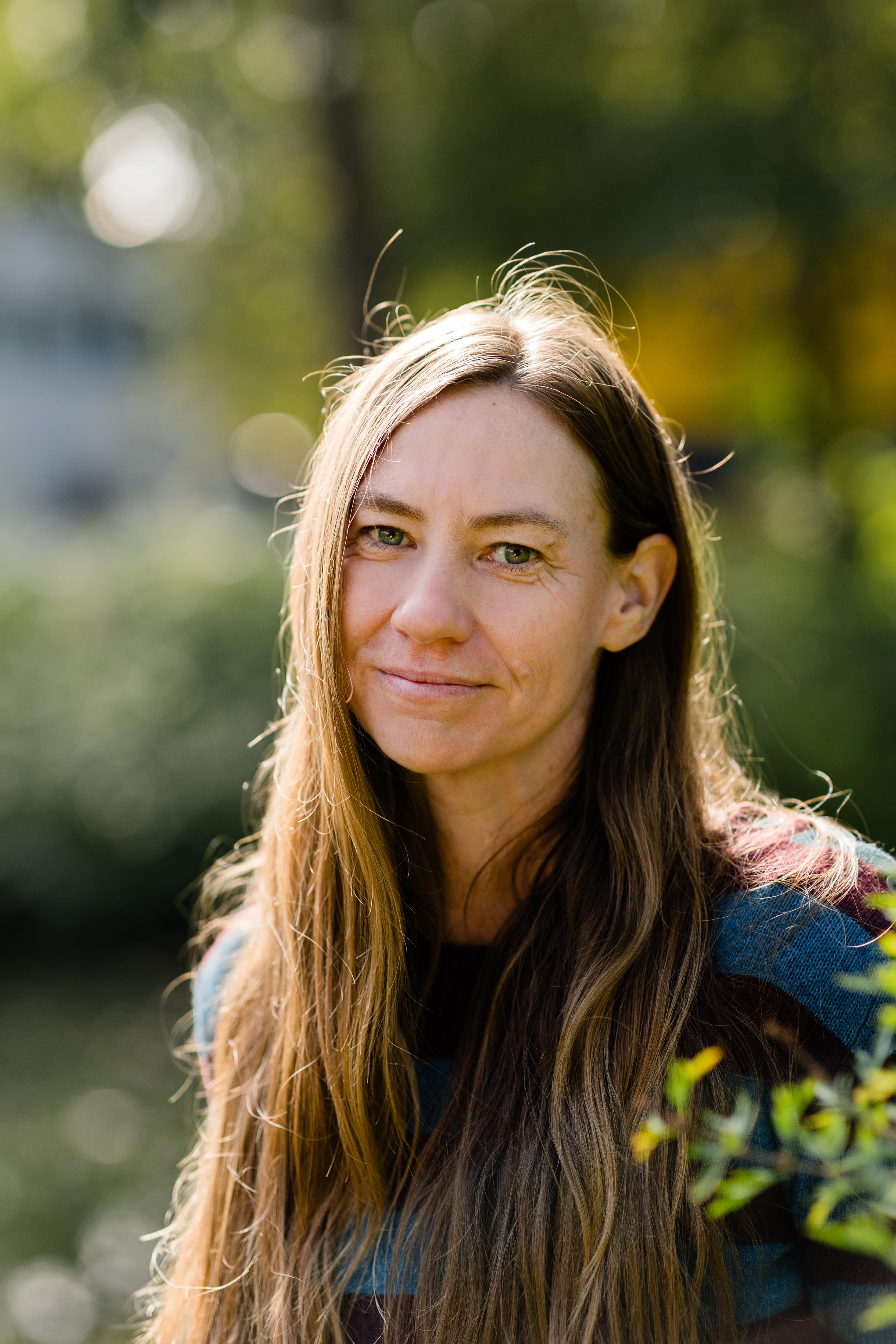
For as long as Kiers can remember, the natural world has been a place of comfort and wonder. She grew up in Cornwall, Connecticut (population 1,567, as of the 2020 Census), where the great outdoors was her backyard.
“We had a tractor, we harvested our own wood, and my sister, Haven, and I were good at collecting morels, which is a wonderful type of edible mushroom,” Kiers says. Sometimes, when the sisters felt agitated or stressed, their mother would simply tell them to go and spend some time outside. Whether yanking weeds from the garden or mushroom hunting near the bases of apple trees that had grown in abandoned farmland, the sisters embraced the healing power of nature earlier than most.
“During our morel foraging adventures,” Haven Kiers ’92 remembers, “Toby and I kept coming back to this one swampy area in the woods that we started calling Candyland. We played there, let our imaginations run wild. And I think going to Exeter was a natural progression for us both.”
The proximity of the woodlands surrounding Exeter’s campus was comforting to Kiers. What surprised her was how much the inquisitive culture of the outdoors applied to the classroom experience as well.
“The thing that really struck me was the Harkness system,” Kiers says. “The idea of sitting down together and having the freedom to talk about ideas and debate them, as opposed to just being taught how to regurgitate them. It just made such a big difference, especially in sciences. I think these discussions are more common in the humanities, but to learn science around a table rather than being lectured was a game changer.”
Kiers soon took these conversations beyond the table. Most semesters since 1984, Exeter has sent a handful of nature-curious students to The Mountain School, a 416-acre farm in the forested hills south of Montpelier, Vermont. The classroom on any given day might be a pen of chickens that need wrangling or a greenhouse rustling with spinach plants. The school, which Kiers attended in 1992, also organizes backpacking voyages into more rugged locales like the White Mountains. Spending so much quality time with spruce trees, seasonal crops and livestock was, as Kiers puts it, “the gateway” to biology.
One exam that Kiers remembers especially well from her Mountain School semester began with the entire class heading into the woods, where the teacher had placed a blackboard among the trees. “Our whole test was on plant communities, trees, succession and everything we saw around us,” Kiers says. “We had to write down our theories of ecological succession, right out there in the wilderness.” When Kiers returned from the mountains, she says, the path in front of her was clearer: “I felt certain that I wanted to be a field biologist.”
This sense of purpose led her to Bowdoin College in 1994 to earn a degree in plant sciences. But in her junior year, feeling confined to labs, Kiers took a leave of absence to start an internship on Barro Colorado, a small island in the middle of the Panama Canal with rich red soil and a research station run by the Smithsonian Tropical Research Institute. “Being on Barro Colorado with all these incredible scientists who were taking the time to bring me out and show me things was hugely impactful,” Kiers says. “We all saw ourselves in the chaos of this massive rainforest.”
While most of the scientists there were studying the trees, bats, primates and everything you could see. Kiers was considering what was happening beneath the ground. “I did this experiment, digging up samples of dirt from underneath old tropical trees, and using that dirt to inoculate seedlings of the same tree species and different ones,” Kiers recalls. “The idea was trying to figure out whether the same species of trees need the same kind of soil, and whether the trees can condition what’s happening below them.”
If trees flourish through a symbiotic relationship with something hidden in the ground, she asked, what is the other partner and what does it receive in return? Kiers’ answer: millions of fungal organisms, which form a series of networks and are the driving force behind a great underground economy. It was a landmark moment for her — an introduction to the fungal kingdom of millions of yeasts, mushrooms, lichens and mildew. Within this subterranean world, she found that a special class of microbes called mycorrhizal fungi perform a world-sustaining transaction: receiving carbon from plants and trees, and offering nutrients in return.
A Hidden Marketplace
“When people see dirt or roots, they’ll think, Oh, that’s something I recognize,” Kiers says. “But if you dig up roots and stain them with blue dye, you’ll start to see these intricate and beautiful fungal structures that penetrate the roots. The first time I saw this, it was like having a blinder taken off.”
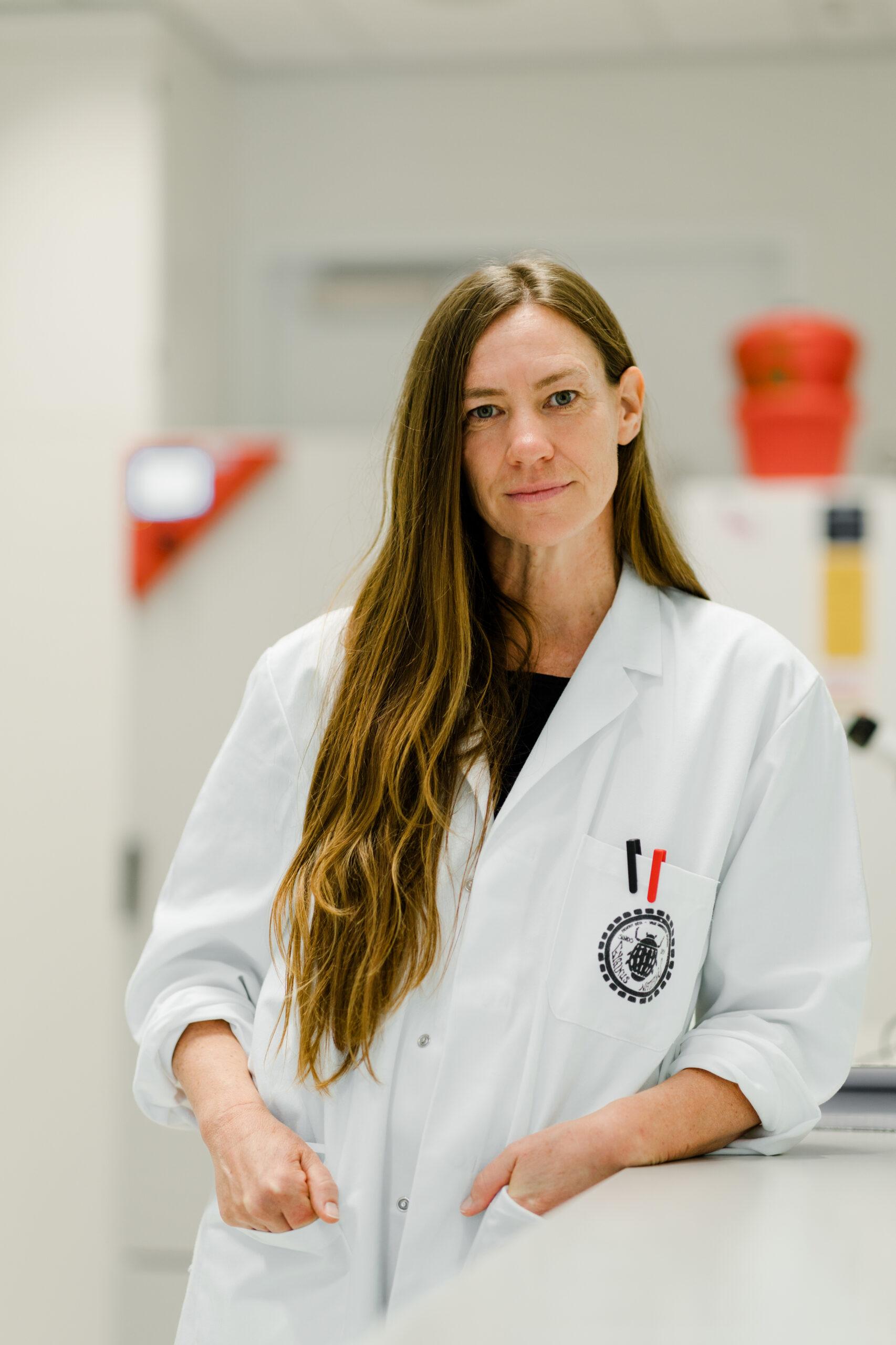
Kiers kept looking closer, even as her own environment took her to new locales like the University of California, Davis, where she earned her Ph.D. in 2005. When her soon-to-be husband, Cralan Kelder, moved to the Netherlands to pursue a career opportunity, Kiers went with him and became an assistant professor at Vrije Universiteit Amsterdam. By 2010, she was a university research chair focused on mycology, the study of fungi. With each experiment and field foray, the transactional nature of the world’s overlooked fungal structures became clearer.
“Fungi and plants have been beneficial partners going as far back as 450 million years ago, when the earliest plants were colonizing land,” Kiers explains. “Let’s say you’ve got a plant that’s photosynthesizing with carbon from the atmosphere. The plant transforms that carbon dioxide into a kind of sugary fat that it feeds to the fungi penetrating its roots. And in return, the fungi will keep foraging the ground for plant-sustaining nitrogen and phosphorus, which they’ll give back.”
Kiers wondered if she and her colleagues could devise a mechanism for monitoring the underground economy of fungi and plant roots, the way the S&P 500 tracks the performance of stocks. “We set up precise experiments in the lab where we would change the plants’ exposure to nitrogen, phosphorus, carbon and shade,” Kiers says. “At the same time, we changed the number of fungal ‘trade partners’ and competitors for the plants, to better understand how their respective resources are exchanged. And in the end we were able to track these resources across fungal networks, so that we could study them more predictively, as we do with our economic system.”
Understanding the futures and vulnerabilities of the vast hidden economy of fungi and plants has climatological implications. As Kiers’ colleague Michael Van Nuland, also an evolutionary biologist, says: “The trade relationship between plants and fungi means that carbon removed from the atmosphere by plants is being stored deeper underground, beyond plant biomass like roots. When we think about climate-change solutions, we often think of engineering technologies like tanks that can extract and store carbon. But the natural ecosystem has been doing this for a long time. Underground networks are a potential form of biological infrastructure.”
The substantial carbon-capture labor performed by fungal structures inspired Kiers to co-found the Society for the Protection of Underground Networks (SPUN) in 2021. When she’s not in the classroom or labs at the university, Kiers serves as SPUN’s executive director, with Van Nuland leading the data science. Their mission, to “map, protect and harness the mycorrhizal networks that regulate the Earth’s climate and ecosystems,” speaks to the importance of making the fungal economy more broadly visible.
“We recently did a study which demonstrated how plants and fungi are playing a massive role in the climate cycle,” Kiers says. “The plants allocate 13 billion tons of CO₂ to mycorrhizal fungi each year. That’s like about one-third of the annual emissions from fossil fuels. And the plants are feeding all that carbon dioxide to the fungal networks. That’s one of the things we’re now trying to understand: how the fungi are controlling the underground flow of carbon.”
The Underdog of Life
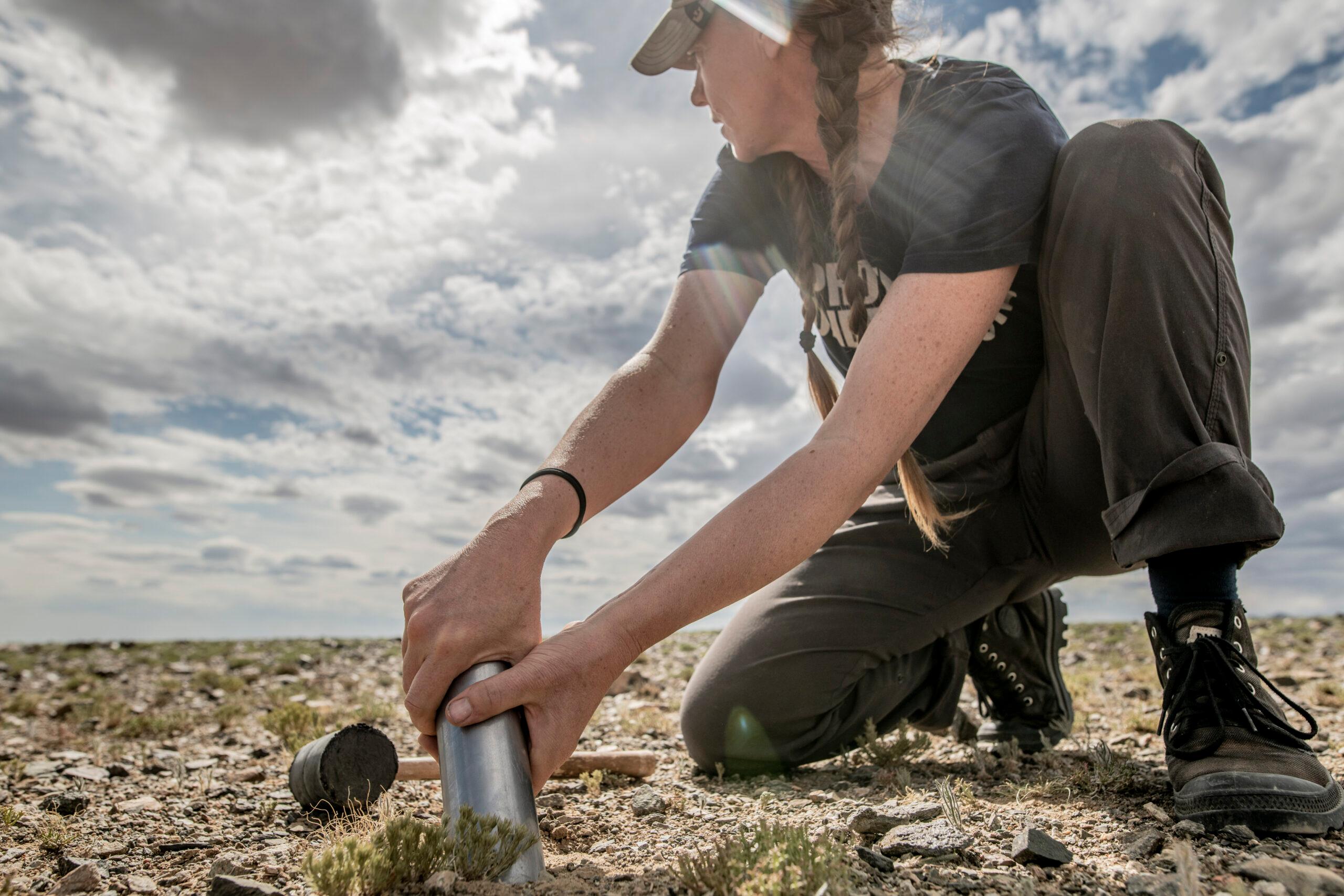
Undaunted by the scale of these elemental questions, Kiers has pursued clues and answers far beyond the Amsterdam campus. Some harsh environments, like the Gobi Desert, might seem incapable of supporting fungi. But as Kiers found in the desert and in the mountains of Lesotho — where scientists often collect data or samples by horseback — deciphering the hidden lives of local fungi is a practice with many roots. “There are incredibly talented local scientists and communities that have been thinking about the workings of soil systems for decades, if not centuries,” Kiers says.
In October — as Kiers and her SPUN colleagues brainstormed ways to translate their collaborative research into blueprints for incorporating fungi into climate protection policies — the unexpected call from the MacArthur Foundation gave Kiers a longer runway and a major infusion of resources. “I sort of fell to the floor, on my knees, when they told me that I had been chosen for one of the grants,” Kiers remembers. “Because really, this is an award that honors all of these scientists around the world that care deeply about the underdog of life, which is fungi.”
Close friends and family were unsurprised by her MacArthur honor. “When it happened, I was like, but of course,” Haven Kiers recalls. Colleagues felt a sense of possibility for where research like Kiers’ could soon lead.
Van Nuland says: “Right now there are some broad biodiversity protection policies in place, but frameworks for how to incorporate fungi more specifically, alongside plants and animals, have been missing. What we now know about underground networks will make it possible to create those frameworks and to take bigger steps toward influencing policy; like building predictive maps of fungal biodiversity hot spots around the world, so we know which areas to work toward protecting in the first place.”
Kiers and Van Nuland agree that a key ingredient in SPUN’s research and advocacy is decentralizing the scientific landscape by collaborating with field biologists across the world and honoring their localized insights and work. “This couldn’t be more important today, especially given recent federal funding cuts for science in the U.S.,” Kiers says. “You can work with researchers in communities to co-create datasets, which can inform a range of biodiversity protection policies that work for different communities and regions, instead of a top-down model.”
This collaborative spirit helped SPUN create the Underground Atlas, an evolving map of fungal patterns across the world’s underground ecosystems. Kiers was recognized for this work, and more, with the 2026 Tyler Prize for Environmental Achievement. Goodall received the 1997 award, which the scientific community sometimes refers to as the Nobel Prize for the environment. Kiers holds the distinction of being the youngest woman to win it.
Inspired and supported by this recognition, Kiers remains deeply immersed in the ground work of tracking the fungal economy. Early this year, she was gearing up for afield-sampling trip to the high-altitude forests and grasslands of Bhutan. This time Kiers traveled alone because of the country’s complex travel permitting system. But she set off with the same curiosity and wonder that she cultivated in the Panama Canal and in the shadow of Mount Kenya with her children.
“We’ve often associated fungi with disease, rot and decay, when it’s actually this massive kingdom,” Kiers says. “And I think people are starting to realize that there are so many ways of interacting with fungi. Not just directly, like eating yeast-raised bread or taking penicillin for an infection, but more passively, whenever we walk among trees and wildflowers.
“It’s all around us, overhead and underfoot.”
Miles Howard is a writer and author based in Boston. His work has appeared in The Boston Globe, Mountain Gazette and National Geographic.