All That Matters
Rocky King ’26 shares how Exeter changed his understanding of the word “future”
Summer 2026
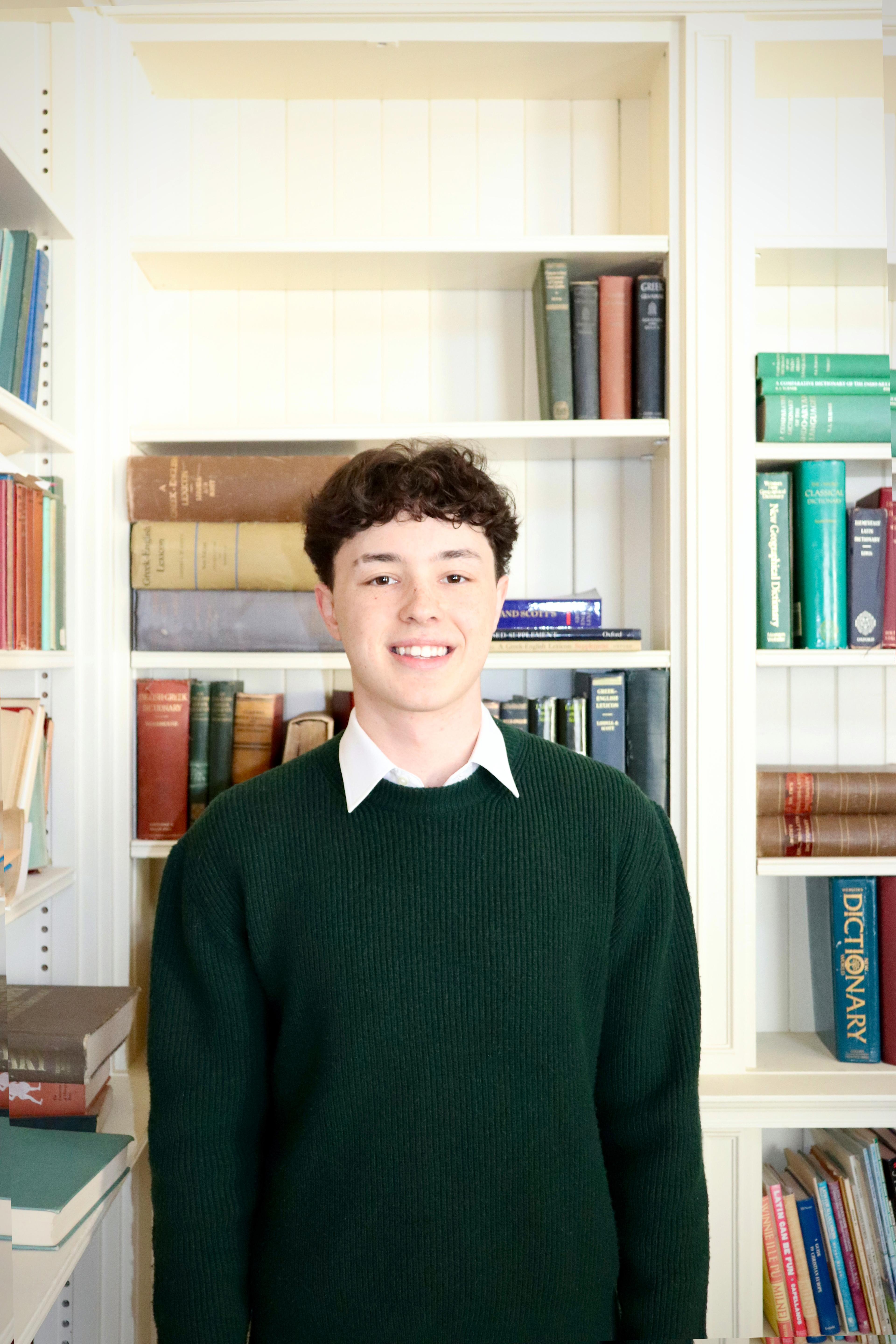
Each winter and spring, members of the senior class take to the lectern in Phillips Church and Multifaith Center to deliver meditations in front of peers, instructors and friends. A meditation has no template or paradigm. Most are personal and evolve from thinking about life and one’s place in it. Here is an excerpt from “All That Matters,” the meditation Rocky King ’26 shared with the Exeter community this spring.
Somehow, the teachers liked me. They’d pull me aside and tell me I was “different,” “smart,” “promising.” My classmates didn’t care about grades or academics and, to be honest, neither did I. However, something in my life made me want to try, and that’s what ultimately set me apart. Maybe it was because of my mom, or maybe because school was the only place where people told me I mattered for something good. I acted like everyone else socially because standing out was dangerous. But inside, I was different. I wanted out. I wanted more.
That drive led my beloved math teacher, Mr. Vilson, to refer me to the Prep 9 program. He handed me the application as if it were a golden ticket to Willy Wonka’s chocolate factory. “You can go places,” he said. “You just need the door.” My mother pushed harder than anyone for me to pursue academics. She wanted something better for me and my brother, even if she wasn’t sure of the path. My acceptance came soon after.
“I acted like everyone else socially because standing out was dangerous. But inside, I was different. I wanted out. I wanted more.”
—Rocky King '26
The preparatory program for elite boarding schools was intense. I spent my eighth-grade weekends and the following two summers in class. Those train rides were long, and this was the first time I had met others who spoke about a future I had never heard of. Up until that point, the term “future” meant the next meal or next month’s rent. I struggled to buy into others’ visions of hard work in academia; however, I followed their vision of the “future” out of love for my mother’s sacrifices, and I excelled.
When I was accepted to Exeter, my mom cried in a way I had never seen. Not out of sadness, but out of relief. Out of hope. As if everything she had endured was finally being held by someone else for a moment. But for me, it wasn’t that simple; going to Exeter didn’t feel like an escape. It felt like I was abandoning my brother, abandoning my mother, and leaving them to fight without me. Still, I went.
Being at Exeter felt like living in someone else’s skin. Everything around me felt clean and orderly. A beautiful, uninterrupted silence enveloped my mind as I walked down the paths. Students walked the halls and sat down at Harkness tables as if they knew exactly what they wanted and why they were here. In the dining hall lines, kids argued about ski trips and European vacations. At the same time, I stood frozen, feeling my hands clench and my chest tighten, wondering whether my brother was walking home safely or if my mother was working herself into the ground.
At night, I’d lie in my dorm room feeling tugs on opposite sides of my heart. One tug pulled me toward academia, extracurriculars and friends. The other reminded me of the family I had left behind, and that every day I spent on this campus was a day they were fighting without me. Every bus ride back to New York City, I watched myself send texts out to those I had befriended for jobs around the city. While my classmates rested, I worked. That was the reality I couldn’t escape.
Smoke shops were usually the first stop, where vapes were restocked, glass counters were cleaned, and boxes were broken down in cramped back rooms that smelled of incense and dust. Nobody asked why I wasn’t in school like the rest of New York City’s high school students. They simply pointed me toward whatever needed to be done, and I appreciated that.
Warehouses were tougher. I carried cases of Arizona Iced Tea until my arms burned and pushed heavy dollies across cold concrete floors. Ramzi, a smoke shop owner, taught me that bosses didn’t judge you by how much you could lift, but by how fast you could move. You didn’t have to be the strongest to help; you just had to want it. By the end of each shift, my shirt was soaked and my back ached, but I felt more accomplished bringing home cash meant for food or bills than I did bringing home any grades from school.
Construction was the most challenging but straightforward job. Swing a hammer, haul trash, rip out drywall, and try not to inhale too much dust. The middle-aged men I worked with didn’t slow down for anyone. Being young and fast helped. It was brutal, but it made sense. If you worked hard, you got paid.
When I think about where I started, it’s strange to sit in classrooms surrounded by students who grew up with every resource I used to wish for. I don’t forget where I came from; if anything, being here makes the contrast sharper. While other seniors talk about college trips or internships arranged through family friends, I remember my brother and me singing on subways, working construction during breaks, and watching my mom fall asleep fully dressed after double shifts. Being at Exeter didn’t magically make any of that disappear. It just layered two different lives on top of each other. One life involved dining halls, Harkness discussions and conversations about careers in fields I didn’t even know existed. The other involved weekends and vacations spent working, sending money home, and checking in on my brother when I wasn’t there to look out for him. Somehow, those two lives ended up shaping who I am becoming now, and for the first time, I can see a future that isn’t defined only by survival.
Rocky King ’26 is a four-year senior, a dormitory proctor in Abbot Hall, an Exeter Student Service Organization mentor, a participant in the Young Brothers Society and La Alianza Latina, and a guard on the boys varsity basketball team. He will attend Fordham University, where he plans to study finance and data science.